Author name: Keith Burns

News

Japan’s Prime Minister Resigns After Uproar Over African Migration Plan

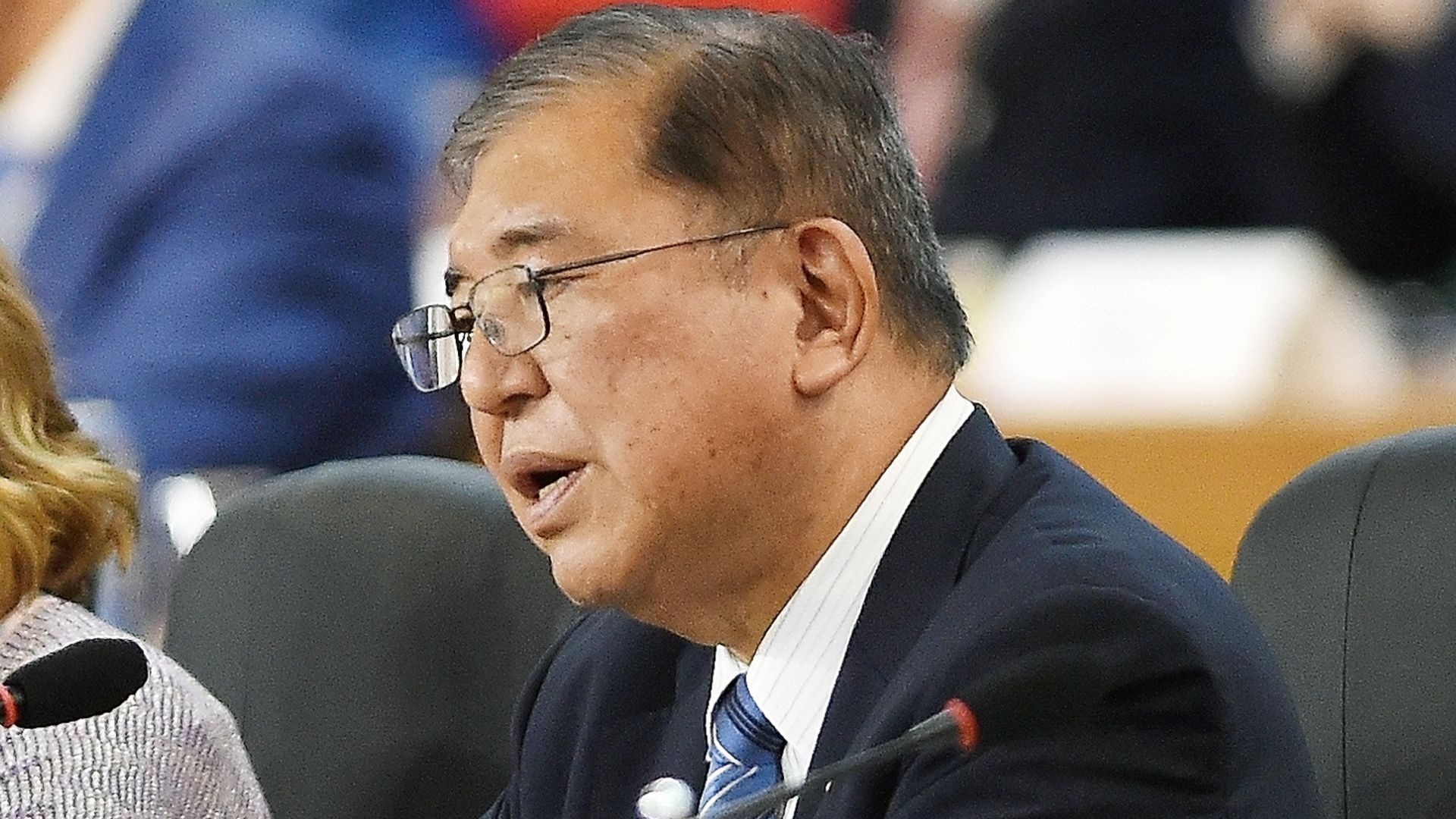
Japan’s Prime Minister Shigeru Ishiba announced Sunday that he will step down following months of internal party pressure and public uproar over his government’s controversial “African Hometown” program.
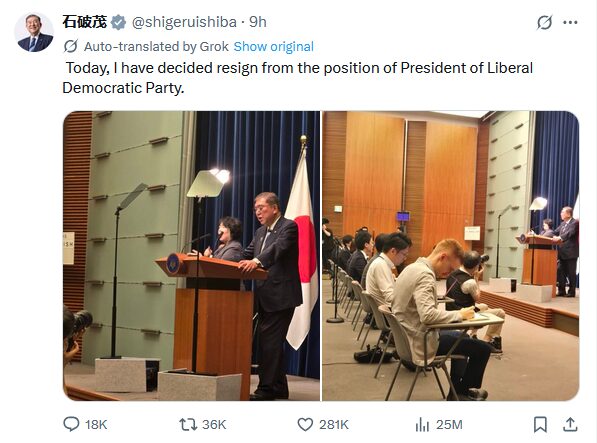
X Screenshot – Shigeru Ishiba

The decision comes as his ruling Liberal Democratic Party (LDP) faces falling poll numbers and rising criticism from both political opponents and the Japanese public.

Ishiba, 68, took office in October and has faced calls to resign for more than a month.

He argued that stepping down would create a political vacuum during a time when Japan is grappling with significant domestic and international challenges.

However, with the LDP scheduled to meet Monday to decide whether to hold an early leadership election, Ishiba’s announcement preempted what was widely viewed as a looming no-confidence vote.

The resignation follows mounting controversy surrounding the African Hometown program, which was promoted under the Japan International Cooperation Agency (JICA).

The initiative designated four Japanese cities—Kisarazu, Sanjo, Nagai, and Imabari—to partner with cities in Mozambique, Nigeria, Ghana, and Tanzania.

The program quickly sparked outrage after the Nigerian government announced that Japan would create “a special visa category for highly skilled, innovative, and talented young Nigerians who want to move to Kisarazu to live and work.”

Nigerian officials also said that “artisans and other blue-collar workers from Nigeria who are ready to upskill will also benefit from the special dispensation visa to work in Japan.”

The announcement set off a wave of anger among Japanese citizens, particularly in Kisarazu, where residents discovered that Google Maps had briefly labeled the city office as the “Nigerian city office.”

News of the Nigerian statement spread rapidly, leading residents in Sanjo, Nagai, and Imabari to flood their municipal offices with inquiries about the implications of the program.

Critics accused Ishiba’s administration of using the African Hometown program as a backdoor to introduce large-scale migration, a move many said contradicted longstanding government policies designed to limit immigration.

The controversy added fuel to Japan’s growing anti-immigration sentiment, which has been reflected in recent political gains by the right-wing Sanseito party.

The party campaigned on a “Japanese First” message and won significant victories in parliamentary elections earlier this year.

Japan has one of the fastest-shrinking populations in the world, with birth rates far below replacement levels.

The government has identified population decline as one of the most pressing crises facing the country, with projections showing significant impacts on the workforce and overall economic stability in the coming decades.

While some policymakers have argued that immigration is necessary to offset labor shortages, many in Japan remain opposed to policies that would significantly increase the number of foreign residents.

Ishiba’s resignation signals the end of a brief tenure that began less than a year ago.

His successor will inherit the dual challenges of managing Japan’s demographic decline while navigating public resistance to migration programs.

The LDP leadership election will determine the direction of the party and government as Japan faces growing domestic pressures and international scrutiny.

The controversy over the African Hometown program is expected to remain a central issue in the leadership race, as candidates seek to distance themselves from Ishiba’s policies and respond to voter demands for stricter immigration controls.
News

Jasmine Crockett: Not All Criminals Are Criminals

Rep. Jasmine Crockett (D-TX) said this week that poverty can drive people to commit certain crimes and suggested that not all offenses should result in prosecution if they involve basic survival needs.

Speaking on the Grounded podcast, Crockett, who previously worked as a public defender, drew a connection between economic hardship and criminal activity.

“There is a direct link between poverty and susceptibility to having to engage in certain things,” she said.

While acknowledging that not everyone in poverty resorts to crime, Crockett argued that financial circumstances often push individuals toward unlawful behavior.

“There are crimes that are committed, not because people are criminals, but because they literally are trying to survive,” she stated.

Crockett cited comments made by Dallas County District Attorney John Creuzot, who in the past indicated his office would not prosecute theft cases involving small amounts of essential goods such as food or diapers.

Crockett said Creuzot “probably shouldn’t have said it out loud,” but agreed with the underlying policy, adding that “there is no good point in doing it because a decent defense attorney would have a defense.”

Watch the cued-up clip here.

Her remarks add to a growing record of controversial statements on crime and politics.

On the same day the podcast episode was released, Crockett appeared on MSNBC and accused President Donald Trump of “unlawfully going into various minority controlled cities” with the National Guard.

The Texas congresswoman has also attracted attention for previous comments about political violence and Republican policies.

In July, she told The Atlantic that her large social media following made her the strongest choice to lead Democrats on the House Oversight Committee.

The position ultimately went to Rep. Robert Garcia (D-CA).

That same month, Crockett said in an interview that “all violence” in American politics comes from Trump supporters, despite multiple recent high-profile attacks linked to left-wing actors.

Earlier this year, Crockett clashed with Republicans in a committee hearing over legislation related to women’s sports.

During the exchange, she accused GOP lawmakers of pushing “demonic” policies in their efforts to keep men out of women’s athletics.

Crockett, first elected to Congress in 2022, has been promoted by several Democratic activists since her arrival in Washington.

In May, then-DNC vice chair David Hogg praised her publicly, saying she represented “the type of leader we’re looking to support.”

Her recent comments on poverty and crime add to an ongoing debate over prosecutorial discretion and how law enforcement should respond to thefts involving basic necessities.

Supporters of policies like those cited by Crockett argue that such measures prioritize limited resources and address root causes of crime.

Critics maintain that they risk excusing unlawful behavior and undermining enforcement of the law.

News

JD Vance Drops a Massive Truth Bomb During RFK Jr Hearing, Blows Senators Out of the Water

Vice President J.D. Vance came to the defense of Health and Human Services Secretary Robert F. Kennedy Jr. on Thursday as the Secretary faced sharp criticism from Senate Democrats over his decisions regarding vaccines and recent changes at the Centers for Disease Control and Prevention (CDC).

The exchange took place during a Senate Finance Committee hearing, where Kennedy was pressed repeatedly by Democratic senators about his positions on mRNA vaccines, the COVID-19 vaccine, and the direction of federal health agencies.

During the hearing, Vance posted a statement on X defending Kennedy while criticizing Democrats for their positions on children’s medical treatments.

“When I see all these senators trying to lecture and ‘gotcha’ Bobby Kennedy today, all I can think is: You all support off-label, untested, and irreversible hormonal ‘therapies’ for children, mutilating our kids and enriching big pharma,” Vance wrote.

“You’re full of shit and everyone knows it.”

The hearing began with remarks from Chairman Mike Crapo (R-ID), who set the parameters before yielding to ranking member Sen. Ron Wyden (D-OR). Wyden accused Kennedy of waging an “unceasing crusade against vaccines,” claiming the Secretary had “caused chaos and brought corruption to America’s healthcare systems.”

Wyden also alleged Kennedy had “elevated conspiracy theorists, crackpots, and grifters” in shaping health policy.

He ended by demanding Kennedy be sworn in as a witness, citing comments made during Kennedy’s confirmation process.

The exchanges grew more tense when Sen. Elizabeth Warren (D-MA) pressed Kennedy over changes to COVID-19 vaccine classifications.

Warren argued that Kennedy had broken his confirmation promise by “taking away vaccines from anyone who wanted them.”

Kennedy denied that allegation. “I’m not going to recommend a product for which there was no clinical data for that indication.

Is that what I should be doing?” he asked in response to Warren’s line of questioning.

Warren countered, “What you should be doing is honoring your promise you made when you were looking to get confirmed in this job. And that is, you promised, that you would not take away vaccines from anyone who wanted them. You just changed the classification of the COVID vaccine…”

Kennedy interjected, “I’m not taking them away from people. Most Americans are going to be able to get it from their pharmacy for free.”

Kennedy went further, addressing Warren’s ties to pharmaceutical companies.

“And I know you’ve taken $855,000 from pharmaceutical companies, Senator,” he stated.

“You want me to indicate a product for which there is no clinical data … I’m not taking them away. Everybody could get access to them.”

The remarks highlighted the clash between Kennedy and Senate Democrats, who have been critical of his approach to vaccine policy and oversight of the Department of Health and Human Services.

The exchanges drew significant attention online, with Vance’s comments amplifying the disputes playing out inside the committee hearing.

The Finance Committee has not announced whether additional hearings will be scheduled to continue oversight of Kennedy’s department.

Kennedy, who has served as Secretary of Health and Human Services since his confirmation earlier this year, maintained that his approach is guided by data and transparency, while Democratic senators accused him of undermining public health.

News

AOC Torched for ‘Putting Sprinkles on Sh*t’ After Bragging About Garbage Cans

Rep. Alexandria Ocasio-Cortez is facing criticism from residents and community leaders in Queens after touting her role in bringing dozens of new trash cans to Roosevelt Avenue, an area long plagued by prostitution, illegal vending, and organized crime.

Earlier this month, Ocasio-Cortez announced on social media that her office had worked with the New York City Department of Sanitation to secure more receptacles for the busy commercial corridor.

“After meeting with local vendors and business owners, my office reached out to the New York City Department of Sanitation about the need for more trash cans along Roosevelt Ave,” she wrote on August 8.

“Thanks to their quick response, 51 trash cans were installed! Grateful for their partnership in keeping our community clean!”

The announcement quickly drew sharp backlash from locals, who said the congresswoman ignored more pressing issues.

“Celebrating garbage cans is like putting sprinkles on s–t and calling it a birthday cake,” said Ramses Frias, a Republican candidate for City Council in Queens’ 25th District.

“It’s all for show.”

He added, “Of course, AOC won’t speak about what’s really happening here so she can keep up the facade that her district is amazing and a paradise.”

Others echoed the sentiment online. “That’s all you’re worried about on Roosevelt Ave?” wrote John Lomonaco in response to her post on Facebook.

The criticism centers on Roosevelt Avenue’s reputation as the so-called “Market of Sweethearts,” a stretch known for prostitution, illegal street vending, and gang-related activity.

Residents and merchants have pleaded for greater intervention, warning that criminal networks have expanded in the area amid the city’s migrant crisis.

Community advocates have even called on federal authorities to investigate possible ties between the illegal sex trade on Roosevelt Avenue and organized crime.

“I have not personally seen Ocasio-Cortez since she’s been elected. I have not seen her in the community,” said Rosa Sanchez, president of the Restore Roosevelt Avenue Coalition, earlier this summer. “I have seen her in a parade — that’s it.”

Ocasio-Cortez, a Democrat and member of the progressive “Squad,” has in the past voiced support for decriminalizing prostitution, framing it as legitimate work.

Critics argue this position has contributed to a lack of urgency in addressing the illegal activity that continues to thrive along Roosevelt Avenue.

The Department of Sanitation confirmed to the New York Post that it replaced 48 missing baskets — not 51 as Ocasio-Cortez had stated — along Roosevelt Avenue between 82nd Street and 111th Street.

The agency said the replacements were part of routine citywide maintenance. “Unfortunately, corner litter baskets go missing – or sustain damage or excessive wear-and-tear – from time to time,” a spokesperson explained.

Residents remain unconvinced that more bins are the solution.

“Real talk, we need more Sanmen, or more overtime for the ones we do have,” said John McGarry in a Jackson Heights residents’ group on Facebook, alongside photos of overflowing trash bins earlier this month.

Ocasio-Cortez’s office defended her actions, saying she responded to requests from local business owners. A spokesperson said sanitation was “a very big concern for them” during a roundtable the congresswoman hosted this summer.

Her office also noted that she requested $500,000 in federal funding for nonprofits assisting victims of sexual violence.

Despite these assurances, community leaders and residents continue to press for stronger action to address crime and public safety on Roosevelt Avenue, saying that trash cans alone do little to solve the problems plaguing the district.

News

Obama Judge Orders Alligator Alcatraz Dismantled, DHS Begins Moving Detainees

The Department of Homeland Security (DHS) has begun transferring detainees out of the Florida detention facility known as “Alligator Alcatraz” after a federal judge ordered the site to be dismantled within 60 days, as reported by The Gateway Pundit.

The detention center, located in the Florida Everglades and opened last month under Governor Ron DeSantis’ direction, was designed to hold illegal aliens, including violent offenders and foreign nationals with terrorism designations.

The facility’s remote location is surrounded by swampland, pythons, and alligators.

On Thursday, U.S. District Judge Kathleen Williams, an Obama appointee, issued a preliminary injunction blocking the Trump Administration from sending new detainees to the site.

In an 82-page order, Williams also instructed federal and state officials to dismantle the facility no later than 60 days from her ruling.

According to the court order, the government is prohibited from installing additional lighting, fencing, buildings, or other infrastructure and barred from bringing any new detainees to the property.

Williams directed officials to remove temporary fencing, industrial lighting, generators, gas, sewage systems, and other equipment once detainee numbers decrease to a level that allows for safe removal.

Earlier this month, Judge Williams cited environmental violations in a separate ruling that paused new construction at the site for two weeks. At the time, she ruled the facility could continue to house existing detainees but barred additional development pending further review.

Following Thursday’s decision, DHS confirmed that detainees are being relocated to other immigration detention centers. In a statement to CBS News, the department said it was complying with the order but criticized the ruling.

“DHS is complying with this order and moving detainees to other facilities. We will continue to fight tooth-and-nail to remove the worst of the worst from American streets,” the statement said.

The preliminary injunction marks the latest legal battle over the controversial facility, which local leaders and immigrant rights advocates challenged shortly after it was established.

Judge Williams’ order emphasized that the site must be dismantled within the mandated timeframe, with all environmental and operational equipment removed.

As of Wednesday, DHS had already begun moving detainees out of the facility, citing the court’s restrictions. Officials did not specify how many detainees remain or where they are being transferred.

News

Redistricting Showdown: Utah Judge Orders Congressional Map Redraw

A state court judge ordered Utah lawmakers on Monday to redraw the state’s congressional districts in time for next year’s midterm elections, ruling that the maps approved by the legislature were unlawfully gerrymandered to benefit Republicans.

In a 76-page order, Judge Dianna Gibson directed the legislature to pass a “remedial congressional map” by the end of September.

The decision sets a firm deadline while appeals proceed. Legislative leaders have already signaled they will challenge the ruling, a step that could send the case to the Utah Supreme Court and, potentially, the U.S. Supreme Court.

Gibson’s order follows years of litigation over how Utah’s congressional lines were drawn after the 2020 census.

The dispute traces to 2018, when voters approved Proposition 4, known as the “Better Boundaries” initiative.

The measure created an independent redistricting commission and set standards intended to curb partisan influence in line-drawing.

Two years later, state lawmakers enacted legislation that reduced the commission’s role to advisory. During the subsequent redistricting cycle, the legislature bypassed the commission and adopted its own maps.

Voting-rights groups—including the League of Women Voters of Utah and the Mormon Women for Ethical Government—sued, alleging the plan illegally diluted urban voters’ influence by splitting Salt Lake City into four separate districts and violating standards envisioned by Proposition 4.

Gibson concluded the plaintiffs were likely to succeed on their claims and said a new plan must be prepared for the upcoming election cycle while the courts resolve the broader constitutional questions.

Her order leaves the door open for appellate review but underscores that, absent a stay, new maps must be in place by the court’s deadline.

The ruling drew immediate attention from Utah’s political leaders.

Sen. Mike Lee, R-Utah, warned ahead of the decision that “almost anything promoted as an ‘independent commission’ is often a strategy to give Democrats an edge they can’t win through fair elections.”

In a lengthy X post, Lee added: “We the people need to halt this trend. To do so, we must first grasp what these independent commissions truly represent.” He continued, “In a state like Utah, they’re essentially a mechanism for the left to grab power they can’t get through democratic elections.”

Utah’s court fight comes as redistricting debates intensify nationwide.

In Texas, the legislature passed new congressional maps this month that give Republicans an advantage in the upcoming midterms.

President Donald Trump encouraged the move and celebrated it as a “BIG WIN,” while Democratic lawmakers in the state temporarily left Texas in protest over the map.

Developments in California added to the national spotlight.

Gov. Gavin Newsom advanced a plan to suspend the state’s map—previously drawn by an independent commission—and to pass a new version in a special election this year, a move he said would offset Republican gains in Texas.

At a press conference, Newsom said Democrats need to “play hardball” to compete with a Republican Party led by Trump.

In response, Trump vowed on Monday to sue Newsom over the proposed map.

The Utah case focuses on whether the legislature’s 2021 plan improperly fractured the Salt Lake City area and whether voters’ approval of Proposition 4 affords enforceable protections against partisan gerrymandering.

Plaintiffs argue the legislature’s map undermines the ability of communities in and around Salt Lake City to elect candidates of their choice and runs contrary to the intent of the 2018 initiative.

State officials counter that the legislature holds constitutional authority over redistricting and that the map reflects legitimate policy choices and traditional districting principles.

With the court’s deadline now in place, lawmakers face a compressed timetable.

If the legislature enacts a new plan by late September, it would govern the next election cycle unless blocked by an appellate court.

If no plan is passed, the court could impose a remedial map to ensure districts are finalized before candidate filing periods and election administration deadlines.

As appeals move forward, Utah joins a growing list of states where courts, legislatures, and voters are testing the limits of partisan mapmaking and the roles of independent commissions.

The outcome in Utah—along with the parallel actions in Texas and California—will shape the congressional battlefield heading into the next round of midterm elections and determine how hundreds of thousands of Utah voters are grouped into districts for years to come.

News

41 Planned Parenthood Clinics Closed or Closing as Federal Funding Cut Bites

Dozens of Planned Parenthood clinics have closed or are slated to close in 2025 as the Trump administration advances its effort to block the abortion provider from receiving taxpayer dollars through Medicaid.

Susan B. Anthony (SBA) Pro-Life America, a leading pro-life organization, released a tracker this month documenting closures nationwide.

According to the tracker, 41 Planned Parenthood facilities have already shut down or are expected to close later this year.

SBA Pro-Life America President Marjorie Dannenfelser described the closures and the Congressional vote to end taxpayer funding of abortion providers as the most significant development for the pro-life movement since the Supreme Court’s 2022 Dobbs decision, which overturned Roe v. Wade.

“Life is winning. The One Big Beautiful Bill’s provision defunding Big Abortion is not even fully in effect and still 41 Planned Parenthoods have closed or will close soon. Imagine how many more will shut down once they stop receiving half a billion dollars in Medicaid money,” Dannenfelser said in a statement.

“By Planned Parenthood’s own account, our victory stopping the forced taxpayer funding of abortion businesses could cause up to 200 facilities to close.”

She continued, “Planned Parenthood is stalling with their defunding lawsuit to keep raking in $2 million of taxpayer money per day, but the defunding of Big Abortion is long overdue. Planned Parenthood’s non-abortion services have decreased drastically. Cancer screenings, breast exams and pap smears are down by more than 50 percent. Contraceptive services are down by almost 40 percent. Community health centers that provide these services outnumber Planned Parenthoods 15:1 nationally and they provide better, more comprehensive care to women and their babies on Medicaid.”

In July, President Donald Trump signed the budget reconciliation package known as the “Big, Beautiful Bill,” which included provisions cutting off Medicaid funding to abortion providers.

Because the measure was passed through reconciliation, Senate Republicans were able to avoid the chamber’s 60-vote threshold, requiring only a simple majority.

While the Hyde Amendment already prohibits federal funding of abortions except in cases of rape, incest, or danger to the mother’s life, pro-life advocates have argued that taxpayer dollars should not support organizations that perform abortions under any circumstances.

Planned Parenthood immediately filed suit against the administration, claiming that up to 200 of its clinics could be forced to shut down as a result of the funding cuts.

The case remains pending after a federal judge appointed by former President Barack Obama issued an injunction blocking the defunding provision from taking effect.

Planned Parenthood’s latest annual report, released earlier this year, indicated the organization carried out a record number of abortions in the 2023-2024 fiscal year.

The report, titled A Force For Hope, stated that 402,230 abortions were performed, up from 392,715 the previous year.

During the same period, Planned Parenthood received $792.2 million in taxpayer funding, nearly $100 million more than the previous year.

The federal push to block abortion providers from Medicaid funding has been reinforced by state actions.

In June, the Supreme Court ruled in a South Carolina case that the state could block Planned Parenthood from receiving Medicaid reimbursements, determining that the organization could not sue under federal civil rights law.

Following that decision, Oklahoma Governor Kevin Stitt issued an executive order barring state Medicaid funds from going to abortion providers. Stitt cited the Supreme Court’s ruling as justification for the order.

The combination of federal action through the reconciliation bill, state-level moves such as Oklahoma’s order, and the Supreme Court’s South Carolina ruling has placed significant financial pressure on Planned Parenthood.

According to SBA Pro-Life America, the closures tracked so far may represent the beginning of a broader wave of facility shutdowns as litigation over the federal defunding effort continues.

News

Canada Bends the Knee to Trump’s Will, Drops Tariffs on U.S. Goods

Canada announced Friday that it will remove a large portion of its retaliatory tariffs on U.S. goods in an effort to restart trade negotiations that have been stalled in recent months.

Canadian Prime Minister Mark Carney said the move is aimed at restoring momentum to bilateral trade discussions under the framework of the U.S.-Mexico-Canada Agreement (USMCA).

Tariffs imposed on U.S. goods compliant with USMCA will be lifted, while restrictions on autos, steel, and aluminum will remain in effect.

“In this context and consistent with Canada’s commitment to USMCA, I am announcing today that the Canadian government will now match the United States by removing all of Canada’s tariffs on U.S. goods specifically covered under USMCA,” Carney said during a press conference in Ottawa.

“Canada and the U.S. have now re-established free trade for the vast majority of our goods,” Carney added.

He noted that compared to other trading partners, Canadian exports continue to face relatively low U.S. tariffs.

“Canada currently has the best trade deal with the United States. And while it’s different from what we had before, it’s still better than that of any other country,” he said.

Carney also said President Donald Trump told him the Canadian action would help relaunch trade talks.

“We welcome this move by Canada, which is long overdue,” a White House official told FOX News.

“We look forward to continuing our discussions with Canada on the Administration’s trade and national security concerns.”

Friday’s announcement follows other recent steps by Canada aimed at smoothing trade relations with the United States.

In late June, the Canadian government withdrew plans for a digital services tax, which had prompted significant pushback from U.S. companies, especially in the technology sector.

The removal of the proposal was seen as an attempt to clear a major obstacle in the trade talks.

Last month, Carney’s government also ended threats to impose new tariffs on U.S. goods if the two countries failed to reach a deal by August 1.

The latest rollback of tariffs underscores Canada’s effort to reduce friction with its largest trading partner and return to negotiations focused on long-term trade stability.

The U.S. and Canada remain each other’s largest or second-largest trading partners depending on the year, with deep ties in energy, agriculture, and manufacturing.

According to the Office of the U.S. Trade Representative, Canada was the top destination for U.S. exports in 2024 and the third-largest source of imported goods.

Canada exported more than three-quarters of its goods to the United States last year, while nearly half of its imports came from the U.S.

U.S. exports to Canada include vehicles, machinery, energy products, and approximately $30 billion in agricultural goods.

Canada’s primary exports to the United States are energy and vehicles, in addition to more than $40 billion in agricultural products.

While most tariffs covered under USMCA are now removed, major sticking points remain over auto, steel, and aluminum products, which continue to be central to ongoing disputes between the two countries.

Both governments have signaled that trade negotiations will resume in the coming weeks, with the goal of resolving outstanding issues and strengthening the long-standing economic relationship.

The tariff removal marks the latest attempt by Canada and the United States to re-establish common ground under the USMCA framework while preserving leverage over key industries where disagreements remain.

News

Texas Dem Flees Bathroom Video Conference Call When Informed She’s Committing a Felony

Texas Democratic state Rep. Nicole Collier abruptly left a virtual call with California Gov. Gavin Newsom and other Democratic leaders after claiming she was told her participation from inside the state Capitol could constitute a felony.

Collier joined the meeting with Newsom, Democratic National Committee Chair Ken Martin, and other party members while the Texas House of Representatives was debating a redistricting bill backed by President Donald Trump.

During the call, Collier argued that the bill violated the Voting Rights Act, saying it would “prevent Black and Brown individuals from selecting the candidates of their choice because they’re cracking and packing these districts.”

Roughly 30 minutes into the call, Collier interrupted Martin to announce she had to leave.

“Sorry, I have to leave. They said it’s a felony for me to do this,” she said.

Collier explained that she was not permitted to remain on the House floor or even in the bathroom during the meeting.

Turning off camera, she added, “You told me I was only allowed to be here in the bathroom,” before concluding, “No, hang on. Bye everybody. I’ve got to go.”

Her sudden exit prompted immediate responses from other Democrats on the call.

Sen. Cory Booker of New Jersey said, “That is outrageous. Let me tell you something, Rep. Collier in the bathroom has more dignity than Donald Trump in the Oval Office.”

Newsom responded, “There you go,” nodding in agreement.

Booker added, “What they’re trying to do right there is silence an American leader, silence a Black woman, and that is outrageous. What we just witnessed, them trying to shut her down and saying it’s illegal for her to be in the bathroom and on this call, this is the lengths that they’re going to in Texas.”

The exchange occurred against the backdrop of ongoing Democratic resistance to the Texas redistricting plan.

Weeks earlier, dozens of Democratic lawmakers left the state for more than two weeks to block the measure by denying the House a quorum.

Texas Gov. Greg Abbott and other state leaders ordered the absent lawmakers to be arrested if they did not return to conduct legislative business, warning they could also face removal from office.

Upon their return, Democrats were met with new security protocols designed to maintain quorum. Lawmakers reported that officers with the Texas Department of Public Safety monitored their movements throughout the Capitol, including standing guard outside their offices and following them when they left.

Some legislators said they were required to sign “permission slips” to leave the building and submit to surveillance.

Collier chose to remain on the House floor late into Monday night and Tuesday rather than comply with the restrictions.

Despite the ongoing dispute, the Texas House voted on Wednesday to approve new congressional maps.

In response, Newsom announced that California would push forward with its own redistricting plan to counter Texas’ legislation.

On Friday, California Democrats and the Democratic Congressional Campaign Committee (DCCC) released a new map that could eliminate five Republican congressional seats in California, potentially offsetting the five additional seats Republicans would gain under the Texas maps.

The parallel developments in Texas and California underscored the partisan battle over redistricting ahead of future elections, with both parties using state legislatures to shape congressional representation.

News

Newsom’s Policies Repel Another Major Brand, Then Mocks Them Online

Bed Bath & Beyond’s Executive Chairman Marcus Lemonis announced Wednesday that the company will not open or operate retail stores in California, citing high costs and heavy regulation as reasons for the decision.

In a statement posted on X, Lemonis said the move was not motivated by politics but by the company’s need to remain financially viable.

“California has created one of the most overregulated, expensive, and risky environments for businesses in America,” Lemonis wrote.

He explained that higher taxes, higher fees, higher wages, and “endless regulations that strangle growth” made it impossible for the company to sustain operations in the state.

Lemonis added that California’s budget surpluses are being built at the expense of “ordinary citizens who are paying too much and businesses who are squeezed until they break.”

He said the company would not participate in what he described as a system that undermines both customers and shareholders.

Instead, Bed Bath & Beyond will focus on strengthening its online presence in California.

According to Lemonis, the company will provide delivery service through BedBathandBeyond.com with orders arriving within 24 to 48 hours, and in some cases, same-day delivery.

Lemonis said the strategy would allow the company to avoid the “inflated costs created by an unsustainable model” while still serving California customers.

The announcement comes as the retailer attempts to regain footing after its collapse in 2023.

Bed Bath & Beyond filed for Chapter 11 bankruptcy in April 2023 and shut down all of its physical locations.

At the time, analysts pointed to what Reuters described as “poor inventory management, slow adoption of online shopping trends and overreliance on coupon shopping” as key reasons for the decline.

Overstock.com purchased Bed Bath & Beyond’s intellectual property, including its brand name and domain, for $21.5 million in June 2023.

The website was relaunched under the Bed Bath & Beyond banner by August, and Overstock rebranded itself as Beyond, Inc. in November 2023.

In February, Kirkland’s Inc. finalized a $25 million investment deal with Beyond, giving Kirkland’s exclusive rights to operate new Bed Bath & Beyond retail locations across the country.

The partnership is focused on smaller-format “neighborhood” stores.

The first of these new Bed Bath & Beyond Home stores opened earlier this month in Nashville, Tennessee.

On Monday, Lemonis announced that the company had changed its corporate name back to Bed Bath & Beyond, Inc.

The company’s common stock will begin trading under the ticker symbol BBBY on the New York Stock Exchange starting August 29.

Lemonis said the name change underscores the company’s effort to “highlight the most valuable pieces of intellectual property that investors and consumers know today.”

In addition to reviving Bed Bath & Beyond, Lemonis said the company aims to build Overstock.com back into a billion-dollar name and to maximize the value of blockchain assets tZERO and GrainChain.

Lemonis emphasized that the company’s strategy is focused on delivering value to customers and stability to shareholders as it reestablishes itself in the retail sector.

While Bed Bath & Beyond’s decision leaves California without a physical store presence, its executives maintain that the online service model will ensure that the state’s consumers remain part of its growth strategy.

Meanwhile, the Gavin Newsom Press Office account on X, had this to say:


Scroll to Top