Author name: Justin Murray

News

Scott Bessent Says Supreme Court Won’t Dare Strike Down Trump’s Tariffs

Treasury Secretary Scott Bessent said on Sunday that he believes the Supreme Court will ultimately uphold President Donald Trump’s authority to issue tariffs under the International Emergency Economic Powers Act (IEEPA).

Appearing on “Sunday Morning Futures With Maria Bartiromo,” Bessent said the Court has historically avoided striking down what he described as a president’s “signature” policy tools.

The case before the Supreme Court centers on whether Trump can continue using IEEPA to impose tariffs on foreign nations after declaring a national emergency.

Bartiromo asked Bessent whether the administration had prepared a contingency plan or whether it would need to “pay back $200 billion in tariff revenue already collected” if the Court ruled against the President.

“I want to say this in the strongest possible terms: I think there are three points here. One, this is one of President Trump’s signature policies and traditionally the Supreme Court does not interfere with a president’s signature policy,” Bessent said.

“Two, this is an emergency authority which is IEEPA. President Trump has successfully used that,” he continued.

“On the rare earth problem he threatened substantial tariffs on China, and that made the rare earths flow.”

Bessent cited several examples in which tariff threats helped advance administration objectives.

He noted instances where Trump raised the possibility of tariffs on goods produced in countries involved in peace negotiations. According to Bessent, that pressure “got us to the peace deal.”

He also pointed to efforts to curb fentanyl trafficking.

“We had fentanyl tariffs. And what is more of an emergency than hundreds of thousands of Americans dying every year? No one had been able to get the Chinese to the table with these precursor drugs,” he said.

Bessent then questioned how the Supreme Court might handle the economic consequences if it were to reject Trump’s tariff authority.

“Three: I would push this back on to the Supreme Court. I don’t think this ruling is going to go against us, but if it does, what’s their plan for refunds? How is this going to get to consumers? Are they just going to hand some of these importers a big windfall?” he said.

“What if the exporters had given big discounts already and then you’re going to give a refund on the tariffs? They’d be making it on both sides. So, I don’t think the Supreme Court wants to wade into a mess like that.”

During oral arguments on Nov. 5, multiple justices signaled skepticism about the scope of the President’s authority under IEEPA. Chief Justice John Roberts questioned whether the law could be interpreted to permit tariffs of any kind.

“Congress uses tariffs in other provisions, but not here,” Roberts said.

“And yet the justification is being used for a power to impose tariffs on any product, from any country, in any amount, for any length of time. That does seem like its major authority.”

Justice Brett Kavanaugh asked why Congress would grant broad power to restrict trade but not specifically authorize even a minor tariff.

“Why would a rational Congress say, ‘Yeah, we’re going to give the president the power to shut down trade … but can’t do a 1% tariff?’” he asked.


IEEPA, signed by President Jimmy Carter in 1977, grants presidents wide authority to regulate international commerce during national emergencies.

The statute does not explicitly address tariffs. Trump made use of the law throughout his second term, applying or threatening tariffs in multiple contexts.

During the 43-day government shutdown, the Senate passed bipartisan resolutions to end three national emergencies Trump had declared for tariffs placed on Brazil and Canada, as well as his broader reciprocal tariff initiative.

In each vote, a small group of Republicans, including Kentucky Sens. Rand Paul and Mitch McConnell, joined Senate Democrats to block the tariff actions.


News

ICE Shooting Claim Debunked After Illegal Alien Tries to Hide in Hospital Ceiling

The Trump administration has expanded its immigration enforcement efforts to Charlotte, North Carolina, with the launch of Operation Charlotte’s Web on Saturday.

Federal officials said the operation is focused on arresting criminal illegal aliens living in the city.

Charlotte has approximately 900,000 residents, and 150,000 of them are foreign-born, according to CBS News.

The Department of Homeland Security said state and local officials failed to cooperate with federal requests to detain individuals flagged for immigration violations.

DHS said that 1,400 detainer requests were not honored, resulting in offenders being released back into the community.

“Americans should be able to live without fear of violent criminal illegal aliens hurting them, their families, or their neighbors,” DHS Assistant Secretary Tricia McLaughlin stated.

“We are surging DHS law enforcement to Charlotte to ensure Americans are safe and public safety threats are removed. There have been too many victims of criminal illegal aliens. President Trump and Secretary Noem will step up to protect Americans when sanctuary politicians won’t.”

Border Patrol Commander Greg Bovino said that more than 80 individuals were arrested on the first day of the operation.

He noted that the majority of those taken into custody had “significant criminal and immigration history.”

A video posted on social media showed a leftist activist confronting Bovino during one of the arrests carried out over the weekend while federal agents were detaining an alleged illegal alien.

“Are you doing nice things?” the activist asked.

“Absolutely, making the community safer for you,” Bovino responded.

Bovino also posted several examples of recent arrests in Charlotte on X.

“Let’s paint this picture for you. An illegal alien from Mexico gets deported 4 times, strolls back to Charlotte, then racks up a hit & run AND a DUI/DWI?” he wrote.

“It’s time to go back home.”

In another post, he highlighted a separate arrest.

“Who’s at the same grocery store as you?” he wrote.

“This illegal alien from Honduras with a criminal history. He has arrests for aggravated assault, assault with a dangerous weapon & DUI. He has also been removed from the U.S. twice, so now that he’s here AGAIN, he committed a felony by re-entering the U.S.”

Reports circulated Sunday claiming that Immigration and Customs Enforcement agents had shot an individual during the ongoing operations.

McLaughlin addressed the report directly, saying the claims were false.

“This criminal illegal alien from Mexico had a panic attack and was taken to the hospital where he attempted to escape by climbing into the ceiling tiles from the hospital bathroom. He was unsuccessful and was apprehended inside the ceiling by law enforcement,” McLaughlin stated.

“He has a prior arrest for assault.”

Operation Charlotte’s Web marks an escalation of federal enforcement efforts in North Carolina as DHS continues to respond to concerns regarding repeat criminal offenders returning to communities after previous removals.

News

Massive Cage-Side Brawl Erupts at UFC 322, Fighter Receives Lifetime Ban

A chaotic scene unfolded at UFC 322 inside Madison Square Garden when a cage-side altercation broke out involving jiu-jitsu world champion Dillon Danis.

The incident occurred during Saturday’s event as fights were taking place inside the octagon.

Danis, known as a training partner of Conor McGregor, became involved in a physical confrontation with members of Islam Makhachev’s team.

During the exchange, Danis received several punches to the back of the head, which appeared to be thrown by Magomed Zaynukov.

UFC Chief Business Officer Hunter Campbell and multiple security officials attempted to intervene and separate the groups.

Security ultimately apprehended Danis and removed him from the area.

At the post-fight press conference, UFC President Dana White stated that Danis was not present at the event in any official capacity.

White explained that Danis had purchased a ticket and was not invited by the promotion.

The situation escalated earlier in the night when Danis began moving between different seats.

White expressed significant frustration over the incident.

“Dillon Danis will never be at a UFC event ever again,” White said, calling it a lifetime ban.

When asked whether Danis might ever have an opportunity to fight in the promotion, White dismissed the idea immediately. “[He starts trouble] among a lot of other things,” he added.

White also said he had been alerted that Danis was present when former welterweight title challenger Jorge Masvidal confronted him, stating that he was going to fight Danis.

According to White, he should have stepped in at that moment, acknowledging there was longstanding tension between Danis and members of Makhachev’s team.

During the confrontation, one of Danis’ red shoes was knocked off and sent across the area.

Danis appeared to retrieve it after the brawl was broken up.

Abubakar Nurmagomedov, a cousin of UFC legend Khabib Nurmagomedov, also appeared to be involved in the commotion.

There is a lengthy history of disputes between Danis and members of the Nurmagomedov and Makhachev teams.

Danis was part of McGregor’s inner circle during the buildup to the UFC 229 fight, which ended with Khabib submitting McGregor.

After the bout, Khabib threw his mouthguard toward Danis before leaping over the cage and sparking a large-scale melee involving coaches, teammates, and officials.

McGregor and Danis were central figures in that rivalry, which extended across members of the Nurmagomedov family, Makhachev, and representatives associated with both fighters.

Danis is not under contract with the UFC. He has been competing in regional organizations while attempting to earn an opportunity with the promotion.

He previously told The Post that he remained in regular communication with the UFC regarding a potential debut.

Danis holds a 2-0 professional record and last competed in August, securing a first-round submission victory over Warren Spencer with a guillotine choke.

News

Georgia Judge Tosses Several Charges Against Trump as Case Continues to Unravel

Fulton County Superior Court Judge Scott McAfee dismissed three charges Friday in Georgia’s election-interference case against President Donald Trump, ruling that the state did not have the authority to pursue several alleged false-document offenses.

The decision marks the latest change in a case that has undergone multiple revisions since its filing.

McAfee dismissed Counts 14, 15 and 27, two of which were brought against President Trump.

According to CBS News, the judge found that Georgia lacked legal authority to pursue the specific false-document allegations contained in those counts.

McAfee had previously indicated concerns with the charges, but he could not formally remove them until the case was reassigned to him following the removal of Fulton County District Attorney Fani Willis.

In the same order, McAfee rejected broader constitutional arguments raised by the defendants, including claims invoking the Supremacy Clause.

Those challenges sought to invalidate the case more broadly, but only the three disputed counts were struck.

Earlier in March 2024, McAfee dismissed six other charges, three of which also applied to President Trump.

Following Friday’s ruling, 32 charges remain against the 15 defendants still in the case.

The central racketeering allegation continues to anchor the prosecution’s theory.

After the latest decision, Trump attorney Steve Sadow said the president’s legal team “remains confident that a fair and impartial review will lead to a dismissal of the case” in its entirety.

The ruling came as significant changes were unfolding in the structure of the prosecution. Peter J. Skandalakis, director of the Prosecuting Attorneys Council of Georgia, announced Friday that he would assume control of the case.

McAfee had previously set a deadline for the appointment of a new prosecutor, warning that failure to find one could result in dismissal of the indictment.

McAfee wrote in his order that “The public has a legitimate interest in the outcome of this case. Accordingly, it is important that someone make an informed and transparent determination about how best to proceed.”

The case had been paused in June 2024 while the Georgia Court of Appeals reviewed efforts by defendants to remove Willis from the prosecution.

Although McAfee initially allowed Willis to remain on the case in a March ruling, he found that her relationship with special prosecutor Nathan Wade created “a significant appearance of impropriety.”

Willis hired Wade at a rate of $250 per hour.

The Daily Caller News Foundation previously reported that the state’s top racketeering expert was paid $200 per hour, despite Willis’ public claim that all three special prosecutors received the same rate.

Skandalakis will now oversee the prosecution moving forward, taking on responsibility for decisions about the remaining charges.

The dismissal of the three counts represents another adjustment to a case that has seen multiple legal revisions and procedural shifts since its filing.

The remaining charges will now proceed under new leadership as the state continues its prosecution effort.

News

Trump Admin Announces Move to Overhaul SNAP Program After Massive Fraud Revealed

The Trump administration plans to require every Supplemental Nutrition Assistance Program (SNAP) recipient to reapply for benefits following findings of widespread irregularities in enrollment records across multiple states.

Agriculture Secretary Brooke Rollins outlined the changes in an interview with Newsmax, citing data that identified deceased individuals and duplicate recipients receiving benefits in the program.

According to Rollins, an initial review last week found 500,000 duplicate cases and 5,000 deceased individuals listed as beneficiaries across 29 states.

Updated figures provided this week showed 186,000 deceased people still listed in SNAP records.

Rollins said those findings reflect only the states that complied with federal data requests, noting that several large states were not included in the review.

Rollins told Newsmax, “186,000 deceased men and women and children in this country are receiving a check.

Now, that is what we’re really going to start clamping down on. [And] here’s the really stunning thing: This is just data from those 29 mostly red states.”

She said the administration intends to rebuild SNAP’s enrollment process to ensure that all recipients verify eligibility.

“It’s going to give us a platform and a trajectory to fundamentally rebuild this program, have everyone reapply for their benefit, make sure that everyone that’s taking a taxpayer-funded benefit through SNAP or food stamps, that they literally are vulnerable, and they can’t survive without it,” Rollins said.

Rollins added that President Trump directed the department to prioritize the review.

“The president has made this a priority. We will fix this program,” she said.

Federal authorities have made more than 120 arrests related to SNAP fraud since the review began.

Rollins told Newsmax, “There’s a lot of people already sitting in jail, but I think we’re just at the very tip of the iceberg with what we’re going to find.”

She also referenced concerns about the accuracy of past enrollment data.

In a post on X, Rollins wrote, “Why block transparency unless the truth is worse than the headlines? This is exactly what happens when a massive program runs on outdated lists and zero accountability. Not to mention the 40% increase in recipients under the Biden Administration.”

The administration’s plan requires all current beneficiaries to submit new applications and proof of need.

Rollins said the goal is to ensure the program serves individuals who meet eligibility requirements while preventing future irregularities in enrollment data.

News

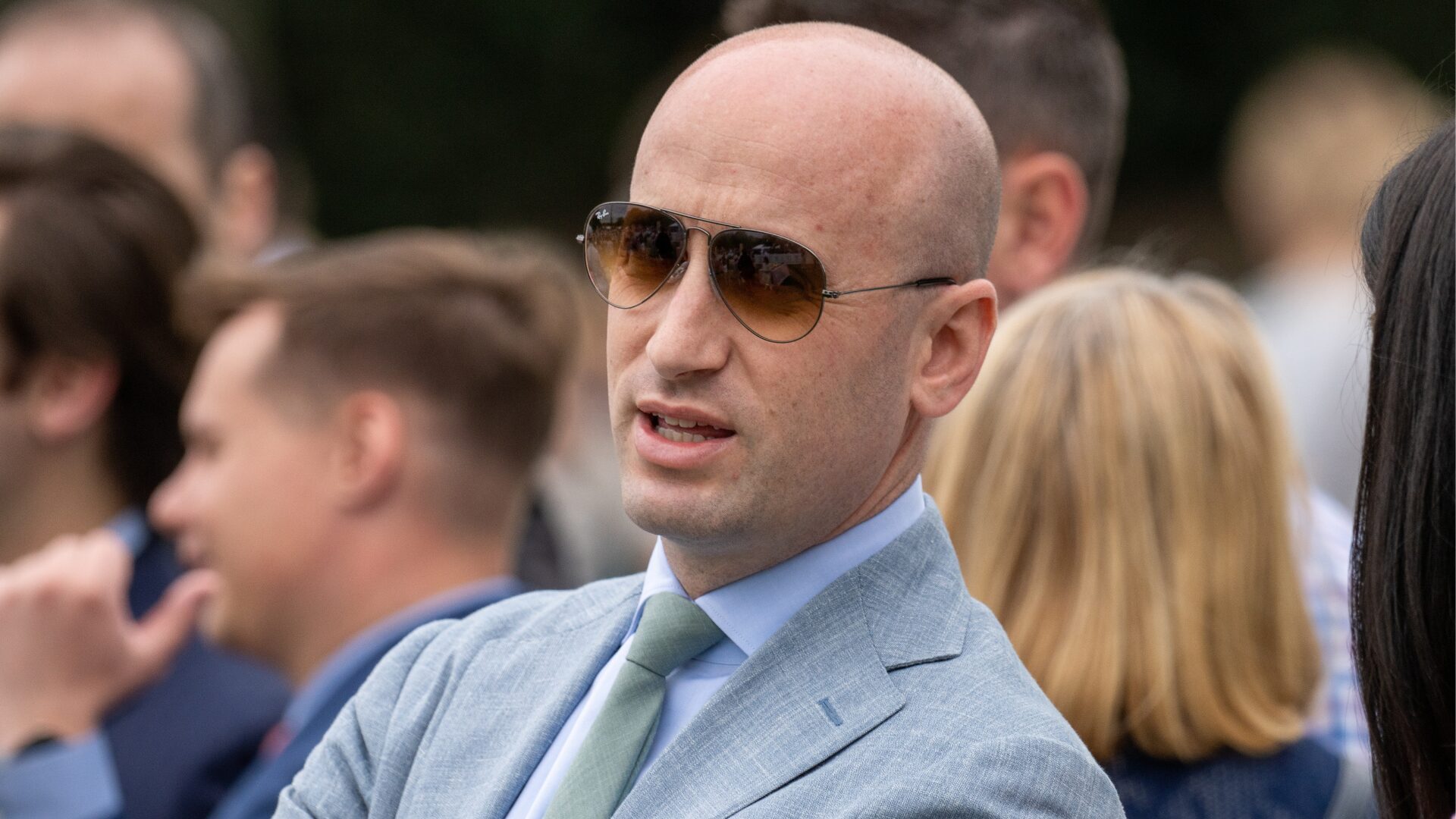
Stephen Miller Unleashed: Dems are ‘a Party of Crazies, Leftists and Open Borders NUT JOBS!’

Deputy Chief of Staff for Policy and Homeland Security Advisor Stephen Miller said President Donald Trump would emphasize that Democrats failed to secure any of their priorities during the recent government funding standoff.

Miller made the remarks during an appearance on Fox News, arguing that Democratic leaders were unable to persuade the public to support a shutdown tied to their policy goals.

“Well, I think that’s a very it’s a very safe bet, Sean,” Miller said when asked what to expect from the president.

“I also think that tonight, President Trump’s going to be very clear the Democrats got nothing. Sean, they got nothing. Chuck Schumer went to the wall and lost. Hakeem Jeffries went to the wall and lost.”

Miller said Democrats could not make the case that the government should close in order to advance their preferred programs.

“Because the end of the day, they could not convince Americans that we should shut down the government to fund their pet programs, to fund free benefits for illegal aliens, to fund health care for people who shouldn’t even be in this country,” he said.

He added that the political shift inside the Democratic Party has made it impossible for moderates to remain.

“What’s terrifying though Sean to keep hitting on this theme, is that the moderates have been driven out of the Democrat Party. Manchin is gone, cinema is gone, and everyone in that party understands that if they don’t toe the line with the leftist they will be driven out too,” Miller said.

Miller argued that the departure of lawmakers like Sen. Joe Manchin and former Sen. Kyrsten Sinema reflected a broader transformation.

According to him, the party no longer includes a centrist faction. “So we as a country, we don’t have a mainstream Democrat party. We don’t have a moderate Democrat party,” he said.

He described the remaining Democratic coalition in blunt terms.

“We have a party of crazies and lunatics and radical leftists and open borders nut jobs, that’s bad for America. It’s bad for the American people. It’s bad for the world,” Miller said.

Miller’s comments came as both chambers of Congress moved toward final passage of legislation to reopen the government.

Democratic leaders had sought to tie funding negotiations to a series of policy goals, but the final agreement did not include the measures they had sought.

News

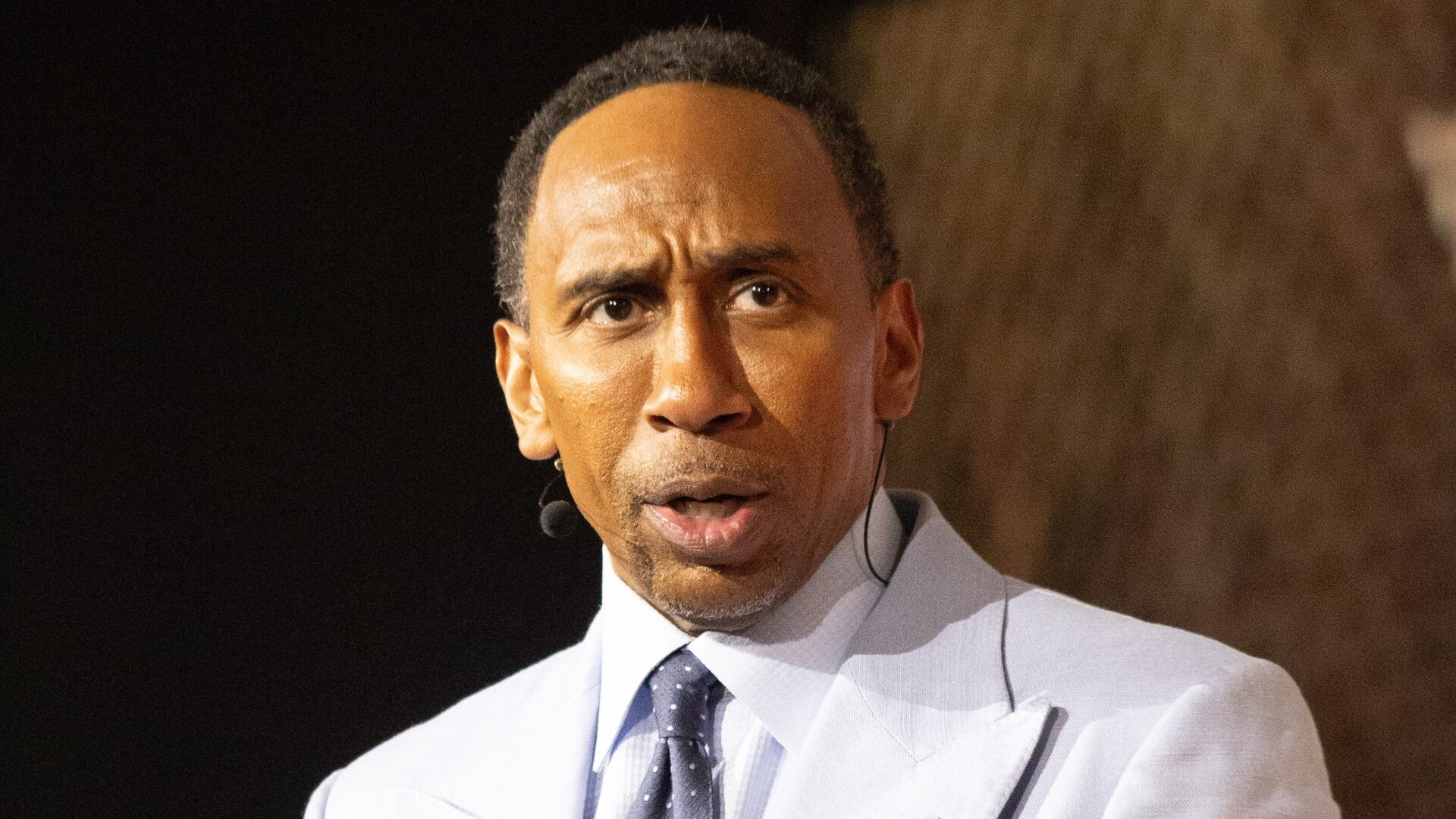
Stephen A. Smith Demands Answers From Democrats For Ignoring Epstein Documents During Biden Years

SiriusXM host Stephen A. Smith criticized Democrats on Wednesday for demanding the release of Jeffrey Epstein–related files only after President Donald Trump returned to office, despite the documents being available during former President Joe Biden’s administration. Smith made the remarks on his show, “Straight Shooter with Stephen A.”

As The Independent Journal Review reported, a discharge petition to force a House vote on releasing the files reached the necessary threshold on Wednesday after Democratic Rep. Adelita Grijalva of Arizona was sworn in and added her signature. Smith raised questions about why Democrats reversed course on the matter.

“Ladies and gentlemen, keep in mind that the Epstein files were in existence and free to have been open during the Biden administration! You were there for four years!” Smith said.

“How come you didn’t open it as a Democratic party then!? What am I missing!? I’m not saying I know, it’s a legitimate question! Maybe I don’t remember the answer. Maybe my extraordinary producers should be able to help me during the commercial break.”

Smith continued pressing the issue, noting that the same files now at the center of debate could have been released earlier.

“But from my understanding, the same files that were open or being open now, with the 220 pages of documents or whatever it is, with various emails, that could have been done when Biden was in office!” he said.

“Well, why didn’t you do it if it’s so important now!? What were the Democrats doing at that particular moment in time? See, this is the kind of stuff that smells.”

Smith suggested that if damaging information about President Trump had been contained in the files, Democrats would have made it public during the Biden administration. “That’s just my thinking from a logical perspective,” he said. “But what do I know!?”

Later in the show, Smith said producers provided him with a possible reason for the lack of transparency during Biden’s tenure. He read an explanation citing legal restrictions.

“The Epstein files and the Biden DOJ — there may be more legal nuance, but the general thing was the DOJ didn’t release the full Epstein files primarily because federal law sharply restricts disclosure of grand jury materials,” Smith said.

“Under Federal Rule of Criminal Procedure 6E, grand jury evidence is kept secret to protect witnesses, informants, victims, and the integrity of ongoing or past investigations. And the Justice Department cannot unilaterally release this material either.”

Democratic Sen. John Fetterman of Pennsylvania also questioned why the Biden administration did not disclose the files earlier.

Appearing on “Morning Joe” Thursday, Fetterman said, “[O]ne of my questions is like … we sat on those for four years, too. So, I mean, I don’t really understand, you know, either. I mean, there are a lot of questions.”

On September 2, the House Oversight Committee published thousands of subpoenaed records tied to Epstein that had been obtained during President Trump’s prior term.

News

Dem Shutdown Boomerang: USDA Reveals Staggering Amounts of SNAP Fraud

Agriculture Secretary Brooke Rollins said her agency identified fraud in the Supplemental Nutrition Assistance Program, which served nearly 42 million people in fiscal year 2024 at a federal cost exceeding $100 billion.

Her remarks come as the federal government continues reform efforts, including restrictions on purchasing junk food and soda in several states.

SNAP benefits are used to buy approved food items at more than 261,000 authorized retailers.

Benefits are issued on electronic benefits transfer cards, and monthly amounts vary according to household size and financial conditions.

While states run the day-to-day operations of SNAP, federal authorities fund a portion of the program and supervise statewide administration.

Interest in reviewing and reducing errors in SNAP has persisted for years among policymakers.

Those concerns have intensified as federal reviews identify problems in multiple areas, including benefit trafficking, false information on retailer applications, applicant errors that lead to incorrect benefit amounts, mistakes by state agencies, and scams targeting benefit recipients.

Townhall reported that the U.S. Department of Agriculture uncovered a $66 million SNAP fraud scheme this year.

The case added to ongoing investigations into misuse of federal nutrition assistance and highlighted several categories of problems.

One category involves trafficking, where retailers or recipients illegally exchange benefits for cash or other prohibited transactions.

Another involves improper retailer applications, where businesses provide false or incomplete information to gain SNAP authorization.

Additional issues arise from household applications that lead to wrong benefit levels, whether caused by mistakes or intentional misstatements.

States also contribute to incorrect benefit amounts through administrative errors or other actions that fall outside program requirements.

A further area of concern involves outside actors who target recipients through scams that result in stolen benefits.

More than 20 states declined to provide SNAP data to the federal government.

The absence of full reporting limits the ability of federal officials to examine error rates, review compliance, and measure the scale of fraud across the entire program.

Federal oversight from fiscal year 2023 showed an estimated 11.7 percent of SNAP benefits—about $10.5 billion—were improper.

Improper payments include benefit amounts that were too high, too low, or issued to households that should not have received them. The figure reflects combined errors across state agencies, retailers, and households.

Federal administrators continue to evaluate SNAP’s structure while enforcing program integrity rules and conducting investigations in cooperation with states.

The mixed responsibilities between federal and state governments complicate oversight efforts, as the federal role includes funding support and supervisory authority, while states manage application procedures, eligibility determinations, and distribution of benefits.

Rollins said an announcement related to the program is expected next week.

News

Climate Summit Turns Violent: Indigenous Protesters Breach U.N. ‘Blue Zone’

Security personnel clashed with protesters Tuesday night at the COP30 climate conference in Belém, Brazil, after dozens of indigenous demonstrators forced their way into a restricted area demanding stronger environmental protections.

The disturbance occurred at approximately 7:20 p.m. local time, shortly after a press conference presenting the day’s negotiations concluded, according to Brazilian outlet G1.

The group blocked the exit of the event’s “Blue Zone,” a secured section reserved for government ministers, diplomats, and official delegates.

Witnesses said protesters breached pavilion doors and attempted to move toward the restricted area before being stopped by security.

The confrontation prompted United Nations guards to form human chains, and in some cases, use wooden tables as barriers to prevent demonstrators from advancing further.

Footage from the scene showed one injured guard being taken away in a wheelchair, clutching his abdomen, while another—who suffered a cut above his eye—told Reuters he had been struck by “a heavy drumstick thrown from the crowd.”

Security teams later reported confiscating several long, heavy sticks from protesters at the site.

A spokesperson for the United Nations Climate Change Secretariat said both Brazilian and U.N. security forces followed established safety protocols and brought the situation under control.

“The venue is completely secure, and conference negotiations are continuing as normal,” the spokesperson told G1.

“The incident caused minor injuries to two security guards and minor damage to the venue’s structure.”

In an official statement, the U.N. clarified that the group responsible for the confrontation had not been part of the event’s official organization.

“The group that went to the Blue Zone after the march ended was not part of the official organization or coordination of the event, having participated independently,” the statement read.

The organization added that the protesters’ stated objective was “to draw attention to the impacts of climate change on public health and the urgent need for policies that protect both people and the planet.”

After the clash, Brazilian security forces cleared the pavilion and reinforced the area with military police vehicles.

G1 reported that no arrests were immediately confirmed following the incident, though authorities have not ruled out further investigation.

Valter Correia, Brazil’s Extraordinary Secretary for COP30, told G1 that event organizers had been in contact with protest groups ahead of the summit and that U.N. security protocols were designed to handle such demonstrations.

“The U.N. has all its security protocols,” Correia said. “We make peaceful coexistence agreements with the movements, and they [U.N. security] are here to ensure security.”

The protesters who breached the Blue Zone reportedly came from a larger demonstration known as the “Global Health and Climate March,” which had taken place earlier in the day.

The rally covered approximately 1.5 kilometers through the streets of Belém before ending near the COP30 venue.

Organizers of the march said the group that attempted to storm the restricted zone acted independently and was not officially affiliated with their event.

The United Nations and Brazilian authorities confirmed that all official COP30 proceedings resumed later that evening without further disruptions.

The conference, which brings together world leaders, policymakers, and environmental activists, is scheduled to continue through the week with sessions focused on deforestation, emissions reduction, and global health impacts related to climate change.

News

Scott Jennings Drops a Well-Timed ‘Sucks to Be You’ On This Dem CNN Panelist

A heated exchange unfolded during a recent CNN segment between Republican commentator Scott Jennings and Democratic strategist Madeline Summerville as the two debated the outcome of the government shutdown and its political fallout.

The shutdown began after Democrats refused to pass a continuing resolution unless it included provisions for expanded health care coverage for illegal aliens and continued funding for the Corporation for Public Broadcasting, which oversees NPR.

The Trump administration and Republican lawmakers rejected those demands, calling them unacceptable additions to a short-term funding bill.

After 42 days of negotiations, Democrats ultimately agreed to a deal that closely resembled the initial proposal from Republicans and the White House.

The agreement funds the government through January 30 and extends the Supplemental Nutrition Assistance Program (SNAP) through September 2026.

A separate vote on Affordable Care Act subsidies was scheduled for mid-October as part of the compromise.

Despite the outcome, Summerville claimed during the panel discussion that the situation “has to suck for Republicans,” prompting a sharp response from Jennings.

“I don’t know you very well, but I can assure you that Donald Trump being President versus Joe Biden in no way, shape, or form sucks for me,” Jennings said.

He added that Democrats had struggled to maintain leadership cohesion during the shutdown, saying Summerville and her party “couldn’t definitively point out who was in charge over the last four years.” Summerville acknowledged the point during the exchange.

The shutdown ended with little change from the Republicans’ original proposal.

The continuing resolution Democrats had previously rejected maintained spending at existing levels and was designed to provide several weeks for Congress to complete the remaining 12 appropriations bills.

Republicans and the Trump administration argued that Democrats’ prolonged opposition was a political maneuver that backfired.

The insistence on linking unrelated spending priorities—such as expanded health care coverage for non-citizens and funding for NPR—to must-pass legislation resulted in significant political and public pressure against Senate Minority Leader Chuck Schumer and his caucus.

The shutdown, now referred to by some lawmakers as the “Schumer shutdown,” marked one of the most contentious spending battles in recent years.

During the standoff, millions of federal employees faced delayed paychecks, and several public services were temporarily suspended.

Republicans emphasized that the delay also disrupted progress on key appropriations bills and delayed other legislative priorities.

According to budget officials, the continuing resolution now in place keeps government operations funded at levels consistent with those passed during the Biden-Harris administration, pending final appropriations discussions in early 2026.

Democrats’ handling of the issue has drawn criticism from across the aisle, including from members of their own party.

Several Senate Democrats, including Sen. John Fetterman (D-PA), publicly questioned the wisdom of using a government shutdown as leverage over health care and cultural spending issues.

Analysts say the episode reflects deeper divisions within the Democratic Party over how to approach negotiations with a Republican-led Congress and the Trump administration.


Scroll to Top