Author name: George Fitzpatrick

News

Trump EPA Slashes 12 Years Off California Sewage Disaster Cleanup Timeline

The Environmental Protection Agency (EPA) under President Donald Trump announced Thursday that it has significantly accelerated the cleanup timeline for the decades-long sewage crisis impacting Southern California’s coastline, as reported by Fox News.

The cross-border contamination from Tijuana, Mexico, has plagued San Diego communities and military training operations for years.

“The Trump Administration is doing everything in its power to urgently and permanently deliver the 100% solution to the Tijuana River Sewage Crisis that the residents of Southern California have demanded for decades,” EPA Administrator Lee Zeldin said in a statement released Thursday.

The EPA completed a 100-day review of ongoing border infrastructure projects and determined that it had shortened construction timelines by an additional nine months for two major initiatives in Mexico — the rehabilitation of Pump Station 1 and the reconstruction of the Tijuana River Gates.

According to the agency, the latest changes bring the total timeline reduction to approximately 12 years.

For decades, untreated sewage from Tijuana has flowed north into San Diego County, polluting beaches and threatening public health.

The crisis has affected tourism and local businesses while also sickening Navy SEALs stationed at the Naval Amphibious Base Coronado, who spend hours in contaminated ocean water during training.

The problem stems from outdated wastewater infrastructure in Tijuana, where population growth has overwhelmed the city’s treatment systems.

Data from the Mexican government and local universities show the city’s population has surged by about 188% between 1990 and 2025.

Zeldin has made resolving the sewage crisis one of his top priorities since becoming EPA administrator.

In April, he traveled to San Diego and Mexico to assess the situation firsthand and meet with local officials.

By July, Zeldin and Mexico’s Secretary of the Environment and Natural Resources, Alicia Bárcena Ibarra, signed a Memorandum of Understanding (MOU) to coordinate the two nations’ efforts under the existing Minute 328 agreement.

The 2022 Minute 328 agreement, facilitated by the International Boundary and Water Commission, established 17 joint sanitation infrastructure projects to address the sewage flow.

However, the Trump EPA concluded the plan “did not go far enough” and initiated a full review aimed at speeding completion and achieving what it calls a “100% solution.”

Under the revised MOU, Mexico committed millions of dollars in unused Minute 328 funds to accelerate the ongoing projects.

Both nations also agreed to a firm deadline of December 31, 2027, for completing all related construction.

“Reducing timelines for existing infrastructure projects is a sign of great progress and demonstrates how both the United States and Mexico are faithfully upholding their agreed-upon responsibilities from July’s MOU,” Zeldin said.

“Through intensive collaboration, we were able to cut through red tape, identify efficiencies, and overcome bureaucratic hurdles. While substantial construction work lies ahead, this represents a crucial step in our commitment to protect American communities from cross-border pollution.”

News

Sen. Thune Had Enough, Goes Ballistic on Dems 13 Votes to Keep Government Shutdown

Senate Majority Leader John Thune (R-SD) delivered a forceful speech Wednesday on the Senate floor, criticizing Democrats for continuing to block government funding measures as the current shutdown nears the longest in U.S. history.

The shutdown, now in its 29th day, is approaching the 35-day record set in 2019.

Thune accused Senate Democrats of refusing to pass clean temporary funding bills — known as continuing resolutions (CRs) — despite repeated opportunities to do so.

According to Thune, Republicans have brought 13 clean funding measures to the floor since the shutdown began, each one rejected by Senate Democrats.

The impasse has left multiple federal programs, including the Supplemental Nutrition Assistance Program (SNAP), without funding.

“People should be getting paid in this country. And we’ve tried to do that 13 times. And you voted no 13 times,” Thune said.

“This isn’t a political game. These are real people’s lives that we’re talking about. And you all have just figured out, 29 days in, that, oh, there might be some consequences.”

Thune added that while federal agencies have managed to operate temporarily on reserve funds, those resources are nearly depleted.

“There are people who are running out of money,” he said.

“Yeah, we’re 29 days in. And they’ve done their best to make sure that a lot of these programs are funded. But at some point, the government runs out of money. Thirteen times, people over here voted to fund SNAP. Thirteen times, they voted to fund WIC.”

The South Dakota senator criticized Democrats for holding out in pursuit of broader policy goals unrelated to government operations.

Republican leaders say Democrats have conditioned their votes on the inclusion of provisions extending Affordable Care Act (ACA) tax credits, which are set to expire under the terms of the Inflation Reduction Act passed in 2022.

The deadlock has also impacted other federal benefits programs and pay for certain federal employees, prompting growing frustration in both parties.

In the evenly divided Senate, Republicans need at least eight Democratic votes to overcome a filibuster and advance a funding bill.

So far, only three Democratic senators have joined Republicans in voting to reopen the government.

Senator Rand Paul (R-KY) has voted against the proposed CRs, citing concerns about spending levels, but Thune said the broader obstacle remains Democratic opposition.

“What Democrats are doing here,” Thune said, “they’re making plans to keep the shutdown going.”

The senator also pointed to what he described as a double standard in the Democrats’ approach to government shutdowns.

He noted that leading Democrats — including Senate Minority Leader Chuck Schumer (D-NY) — have previously condemned Republicans for using funding debates as leverage in policy negotiations.

In September 2023, when several conservative lawmakers threatened to block a CR, Schumer accused Republicans of “recklessly marching our nation to the brink of a shutdown.”

He said then, “If the government shuts down, it will be average Americans who suffer most.”

Weeks later, during a December 13 speech, Schumer argued that Congress should “pass a clean CR to keep the government open,” rejecting Republican efforts to attach policy riders.

Thune said those same arguments now apply to Democrats, who have rejected clean funding bills to push unrelated provisions.

“We have tried again and again to keep this government open,” Thune said.

“It is Democrats who are standing in the way.”

As the shutdown continues into its fifth week, congressional leaders from both parties are facing increased pressure to reach an agreement.

SNAP and other nutrition programs are expected to run out of funds within days if no action is taken.

The Senate is expected to hold another procedural vote on a funding resolution before the weekend.

The White House has not issued a formal statement on the Senate impasse.

Treasury officials have warned that extended inaction could delay payments to federal contractors and furloughed employees if no resolution is reached in the coming days.

News

Federal Appeals Court Halts Judge’s Wild Ruling Against Border Patrol Chief

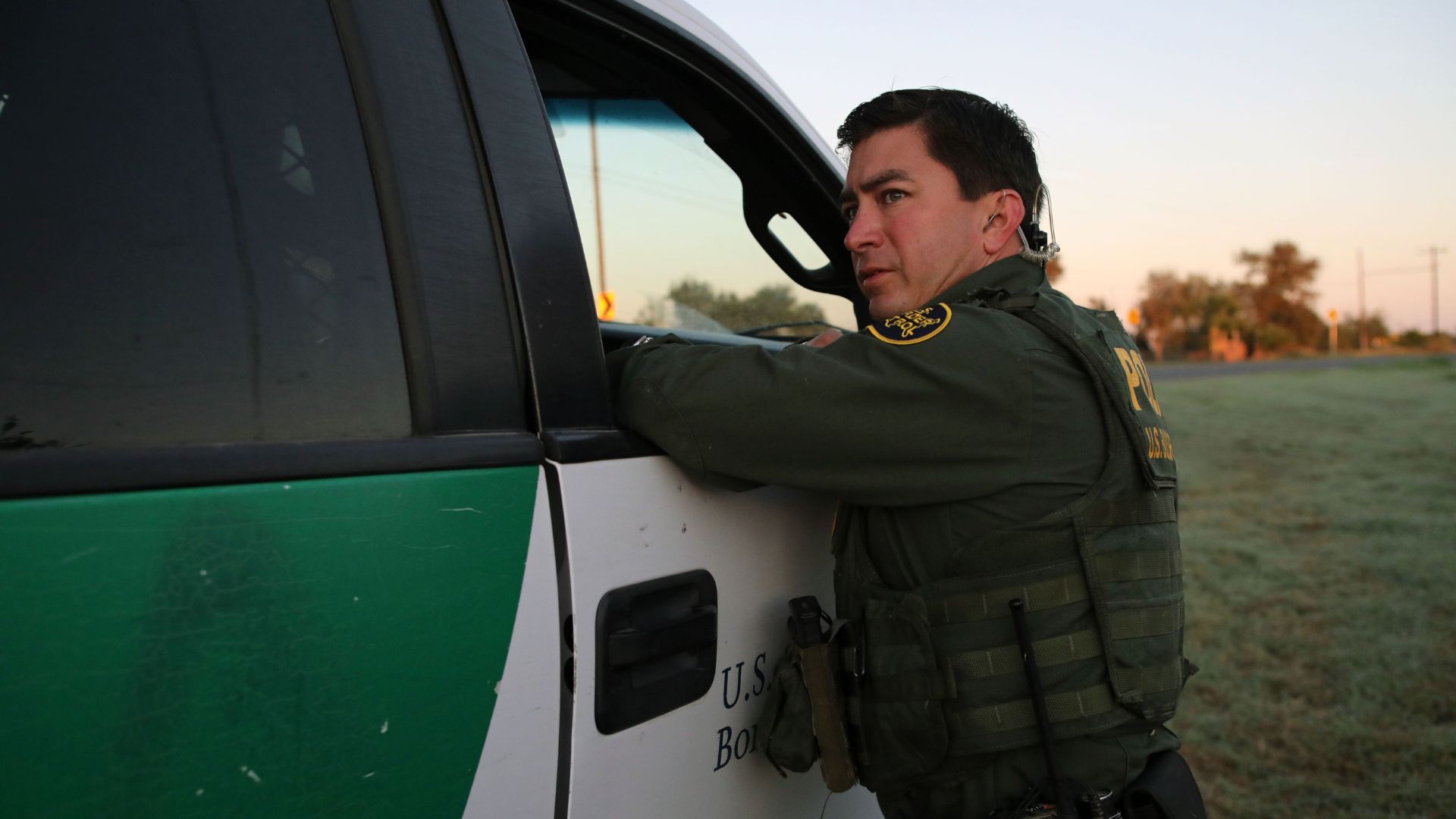
A federal appeals court has temporarily blocked an order issued by U.S. District Judge Sara Ellis that required Border Patrol Commander Gregory Bovino to meet with her in person every weekday evening to discuss enforcement activities in Chicago.

The U.S. Court of Appeals for the Seventh Circuit granted an administrative stay Wednesday following an emergency request from the Department of Justice, which argued that Judge Ellis’s order “far exceeds the recognized bounds of discovery” and interferes with the lawful duties of federal immigration enforcement officials.

The dispute stems from a case involving the Department of Homeland Security’s Operation Midway Blitz, a joint federal and local operation conducted in Chicago.

The court action followed allegations that Border Patrol and other federal agents used tear gas and crowd control measures against protesters, journalists, and clergy in violation of a temporary restraining order issued by Judge Ellis earlier this year.

During a hearing on Tuesday, Ellis expressed frustration with what she described as repeated violations of her order and directed Commander Bovino to appear before her in person each weekday to “go over the events of the day” until a preliminary injunction hearing scheduled for November 5.

Attorneys for the Department of Justice immediately sought emergency relief, calling the requirement “extraordinary” and asserting that it interfered with Bovino’s ability to perform his duties.

In filings to the Seventh Circuit, government lawyers wrote that the order “significantly interferes with Commander Bovino’s function, which is ensuring the Nation’s immigration laws are properly enforced.”

The Justice Department also argued that Ellis’s directive was “untethered to the plaintiffs’ underlying claims” and “goes beyond reasonable necessity to ensure compliance” with existing court orders.

The appeal requested an immediate stay while the department prepares a broader challenge to the ruling.

The Seventh Circuit granted the DOJ’s request, pausing enforcement of Ellis’s order until further review.

The stay temporarily relieves Bovino of the requirement to meet daily with the judge, though the case remains active.

The original temporary restraining order, issued earlier this year, limited the use of tear gas and other riot control measures during immigration-related enforcement actions involving public gatherings or demonstrations.

The plaintiffs—comprised of activist and media groups—accused federal agents of violating that order during recent enforcement operations in Chicago, prompting Judge Ellis to expand court oversight.

Court filings indicate that Ellis’s order requiring daily meetings was intended to ensure transparency and accountability in ongoing enforcement actions.

However, federal attorneys contended that the directive created an operational burden on DHS leadership and effectively placed day-to-day immigration enforcement under direct judicial supervision.

The appeals court’s administrative stay will remain in place while a three-judge panel considers the Justice Department’s full motion to vacate the order.

Legal experts say the panel could determine whether the lower court exceeded its authority in imposing direct oversight on a federal law enforcement official.

The preliminary injunction hearing remains scheduled for November 5 in the U.S. District Court for the Northern District of Illinois.

The Seventh Circuit has not yet indicated when it will issue a final ruling on the stay request.

Neither the Department of Justice nor representatives for Judge Ellis commented publicly on the appeals court’s decision.

The Department of Homeland Security has not provided additional details regarding the ongoing enforcement operation or the scope of the court’s restrictions.

The case highlights the ongoing tension between federal immigration enforcement agencies and judicial oversight of crowd control and protest-related actions, particularly in major urban areas where DHS operations intersect with local law enforcement and activist groups.

News

Kentucky Sheriff’s Daughter Pushes Back Against Online Rumors After Judge’s Killing

The daughter of a former Kentucky sheriff accused of fatally shooting a district judge last year has publicly denounced online speculation about her father’s case, calling it “gossip” and “cruel.”

As The New York Post reported, Eighteen-year-old Lila Stines posted a TikTok video last week defending her father, Shawn “Mickey” Stines, 44, who has been charged in the September 2024 shooting death of District Judge Kevin Mullins, 54.

The killing occurred inside Mullins’ chambers in Letcher County, Kentucky, and was captured on surveillance video.

“Do you have nothing better to do than to sit and gossip?” Lila said in her video. “You are taking my pain and making it your pleasure.”

Authorities said the video evidence shows Stines entering the judge’s chambers, exchanging cellphones with Mullins, and looking at something on the screens before opening fire. The two men had reportedly been longtime friends and had lunch together hours before the shooting.

After the shooting, Stines walked out of the courthouse and immediately surrendered to police, telling officers, “They’re trying to kidnap my wife and kid.” He has pleaded not guilty and is pursuing an insanity defense.

In the year since the killing, rumors about possible motives have circulated online, including claims of personal or professional disputes between the two men.

Shawn “Mickey” Stines had a preliminary hearing at Morgan County District Court. Oct. 1, 2024

Some social media users have alleged infidelity involving Mullins and members of Stines’ family — speculation that Lila addressed directly in her video.

“You’re taking our stories and turning them into entertainment pieces, jokes, and for that matter, you’re making it your income,” she said. “Since when did that become OK?”

Lila’s video has since gained more than 40,000 likes and sparked widespread debate. In a follow-up post Monday, she said she was “shocked” at the reaction and criticized commenters who mocked her appearance. She also vowed not to stay silent about the case any longer.

“I just want to say that a lot of things that are in the dark, they are coming to light,” she said. “I looked up the definition of insanity and it’s basically doing the same thing over and over and over again, expecting change. The silence is over.”

Meanwhile, new allegations have emerged from others familiar with the case. Letcher County resident Tya Adams told NewsNation’s “Banfield” program that Mullins allegedly used his position to exploit women, describing him as someone who “ran his courthouse like a brothel.”

Adams claimed she and others were coerced into sex acts in exchange for leniency. “It was consensual,” she said, “but it was the thing that we were so young, and then they used it against us and to destroy our lives later.”

Sarah Davis, a former deputy jailer, told the outlet she had also heard about “nasty and sickening” stories related to Mullins’ conduct.

Stines remains in custody awaiting trial. Prosecutors have not commented on whether any of the allegations surrounding Mullins are being investigated in connection with the case.

News

Obama Reportedly Confronted Pelosi Over Early Kamala Endorsement After Biden’s Exit: ‘What the F*ck Did You Just Do?’

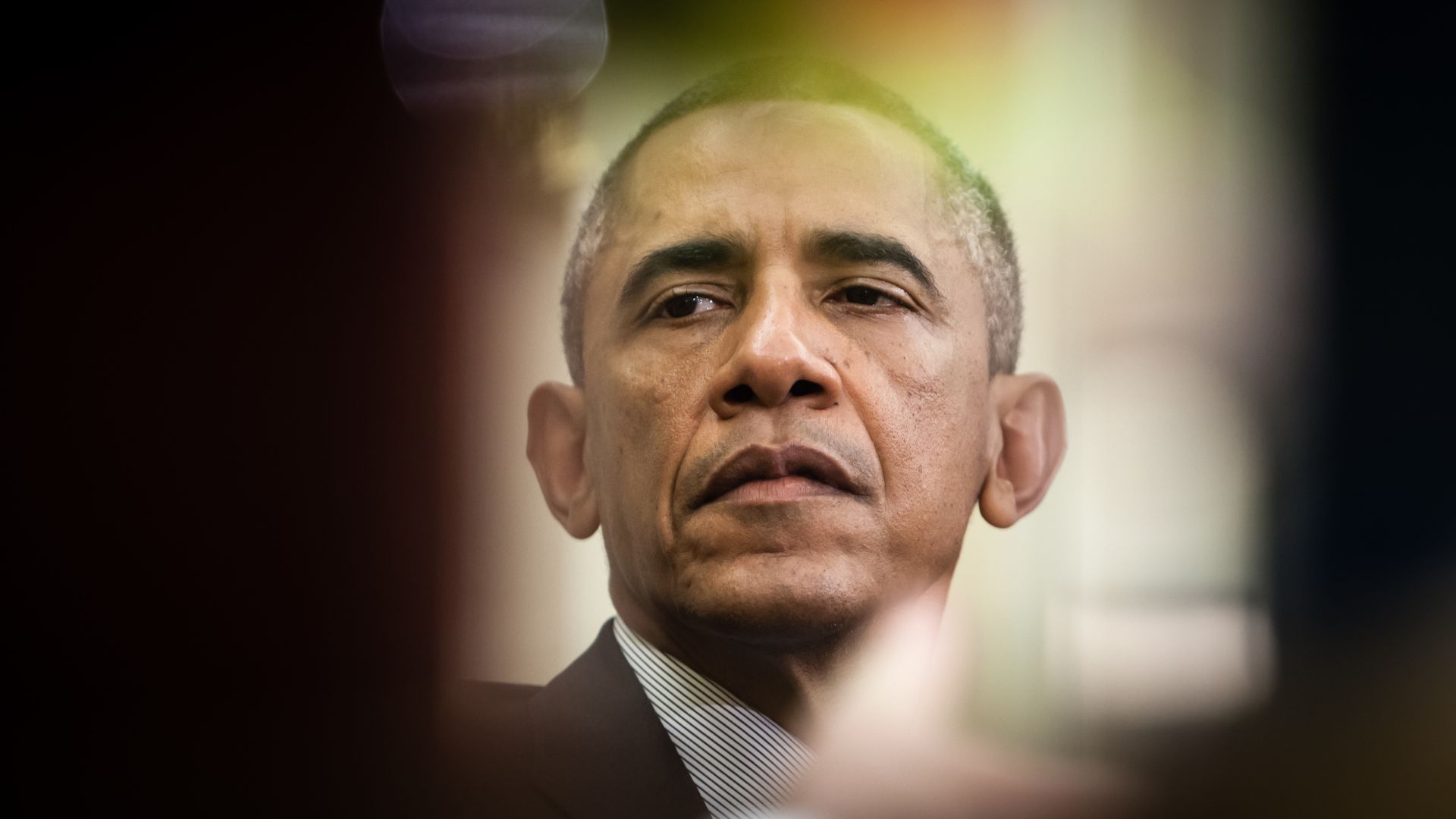
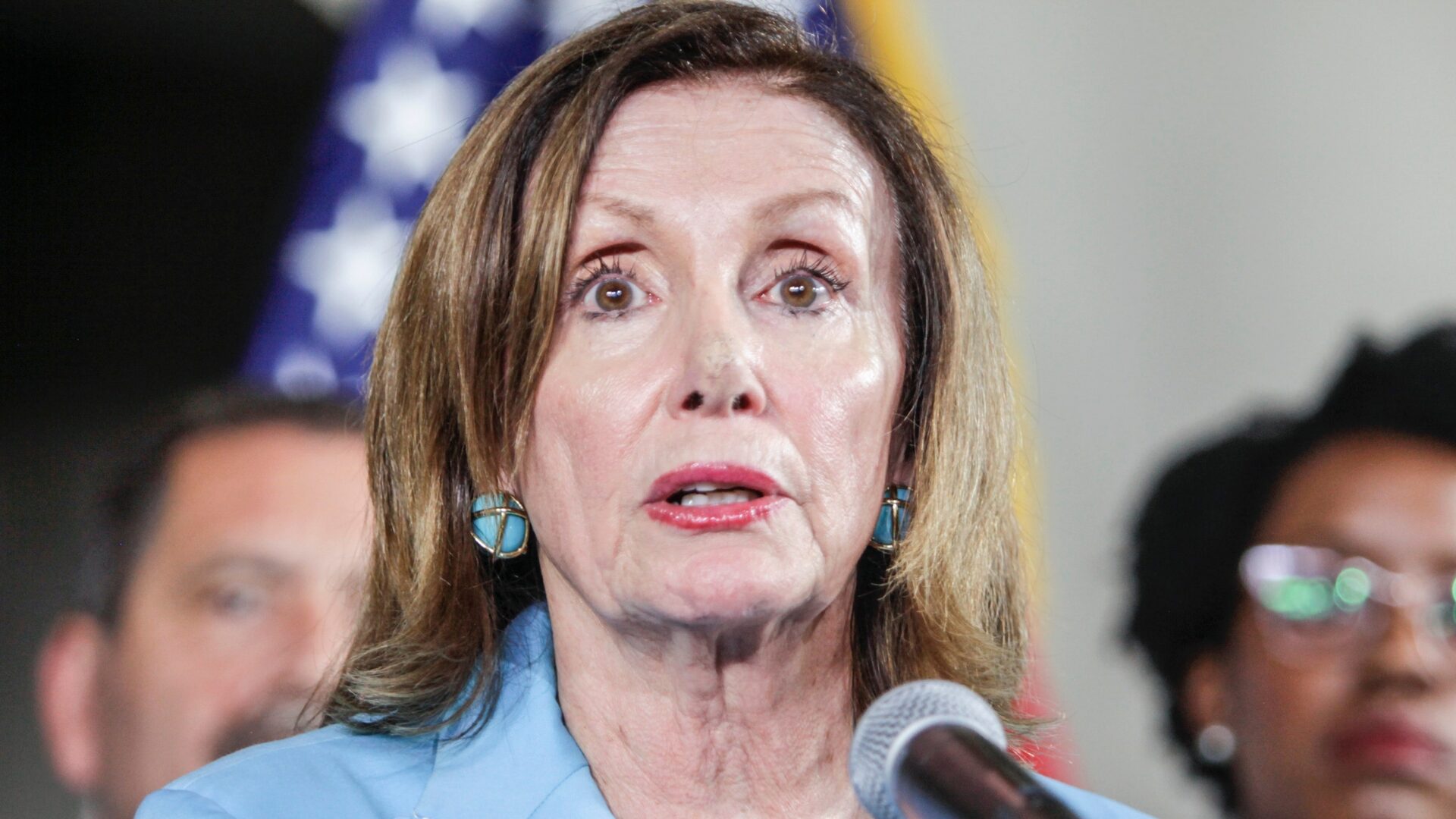
Former President Barack Obama expressed frustration with former House Speaker Nancy Pelosi following her swift endorsement of then–Vice President Kamala Harris for the Democratic nomination after President Joe Biden’s withdrawal from the 2024 race, according to a new book.

The account, detailed in Retribution by ABC News Chief Washington Correspondent Jonathan Karl, describes Obama as being caught off guard by Pelosi’s immediate public backing of Harris, just hours after Biden announced the end of his re-election campaign.

Pelosi released a statement less than 24 hours after Biden’s July 21, 2024, announcement, calling Harris “brilliantly astute” and saying she had “full confidence” that the former California senator could defeat President Trump in November.

Karl wrote that Obama, who had privately preferred that the Democratic nomination be decided through an open convention process rather than a swift endorsement, called Pelosi soon after her statement. According to a Pelosi confidant cited in the book, “The Obamas were not happy.

” The source summarized Obama’s reaction as:

“What the f*ck did you just do?”

Both Obama and Pelosi had reportedly agreed in the days leading up to Biden’s withdrawal that party leaders should avoid anointing Harris as the nominee without a formal process.

Karl noted that the two were “in regular communication” before Biden’s decision and had privately concluded that Harris should not receive the nomination unchallenged.

“That train has left the station,” Pelosi reportedly told Obama during their call, referring to Biden’s immediate endorsement of his vice president.

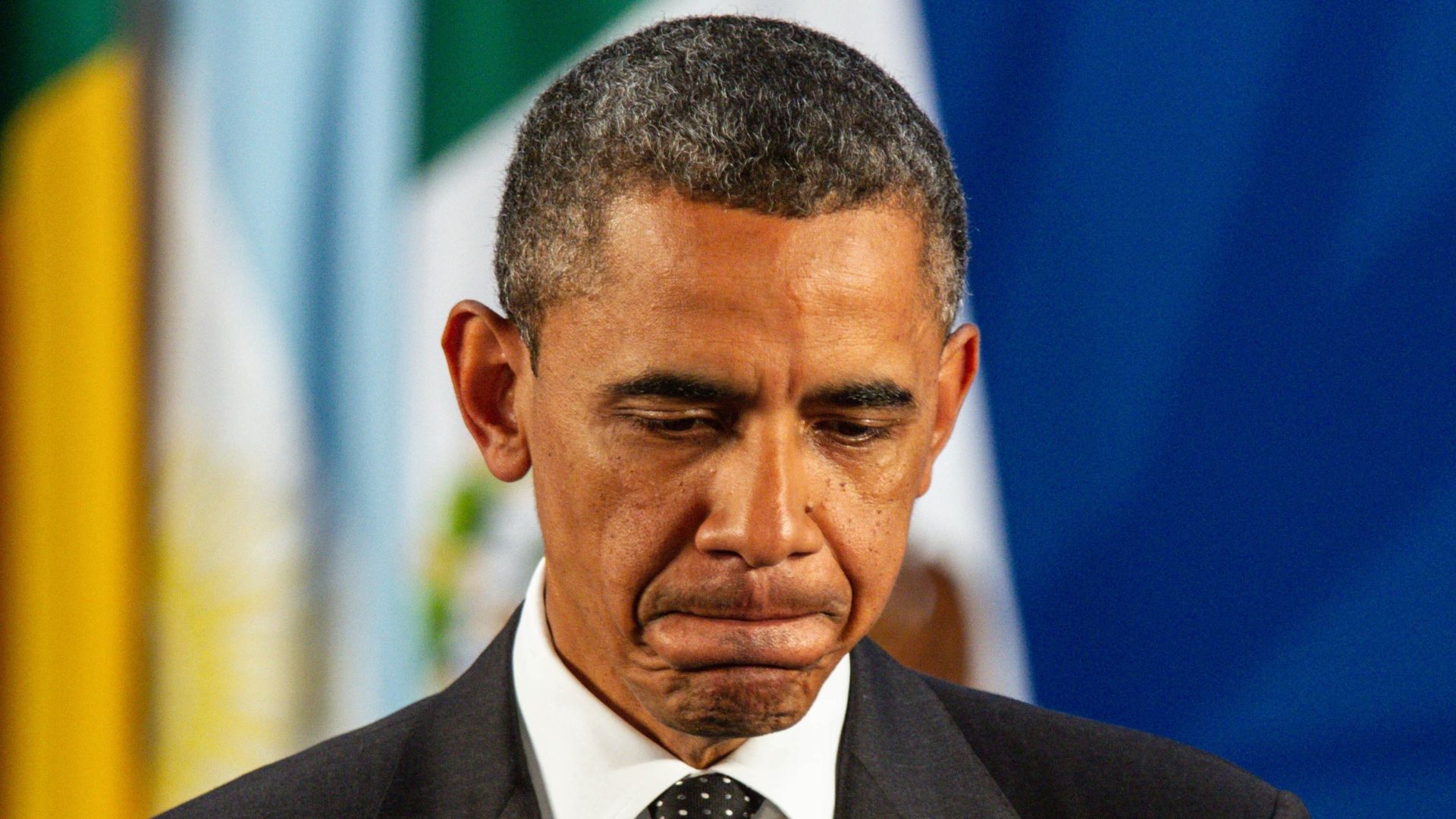
Los Cabos Baja California Sur, Mexico June 20 2013. United States President Barack Obama during a press conference at the G20 meeting in Los Cabos in 2013.

According to the book, Obama had significant concerns about Harris’ electability and readiness for a national campaign. Those reservations, Karl wrote, were shared among other senior Democrats, including members of the Obama network who privately questioned whether Harris could defeat Trump.

A source close to Obama told Karl that the conversation with Pelosi was “good-natured ribbing,” suggesting it was not confrontational. However, a Pelosi ally told Karl the former president “sounded genuinely irritated” during the exchange.

Obama delayed his own endorsement of Harris for five days after Biden’s exit, a decision that reportedly reflected his doubts about her ability to unify the party and win over swing voters.

Karl wrote that at least one senior Biden adviser believed Obama’s hesitation was deliberate. “There’s only one Black Jesus,” the adviser said, suggesting Obama viewed himself, not Harris, as the singular political figure capable of uniting Democrats in moments of crisis.

Even Pelosi’s husband, Paul Pelosi, was taken aback by her decision. “Kamala?” he asked, according to Karl’s account. “Don’t start with me,” the former speaker replied.

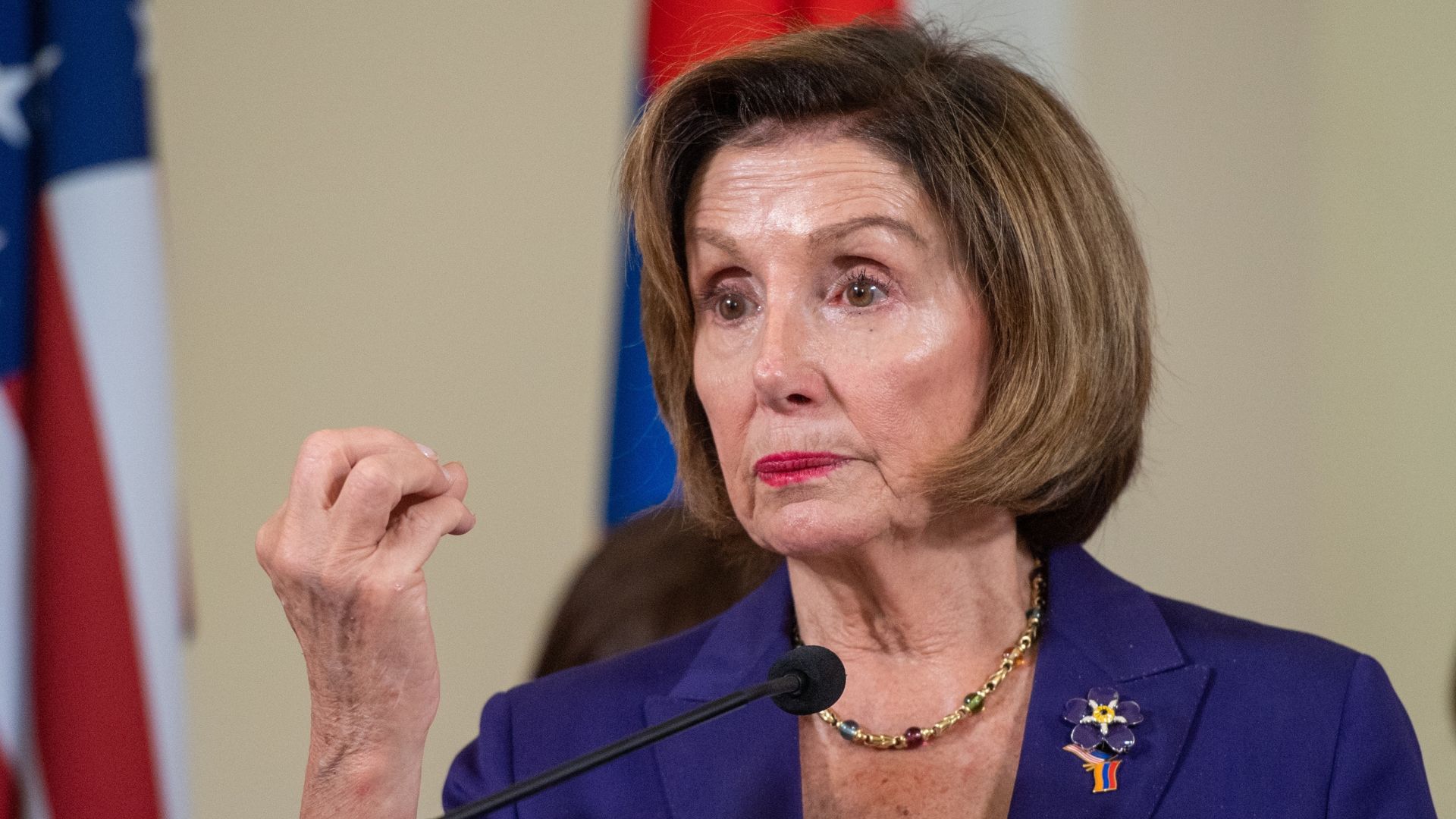
ARMENIA, YEREVAN: 18 September 2022 U.S. House Speaker Nancy Pelosi talks to the media during a briefing following her meeting with Armenian National Assembly Speaker Alen Simonyan.

Despite the tensions, Pelosi’s endorsement became a turning point for Harris’s campaign.

Within days, several top Democrats, including former President Bill Clinton, former Secretary of State Hillary Clinton, Pennsylvania Governor Josh Shapiro, and California Governor Gavin Newsom, followed suit in offering their support.

Karl wrote that with no other viable candidates stepping forward, Pelosi “had no choice” but to rally behind Harris to ensure party unity ahead of the Democratic National Convention.

“No other candidates had stepped forward — Kamala Harris was it. The only thing Pelosi could do was try to help her win the election,” he wrote.

The revelation adds new detail to the internal divisions that surfaced inside the Democratic Party after Biden’s withdrawal, highlighting the uncertainty and strategic disagreements among the party’s most powerful figures during the transition to Harris’s campaign.

News

Forty-One Million Americans Could Lose Food Benefits as Democrats Block Shutdown Deal

Roughly 41 million Americans who rely on federal food assistance could see their benefits halted beginning November 1 as the government shutdown enters its second month without a resolution.

According to a notice posted on the U.S. Department of Agriculture (USDA) website, there will be “no benefits issued Nov. 1” under the Supplemental Nutrition Assistance Program (SNAP) if Congress fails to approve funding.

The program, which provides food assistance to low-income families and individuals, is funded primarily by the federal government but administered through state agencies.

The announcement follows repeated failed efforts by lawmakers in the U.S. Senate to end the funding impasse.

Senators have held 12 votes since October 1 on various measures to reopen the government, all of which have failed to secure enough support for passage.

The ongoing shutdown has become the second-longest since 1981 and has begun to affect a growing number of federal services, including programs that millions depend on for daily necessities.

SNAP benefits are typically distributed to recipients through electronic benefit transfer (EBT) cards, with funds allocated by the federal government and transferred through state systems.

Each state manages its own issuance schedule, with some distributing benefits based on alphabetical order of last names, while others use case numbers or staggered release dates.

The potential disruption to SNAP would mark one of the most significant impacts yet from the federal stalemate.

President Lyndon B. Johnson established the first permanent food stamp program in 1964 as part of his Great Society initiative.

The program’s origins, however, date back to 1939, when the first temporary food stamp system was launched during the Great Depression to support struggling families.

As the standoff continues, political divisions have deepened over the cause of the shutdown and the scope of federal spending.

Democratic lawmakers have blamed Republicans for what they describe as unnecessary gridlock, while Republicans argue that the dispute centers on fiscal responsibility and government priorities.

President Donald Trump has said he will not support a spending package that includes $1.5 trillion in funding that he said would “give illegal aliens health care.”

The president reiterated his position during remarks to reporters this week, emphasizing that federal resources must be directed toward citizens and lawful residents rather than noncitizens.

Meanwhile, other federal workers are also feeling the impact of the shutdown.

Transportation Secretary Sean Duffy confirmed that thousands of air traffic controllers across the country are continuing to work without pay to maintain operations at airports and ensure flight safety.

Lawmakers in both chambers remain deadlocked over a compromise to restore government funding.

Representative Tim Burchett, R-Tenn., told Fox News that the path to reopening the government likely depends on a handful of Senate Democrats crossing party lines.

“We need four or five more Senate Democrats to cross over to reopen the federal government,” Burchett said.

The funding lapse has already delayed pay for hundreds of thousands of federal employees and disrupted services across multiple agencies.

Without an agreement before the start of November, SNAP beneficiaries could experience a lapse in benefits, heightening concerns among state agencies responsible for distributing aid.

The USDA has advised states to prepare for possible delays and to communicate updates directly to SNAP participants as the situation evolves.

Unless Congress passes a new funding measure in the coming days, November 1 will mark the first day that tens of millions of Americans could lose access to the nation’s largest food assistance program.

News

Shock Poll: GOP Candidate Leads California Gov Race as Dem Party Throws Itself Off a Cliff

Republican policy analyst and commentator Steve Hilton is leading the latest poll in California’s 2026 gubernatorial race, a development that suggests widespread voter dissatisfaction with the state’s Democratic leadership.

The Emerson College poll shows Hilton narrowly ahead of all major Democratic contenders, including former Representative Katie Porter.

His lead falls within the survey’s 3% margin of error, but the result marks a rare moment in which a Republican candidate tops a statewide poll in California.

Hilton, known for his work as a conservative commentator and his criticism of the state’s high taxes, cost of living, and public safety issues, has emerged as the early front-runner in a crowded field.

The poll comes amid deep divisions within California’s Democratic Party and declining enthusiasm among voters after years of one-party rule.

The survey found that 57% of California voters support Democratic Governor Gavin Newsom’s proposal to alter congressional district maps, a move critics say would dismantle the state’s constitutionally mandated independent redistricting commission.

The governor’s plan would give the state legislature more power over how congressional lines are drawn — a change opponents argue could entrench Democratic control for decades.

While the poll reflects the state’s continued liberal tilt on many policy issues, it also reveals growing frustration with Democratic leadership.

Newsom’s approval rating stands at 48%, his highest mark in the past year, yet still below 50% amid concerns about homelessness, crime, and the state’s declining population.

Hilton’s lead comes as Democratic support fractures among several lesser-known candidates.

Porter, who represented Orange County in Congress until early 2025, is the only Democrat polling in double digits.

Her campaign, however, has struggled to recover from a recent controversy involving a heated exchange with a CBS interviewer, which drew widespread backlash.

Other Democrats included in the Emerson poll failed to gain significant traction.

Political analysts note that the weak early showing from the Democratic field could prompt additional candidates to enter the race.

Among those mentioned as potential contenders is Senator Alex Padilla (D-Calif.), who has maintained a low national profile since being appointed to fill Kamala Harris’s former Senate seat in 2021.

Padilla’s potential candidacy is seen by some party strategists as an effort to consolidate Democratic voters behind a single, higher-profile figure capable of challenging Hilton’s momentum.

The poll’s findings also indicate that overall Democratic support still outweighs Republican support when all candidates are grouped by party affiliation, reflecting the state’s longstanding political demographics.

However, Hilton’s early lead highlights shifting attitudes among independents and moderate Democrats, particularly in regions outside the coastal metropolitan areas.

Emerson College surveyed a cross-section of registered voters across the state, with results showing that economic concerns remain a dominant factor in voter priorities.

Respondents cited housing affordability, taxes, and public safety as the most important issues ahead of the 2026 election.

Hilton, originally from the United Kingdom, previously served as an adviser to former British Prime Minister David Cameron before moving to the United States, where he became an American citizen.

He has since worked as a political analyst and commentator, focusing on state-level policy reforms and government accountability.

If Hilton maintains his position in the months ahead, it would mark one of the strongest showings by a Republican gubernatorial candidate in California in more than a decade.

The last Republican to serve as governor was Arnold Schwarzenegger, who left office in 2011.

The California governor’s race is scheduled for November 2026.

News

Trump Pulls Off ‘Impossible’ Peace Deal in Southeast Asia Without Firing a Shot

Cambodia and Thailand signed an expanded ceasefire agreement on Sunday, concluding a long-running border conflict that President Donald Trump helped broker earlier this year.

The agreement, signed at the annual Association of Southeast Asian Nations (ASEAN) summit in Kuala Lumpur, Malaysia, marked the end of fighting that had left dozens of people dead and displaced hundreds of thousands.

President Trump, who played a direct role in bringing both sides to the table, used tariff threats to push the two nations toward peace.

Trump witnessed Cambodian Prime Minister Hun Manet and Thai Prime Minister Anutin Charnvirakul sign the deal, which calls for Thailand to release 18 Cambodian soldiers held in detention and for both countries to begin withdrawing heavy weaponry from contested border areas.

“We did something that a lot of people said couldn’t be done,” Trump said during the signing ceremony.

Hun Manet described the day as “historic,” while Anutin said the agreement created “the building blocks for a lasting peace.”

The ceremony was Trump’s first public event after arriving in Kuala Lumpur as part of his multi-nation Asia trip, which includes additional stops in Japan and South Korea.

Upon landing, Trump participated in a local welcoming ceremony, where he was seen waving both American and Malaysian flags and performing his signature dance often featured during campaign rallies.

Malaysian Prime Minister Anwar Ibrahim praised the peace accord during his opening remarks at the ASEAN summit, calling it a model for reconciliation through strength.

“It reminds us that reconciliation is not concession, but an act of courage,” Anwar said.

Following the signing, President Trump finalized separate economic agreements with both Cambodia and Thailand to strengthen trade and investment partnerships.

The economic deals, negotiated alongside the peace framework, aim to deepen U.S. engagement in Southeast Asia and stabilize the region’s markets following years of border tension.

In addition, the United States and Malaysia signed new agreements focused on trade and critical mineral supply chains.

The pacts are part of the administration’s broader effort to diversify sourcing and reduce American dependence on Chinese exports, particularly in the production of semiconductors and advanced manufacturing components.

In a joint statement, the U.S. and Malaysia announced an agreement “to strengthen our bilateral economic relationship, which will provide both countries’ exporters unprecedented access to each other’s markets.”

“The Agreement will build upon our longstanding economic relationship, including the United States-Malaysia Trade Investment Framework Agreement signed in 2004,” the statement continued.

The expanded ceasefire between Cambodia and Thailand is expected to be monitored by an international observer team under ASEAN supervision.

Both governments have pledged to begin implementing demilitarization procedures immediately, with troop withdrawals set to start within two weeks.

Trump’s diplomatic involvement, which began earlier in the summer, included direct negotiations with both leaders and multiple rounds of virtual talks.

Administration officials have said the deal reflects the President’s strategy of combining economic pressure with diplomatic engagement to resolve regional conflicts without U.S. troop involvement.

The signing in Kuala Lumpur marks the most significant peace breakthrough between the two Southeast Asian neighbors in more than a decade and reinforces the administration’s stated goal of promoting regional stability through trade partnerships and security cooperation.

News

Trump Terminates Trade Talks with Canada Over “FAKE” Reagan Ad

President Donald Trump announced Thursday night that he was terminating all trade negotiations with Canada after criticizing an anti-tariff advertisement produced by Ontario that used archival audio of Ronald Reagan and calling the ad “FAKE.”

“The Ronald Reagan Foundation has just announced that Canada has fraudulently used an advertisement, which is FAKE, featuring Ronald Reagan speaking negatively about Tariffs,” the president wrote on Truth Social.

“They only did this to interfere with the decision of the U.S. Supreme Court, and other courts. TARIFFS ARE VERY IMPORTANT TO THE NATIONAL SECURITY, AND ECONOMY, OF THE U.S.A. Based on their egregious behavior, ALL TRADE NEGOTIATIONS WITH CANADA ARE HEREBY TERMINATED.”

The 60-second spot was part of a $53.5 million campaign launched by Ontario Premier Doug Ford aimed at informing American voters about the effects tariffs can have on everyday life.

Ford said at the time of the campaign’s launch, “Let’s take Ronald Reagan’s words and let’s blast it to the American people. We’re going to repeat that message to every Republican district there is right across the entire country.”

The ad pulls from a 1987 radio address in which Reagan explained why he was placing tariffs on Japanese electronics.

In the advertisement, Reagan warns that while tariffs may appear to protect American jobs in the short term, “over the long run, such trade barriers hurt every American, worker and consumer.”

The ad continues with Reagan’s explanation of retaliation and trade wars:

“High tariffs inevitably lead to retaliation by foreign countries and the triggering of fierce trade wars. Then the worst happens. Markets shrink and collapse, businesses and industries shut down, and millions of people lose their jobs.”

Ford described the creative as “not nasty” and “very factual,” calling Reagan “the best president [America] has ever seen, in my opinion,” and said the ad would run on major television networks across the United States.

The Ronald Reagan Presidential Foundation & Institute issued a rebuttal Thursday, saying the ad “misrepresents the Presidential Radio Address, and the Government of Ontario did not seek nor receive permission to use and edit the remarks.”

The institute added that it was “reviewing its legal options in this matter” and linked to the full text of Reagan’s original address.

Trump tied the ad to broader legal and trade disputes in his Truth Social post and framed tariffs as critical to national security and the U.S. economy.

The president has imposed tariffs on a number of Canadian products in recent months, including lumber, aluminum, steel and automobiles, and announced a 25 percent tariff on heavy trucks effective Nov. 1.

Despite the measures, the U.S.-Mexico-Canada Agreement (USMCA) continues to govern much of the trade relationship between the two countries.

The ad and Trump’s response come amid sensitive diplomatic exchanges between Washington and Ottawa. The Canadian leader referenced in several reports is described as having sought to improve ties with the White House.

According to the provided account, the Canadian official framed his visit as an effort to restore bilateral relations and discuss shared economic and security priorities.

The text also recounts an exchange in the Oval Office in which the Canadian official reportedly said, “You are a transformative president,” and Trump quipped about a hypothetical “merger of Canada and the United States.”

The report asserts that the United States imported $412 billion worth of goods from Canada in 2024, and that Canada’s GDP fell 1.5 percent in the second quarter, adding to pressure on Ottawa to secure favorable terms.

It also quotes critics at home urging Canada to extract substantive concessions, with one political scientist saying, “Mark Carney has no choice, he must return from Washington with progress.”

The Ontario campaign’s use of Reagan audio and the Reagan Foundation’s objection appear to have escalated already tense trade discussions. The institute said Ontario did not seek permission to edit the remarks, and the foundation linked audiences to the full address as it considers legal action.

Ford initially threatened retaliatory tariffs in response to earlier U.S. measures, though he ultimately stepped back from those threats.

The advertisement, Ford said, was intended to present a cautionary message to American voters about tariffs’ long-term consequences and to use Reagan’s own words to illustrate that point.

U.S. Trade Representative Jamieson Greer was quoted as saying that Canada’s current leadership was “much more centrist, much more interested in exploiting their energy resources” than the previous government, and that Washington was developing a “great relationship” with Canada dependent on cooperation over mutual interests, even as tariff disputes continue.

The White House has argued that tariffs protect domestic industries and that the United States subsidizes Canadian economic and security benefits in ways that justify tougher trade stances.

Trump reiterated those themes in his Truth Social post, asserting that the U.S. protects Canada and criticizing Ottawa’s economic policies.

The termination of trade negotiations marks a sharp diplomatic turn, with both economic and political ramifications.

The Ontario ad that prompted the response framed tariffs as harmful to American workers and consumers over time; the Reagan Foundation’s assertion that the ad misused archival remarks sparked Trump’s declaration to halt trade talks.

The legal and diplomatic fallout from this episode is ongoing.

News

Latest US Strike on Drug-Running Boat Kills 6, Hegseth Says

In a decisive display of American strength and commitment to homeland security, the U.S. military has launched its tenth strike on a suspected drug-running vessel in the Caribbean.

Secretary of Defense Pete Hegseth, a leader who has never shied away from tough calls, confirmed the operation, which resulted in the deaths of six alleged cartel operatives.

Hegseth did not mince words in attributing the activity to the Tren de Aragua gang, a notorious criminal group that first emerged within Venezuela’s troubled prison system.

This latest action highlights the Trump administration’s firm stance against international drug traffickers, sending a clear signal to criminal organizations that the United States will not tolerate the smuggling of deadly narcotics into its hemisphere.

In a social media post, Secretary Hegseth shared a dramatic 20-second black-and-white video of the strike, which shows a small boat sitting motionless on open water.

https://x.com/SecWar/status/1981706596972372446

Suddenly, a long, thin projectile arcs down from the night sky, igniting the vessel in a bright explosion. The video, as powerful as it is brief, underscores the military’s newfound speed and precision.

Notably, Hegseth celebrated that this was the first such strike conducted at night, demonstrating the military’s growing operational confidence.

“If you are a narco-terrorist smuggling drugs in our hemisphere, we will treat you like we treat Al-Qaeda,” he warned. “Day or NIGHT, we will map your networks, track your people, hunt you down, and kill you.”

This unapologetic approach serves as a direct warning to those who profit from America’s pain, making clear that time and darkness will not provide any cover from justice.

Because these strikes are no longer an occasional event, but rather part of a sustained campaign, they show a notable escalation.

What began in September with sporadic actions has accelerated to three strikes in just one week, including operations in the eastern Pacific Ocean—an area through which massive amounts of cocaine flow from the world’s largest producers.

Therefore, the scope and frequency of these missions reveal a comprehensive plan to choke off the trafficking routes at their source.

At the same time, the U.S. military’s presence in the Caribbean has grown visibly. Only hours before the latest strike, two supersonic heavy bombers were flown up to Venezuela’s coastline.

This demonstration of American air power, while raising eyebrows among international observers, shows that the United States is willing to use every tool at its disposal to secure its interests and protect its people.

Such actions have led some to speculate that President Trump could move to oust Venezuelan President Nicolás Maduro, who is currently facing narcoterrorism charges in the United States. While this remains speculation, the message is clear: the United States will not stand by idly while criminal regimes export chaos and drugs.

Predictably, these bold actions have drawn criticism from Venezuela’s leaders. Defense Minister Vladimir Padrino insisted that the U.S. government’s true aim is “force a regime change” and not to stop drug trafficking.

However, such claims ring hollow given Venezuela’s own history with narcotics gangs and its reluctance to cooperate with international law enforcement.

Secretary Hegseth has not shied away from making comparisons between today’s anti-cartel campaign and the war on terror launched after September 11.

For many Americans, this is a welcome recognition of the threat posed by modern drug cartels, which operate with the resources and brutality of terrorist organizations.

The Trump administration has backed up this rhetoric with action, declaring drug cartels to be unlawful combatants and officially recognizing an “armed conflict” with these groups.

When reporters questioned President Trump about whether he would seek a formal declaration of war against the cartels, his answer was characteristically direct.

“I think we’re just going to kill people that are bringing drugs into our country, OK? We’re going to kill them, you know? They’re going to be like, dead,” Trump stated during a roundtable at the White House.

His remarks cut through political doublespeak and made the administration’s position clear.

Of course, not everyone in Washington agrees. Some lawmakers from both parties have expressed concerns about the scope and legality of these military actions. Democrats, in particular, have called the strikes a violation of international law.

Senator Richard Blumenthal went so far as to call them “lawless” and “reckless,” especially as the geographic area of operations expands.

Despite these objections, the Republican-led Senate has rejected efforts to require the president to seek further congressional authorization for such strikes, confirming that national security remains a top priority.

These recent events mark a new era in the U.S. fight against drug traffickers.

The administration’s willingness to act swiftly and decisively—guided by leaders like President Trump and Secretary Hegseth—signals to America’s adversaries that there will be no safe haven for those who bring death and destruction to our shores.

Americans can take heart knowing that the full might of the U.S. military stands ready to defend their safety, both at home and abroad.


Scroll to Top