Author name: Don Palladino

News

California’s ‘Toilet to Tap’ Water: Industrial Grift at Scale Exposed by Citizen Journalist

Adam Huntington criticized the progress, cost overruns, and management of San Diego’s Pure Water Project in two video statements, raising concerns about transparency, accountability, and whether the long-delayed project will meet its stated goals.

The project, which is intended to come online by 2026 and produce 30 million gallons of water, is now roughly $300 million over budget and years behind schedule, according to Huntington.

“You guys thought the Somalian grift was bad. This is a this is our pure water project in San Diego. It’s a multi billion dollar project, and this site has been under construction for almost a decade now,” Huntington said.

“It’s supposed to be online by 2026 pumping out 30 million gallons… But I don’t, I don’t see this thing being online by 2026 pumping 30 million gallons.”

Huntington questioned the technology being used and said the worksite appears understaffed, with minimal visible progress despite years of construction.

“This is the city of San Diego’s heralded project toilet to tap,” he said.

“So they take our our toilet water, and they filter it, which is this technology is like 30 years old, so it can’t even, it’s not even supposed to filter out all the hormones and things like that people put in their body nowadays.”

He also pointed to the removal of signage and restricted visibility at the site following reports he conducted with Luke Slywaker.

“They’ve taken down all the pure water project signage,” Huntington said.

“After Luke and I did a did a special report a few months ago, it looks like they built up this wall so we can’t see him inside anymore.”

Huntington said the site does not resemble a project nearing completion.

“There’s only about five people working here on any given day,” he said.

“This is a multi billion dollar project, and it’s just just a handful of guys moving the crane around.”

He described the delays and inefficiencies as evidence of broader infrastructure problems.

“If you thought the Somalian grift was bad, just wait until we pull back the layers on the infrastructure. Fraud. It’s happening everywhere,” Huntington said.

In a second video, Huntington focused on how equipment for the project is being stored, arguing that exposure to salt air and dust could render it unusable.

He noted that Friars Road has been closed since around 2019 as a staging area and remains cluttered with materials.

“All right, guys, here we are just just a couple blocks over from the pure water project site, and this is where they’re storing everything,” he said.

“A lot of this equipment is probably going to be rendered useless just because of all the salt air and rust that’s going on here.”

He questioned whether the project’s management is being held accountable and said the conditions raise serious concerns.

“This is wild,” Huntington said.

“This is about a two mile stretch of road that’s just absolutely cluttered with construction sh*t.”

Huntington accused those overseeing the project of mismanagement and fraud, naming what he described as a Jacobs family–managed project and calling for federal intervention.

“But I just please somebody tell me how this is not fraud,” he said. “Dude, send in the f**king feds. RAID City Hall. RAID all the NGOs in San Diego. Raid the Jacobs Family Services, the whole nine yards.”

He ended both statements by questioning whether the project will ever be completed as promised and whether public funds have been properly safeguarded.

“Pure water project San Diego, it is $300 million over budget and years behind schedule, and it doesn’t look like it’s coming on line anytime soon,” Huntington said.

News

JD Vance Says Nick Shirley Did More ‘Useful Journalism’ Than 2024 Pulitzer Winners

Vice President J.D. Vance publicly praised YouTuber Nick Shirley’s reporting on alleged fraud in Minnesota, saying Shirley’s work surpassed that of recent Pulitzer Prize winners and drawing renewed attention to a series of investigations and official responses involving the state.

“This dude has done far more useful journalism than any of the winners of the 2024 @pulitzercenter prizes,” Vance wrote in a post on X.

Vance’s comment came in response to a video posted by Shirley on X in which Shirley and his team documented what they described as widespread fraud in Minnesota.

Shirley said the reporting effort resulted in the discovery of large sums of questionable spending in a single day.

“Here is the full 42 minutes of my crew and I exposing Minnesota fraud, this might be my most important work yet,” Shirley wrote.

“We uncovered over $110,000,000 in ONE day. Like it and share it around like wildfire! Its time to hold these corrupt politicians and fraudsters accountable.”

The video and Vance’s endorsement quickly spread online, prompting additional commentary from conservative figures and renewed focus on Minnesota’s handling of public funds.

Conservative activist Benny Johnson also weighed in on X, stating that Shirley had “exposed over $100M in Minnesota Somali fraud, funneled through fake daycares and healthcare fronts.”

Shirley’s reporting includes on-the-ground visits to facilities receiving public funds.

According to reporting by Breitbart News contributor Lowell Cauffiel, Rep. Tom Emmer (R-MN) demanded answers from Minnesota Gov. Tim Walz after a video circulated showing Shirley confronting employees at what was described as an alleged daycare center receiving millions in federal aid.

Cauffiel reported that Emmer’s request followed a viral video in which Shirley visited the “Quality Learing Center” in South Minneapolis.

Shirley reported that the facility’s signage misspelled the word “learning” as “learing,” raising questions about the operation.

The center was reportedly receiving funding for up to 99 children, despite showing no visible signs of activity at the time of Shirley’s visit.

As Shirley approached the building, an unidentified woman inside shouted, “Don’t open up,” while incorrectly claiming that Shirley and another man with him were Immigration and Customs Enforcement agents.

The scrutiny surrounding Shirley’s reporting comes after City Journal published a report in November examining alleged fraud involving Minnesota’s Somali community and public funds.

The report stated that “federal counterterrorism sources” had confirmed that millions of dollars in stolen funds originating in Minnesota were being sent overseas.

“In many cases, the fraud has allegedly been perpetrated by members of Minnesota’s sizeable Somali community,” City Journal reported.

“Federal counterterrorism sources confirm that millions of dollars in stolen funds have been sent back to Somalia, where they ultimately landed in the hands of the terror group Al-Shabaab.”

The report included a statement from a confidential source describing the scale of the alleged activity.

“The largest funder of Al-Shabaab is the Minnesota taxpayer,” the source said.

Following the release of the City Journal report, Treasury Secretary Scott Bessent announced that the Treasury Department would investigate reports that Minnesota taxpayer funds were ending up in the hands of Al-Shabaab.

The announcement marked a federal response to concerns raised by both journalists and lawmakers about oversight of public funds in the state.

Education Secretary Linda McMahon has also called on Gov. Walz to resign, citing reports of extensive fraud within Minnesota’s college system.

Her call added to mounting political pressure on the governor as multiple state and federal agencies face questions over oversight and enforcement.

Shirley’s work, shared widely online, has become a focal point in the broader debate over fraud, accountability, and the role of independent journalists in uncovering alleged misuse of taxpayer money.

As investigations continue, federal officials, members of Congress, and state leaders remain under increasing scrutiny over how public funds have been distributed and monitored in Minnesota.

News

Younger Voters Driving GOP Away From Old Foreign Policy Playbook: Posobiec and Baris

An exchange between political pollster Rich Baris and commentator Jack Posobiec focused on the growing influence of younger right-wing voters and their strong alignment with the MAGA movement, highlighting how concerns over the American dream and domestic priorities continue to shape conservative politics.

Baris framed the discussion around the future direction of the Republican Party and the preferences of its younger base.

“In 28 who’s going to be the nominee, the direction the party is going to go in?” Baris asked, before arguing that age demographics are a critical factor.

“The fact of the matter is, I think some people have to understand that the age demographics of this younger voters, younger right wing voters, are more mad. They’re not isolationist, but they are more MAGA, and that’s because they feel so deeply the dire threat to their own future and their own ability to live the American dream.”

Baris said polling data shows a clear pattern among younger conservatives, particularly those under middle age.

“You do see this massive aid signal with under 45 under 50, whatever, however, you know, demographic bucket you want to put it in,” he said.

He added that the shift was inevitable.

“So it was bound to happen. Jack. It was going to happen well.”

Posobiec agreed, saying he regularly hears similar views from younger voters who are frustrated with political priorities they believe leave them behind.

“And I see this with younger voters all the time,” Posobiec said.

He pointed to age groups most vocal about these concerns.

“I think we said earlier, what did we say? Under 50? Under 40, crowd is when it comes to a lot of the foreign policy stuff, they’ll say, Yeah, okay, but what about me? What about us? What are you doing for us? What are we getting out of this?”

According to Posobiec, this perspective explains how younger voters interpret the “America First” message.

“And so when they say America first, they don’t necessarily mean that, like you say it does that,” he said.

“You know, we have to recede from the world and be isolation still this, but they would like to see more of a prioritization on issues of Americans, the issues of veterans and rather than this foreign policy push that they feel for so long had been the focus of the Republican Party.”

Posobiec concluded that these attitudes are not new and directly fueled recent political realignments.

“And oh, by the way, those are the same conditions that led to the rise of MAGA, of finalism, of Donald Trump in the first place in 2016.”

WATCH:

News

Federal Task Force Probes Missing Billions in LA Homeless Funds as Indictments Mount

Federal investigators are examining the disappearance and misuse of billions of dollars intended to address homelessness in Los Angeles County, following revelations that large sums of taxpayer money remain unaccounted for and have allegedly been diverted for personal use.

The issue was discussed in an on-air exchange between journalist Elizabeth Vargas and U.S. Attorney Bill Essayli, who detailed the scope of the problem and the ongoing federal response.

According to Vargas, a massive portion of the funds sent to Los Angeles County over several years cannot be properly traced.

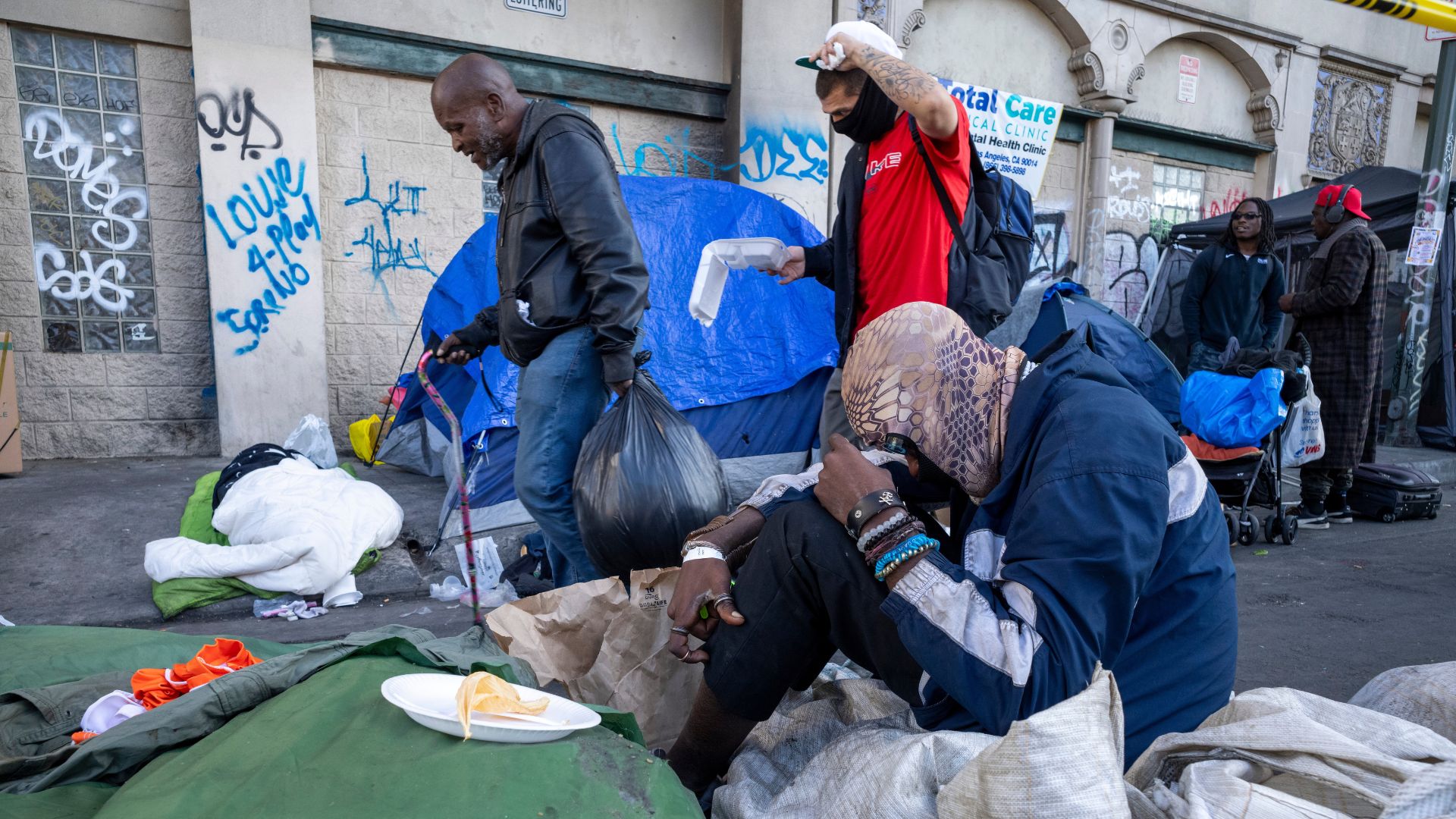
“Point $3 billion sent to LA County over four years is completely unaccounted for. That’s $2.3 billion that could have been used to clean up this or find housing for people who live like this,” Vargas said.

“Taxpayers have forked over 10s of millions, if not hundreds of millions, of dollars to fix it, and people are stealing it.”

Essayli said the lack of accountability surrounding homelessness spending has been a long-standing issue that went largely unchecked until recently.

“It’s unbelievable. And you know, it’s probably been going on for a very long time, but unfortunately, no one’s really looked at it until recently,” Essayli said.

“Before this position, I was in the state legislature, and we would ask a lot of questions about the billions of dollars being spent every year to solve homelessness, and we can all see with our eyes and ears that it wasn’t being solved, and the money wasn’t going to the people we needed it most.”

Essayli explained that one of his first actions after taking office as U.S. Attorney in Los Angeles was to establish a dedicated task force focused on fraud and corruption tied to homelessness funding.

“So one of the first things I did after being appointed as the US Attorney here in LA was to create the homeless fraud and corruption Task Force,” he said.

“We’re starting from the bottom up, and we began brand new investigations with the IRS and the FBI, and it’s already culminated in two separate indictments, and I can assure you that more will come.”

Vargas pointed to details from the indictments already announced, highlighting the nature of the alleged misuse.

“In the two indictments you’ve announced thus far, in one case, somebody was taking this money that was meant to build homes for the homeless and spending it on things like tickets to Coachella concert, jewelry and a Beverly Hills mansion,” Vargas said.

Essayli described the allegations as emblematic of what can happen when massive sums are distributed without strict oversight.

“It’s frankly outrageous, and this goes to show, when you hand out billions of dollars with little to no oversight, there are people out there that will take advantage,” he said.

“And that’s always been, our suspicion is that there’s been very little oversight or accountability to the individuals who receive this money.”

He said most of the funding is routed through nonprofits or developers who claim the money will be used to build housing, but federal investigators have found otherwise in the cases already charged.

“And what we saw in these just these two investigations, that’s not where the money went, and it was used to pay one individual’s American Express Bill,” Essayli said.

“In these two cases, represent over a $50 million loss, and that’s again, scratching the service surface.”

Essayli stressed that the investigation is far from over and that federal agencies are aggressively pursuing additional leads.

“We have many more investigations open that I cannot get into, but we are going to follow the money,” he said.

“We’re going to follow every dollar, and we want to make sure the money went to its intended objective, which is to assist the homeless, and if any of it was diverted for personal use or other use that wasn’t authorized, we intend to criminally prosecute those individuals.”

He detailed the breadth of the ongoing efforts.

“And like I said, we have multiple, multiple ongoing investigations. We have the IRS conducting the financial review. We have the FBI going out and conducting interviews. We’re issuing subpoenas. We’re doing search warrants. There is a lot happening that the public cannot see right now,” Essayli said.

Vargas questioned how such large-scale misuse could persist for years without detection.

“How did this go unnoticed for so long?” she asked.

Essayli attributed the lack of scrutiny to California’s political environment and the absence of meaningful checks on spending.

“This is a problem we saw in the legislature. When you have a state like California that frankly enjoys a super majority controlled by one political party, there’s very little checks and balances in the system to hold that accountability, and there’s really, again, never been any oversight,” he said.

He added that recent political changes at the federal level have altered the enforcement landscape.

“But now you have the federal government, the election was won by the opposite party, and you have an election that has consequences,” Essayli said.

“And now you have prosecutors in the federal government that are independent and are going to take an objective look.”

WATCH:

News

GOP Can ‘Stimulate the Economy and Increase Wages’ Without Democrats: Sen. Kennedy

Sen. John Kennedy discussed inflation, cost-of-living concerns, and the need for congressional action during an exchange with Will Cain, focusing on what he described as disinflation rather than deflation and outlining legislative steps he said Congress should take immediately.

Will Cain opened the discussion by referencing Kennedy’s recent remarks on the economy and inflation.

“Let’s start with the idea of a new reconciliation bill. Let’s talk about affordability politics. Let’s talk about the economy. You give an interesting speech recently when you distinguished between what’s going on now, which is, as you described it, disinflation. That’s the slowing down of Biden era inflation from 9% to the current two to 3% but distinguishing that from deflation, very different, and in your description, very dangerous,” Cain said.

Kennedy responded by acknowledging the reduction in inflation while assigning responsibility for its origin and emphasizing that lower inflation does not mean prices are no longer rising.

“Well, let me say first, I want to give credit to the President, to the Republicans in Congress and to the Federal Reserve for getting inflation down,” Kennedy said.

He contrasted current inflation levels with previous highs.

“It wasn’t that many years ago, will that we had 9% inflation, and that inflation didn’t originate in a bat, that inflation was man made, and that man’s name is President Joe Biden,” Kennedy said.

Kennedy said inflation has declined significantly but remains a concern for American families.

“So we started at 9% we’ve got it down to 3% that’s the good news. The bad news is that 3% inflation still means prices are going up,” Kennedy said.

He said lawmakers must recognize the continued strain rising prices place on households.

“Now what do we do about first, we acknowledge the problem, and it is a fact that when many moms and dads lie down asleep at night and can’t one of the things they’re worried about is cost of living,” Kennedy said.

Kennedy said dismissing those concerns is not an option.

“And you can say, Well, you shouldn’t be worried about it, because things are better. Well, they’re still worried about it, and my job is to address what people are worried about,” Kennedy said.

He argued that addressing affordability requires action from Congress, not just the executive branch.

“What should we do about it? The president can’t do everything. Okay?” Kennedy said.

Kennedy said Congress should act independently to advance legislation focused on affordability.

“Congress needs to do its part without depending on a single Democratic vote, we can start passing bills tomorrow to reduce the cost of housing,” Kennedy said.

He said proposals are already prepared to address healthcare costs.

“The legislation is ready to lessen the cost of health care,” Kennedy said.

Kennedy also pointed to tax policy changes as a tool for economic growth.

“We have over 200 tax changes that if we made, they would stimulate the economy and increase wages,” Kennedy said.

He said those measures could be passed using the reconciliation process.

“We do it through what’s called reconciliation. That’s how we pass the one big beautiful bill,” Kennedy said.

Kennedy said the legislation would begin helping Americans once implemented.

“And the one big beautiful bill, by the way, is going to help once it kicks in this year, but since we passed it back in July, we hadn’t done anything,” Kennedy said.

WATCH:

News

Ohio Cop Nearly Shot at Point-Blank Range by Walmart Shoplifting Suspect

A shoplifting detention inside a Walmart in Canton, Ohio, escalated into a life-threatening confrontation Thursday after a suspect allegedly attempted to shoot a police officer at point-blank range but was stopped when the weapon failed to fire and a store security worker intervened, according to authorities and body camera footage.

The incident occurred after police responded to a report of suspected theft involving a man and a woman inside the store.

The two were detained by Walmart staff and escorted to a security room to wait for police, according to reports.

Once inside the room, a Canton police officer began questioning and searching the male suspect, later identified by FOX 8 as 21-year-old Shane Newman.

Body camera video from the officer, which had been placed on a table in the room, initially showed a calm and orderly scene.

A Walmart employee can be seen handing the officer a pen and paper while Newman and the woman sat on a bench.

Moments later, the situation changed abruptly.

According to the bodycam footage, Newman suddenly turned toward the officer, pulled out a firearm, and attempted to shoot him at close range.

As the woman screamed, “No, no, no!” a clicking sound could be heard as Newman appeared to pull the trigger.

The gun did not fire.

The Walmart security worker immediately lunged toward Newman in an effort to restrain him.

Despite that, Newman raised the firearm again and attempted to fire a second time.

Another clicking sound could be heard, indicating the weapon again failed to discharge.

The employee then knocked the gun out of Newman’s hands as the officer drew his own weapon and shouted, “Get back! Get back!”

With the gun dislodged, the officer moved in and was able to pin Newman to the floor while the Walmart worker assisted.

Additional officers arrived shortly afterward, and both suspects were taken into custody.

In the body camera footage, the officer told responding officers that Newman had “pulled the gun out, pointed it at my head and pulled the trigger,” but the weapon malfunctioned and did not fire.

The officer said he drew his own firearm during the struggle but did not shoot because he feared hitting the Walmart employee who was wrestling with Newman to disarm him.

The officer also acknowledged during the footage that he had missed the firearm during his initial search of Newman, noting that the gun had been concealed inside a shoulder bag.

According to the officer, he had just been informed seconds before the attack that Newman had an active warrant for his arrest and was considered “armed and dangerous.”

Court records show Newman has since been charged with attempted murder and felonious assault on a police officer.

The woman detained alongside Newman was identified by FOX 8 as Katerina Jeffrey. She was charged with complicity to commit robbery and having weapons under disability for possession of ammunition.

Prior to the violent confrontation, the bodycam footage captured the officer conducting a routine search and questioning Newman about whether he had anything on him.

Newman told the officer that all he had was a cellphone.

He then voluntarily handed over a small container from his pocket, which investigators said contained illegal drugs, according to FOX 8.

During the same exchange, Jeffrey asked the officer, “Are we going to jail?”

“Not unless something crazy happens,” the officer replied.

Within moments, the situation escalated into the attempted shooting.

Authorities credited the Walmart security employee’s quick action and the firearm’s apparent malfunction with preventing a potentially deadly outcome.

The investigation into the incident remains ongoing.

Entertainment

Rob Schneider Issues a Blunt Warning to America While Honoring Charlie Kirk

Actor and comedian Rob Schneider delivered a wide-ranging statement reflecting on the influence of Charlie Kirk, arguing that Kirk’s work challenged foundational assumptions among young Americans whilehighlighting what Schneider described as the fragile state of freedom in the United States.

Schneider said Kirk played a pivotal role for university students across the country by questioning ideas that many had taken for granted and by framing America as central to the survival of Western civilization.

“Charlie did for me what he did for so many university students across this country. He dismantled foundational thinking,” Schneider said.

“He understood that America is now the keystone of Western civilization. However, he also knew how precarious it was and that it would take only one generation to lose it.”

Schneider said Kirk consistently warned that Americans should not expect outside forces to preserve the nation if it falters.

“He said no one is coming to save us. There will be no Marines from some other country landing on our beaches. There will be no Marshall Plan to financially bail us out. We are the Marines,” Schneider said.

According to Schneider, Kirk framed the moment as a decisive one in human history, with the survival of individual liberty at stake.

“So the question is simply this, will America be a temporary experiment in human history, a brief moment where freedom for the individual enjoyed by relatively few people in human history, before it returns to some brutal feudal system where individual freedom is lost to a world government with complete control,” Schneider said, adding that preserving freedom would require more than “political posturing.”

Schneider said Kirk believed faith was essential to sustaining liberty and warned that freedom cannot survive when it is detached from deeper moral foundations.

“Charlie understood something fundamental without faith, freedom becomes fragile. Our roots must be rooted in something higher than government, and he warned us, a civilization that abandons God will deteriorate and ultimately collapse from the inside out,” Schneider said.

Schneider also recalled Kirk’s emphasis on the dangers of dehumanizing political opponents and the importance of maintaining dialogue.

“Charlie said, when you stop having a human connection with someone you disagree with, it becomes a lot easier to want to commit violence against that group,” Schneider said.

“What we as a culture have to get back to, he said, is to be able to have reasonable disagreement where violence is not an option.”

He described the current state of the country as a “cold civil war” and said Kirk believed debate and dialogue were necessary to prevent further escalation.

“Now we are in a cold civil war right now, but we must do everything in our power to make sure that this doesn’t become an actual hot Civil War, and we must do that with dialog and debate,” Schneider said. “We must let the better nature that each of us have rise to the surface.”

Schneider contrasted public reaction to Kirk’s death with episodes of unrest in recent years.

“I want to point out that after Charlie was murdered, no American cities were burned to the ground, no cars were set ablaze. No looting took place. The only burning was candles, candles to honor someone who dearly loved our country and fought passionately to preserve these unique liberties that so many have fought and died for,” he said.

Schneider then drew a historical parallel to Telemachus, a priest killed in 404 AD after opposing violent spectacles, and compared that moment to Kirk’s actions on college campuses.

“In 404 AD, the crowd killed the priest because he told them the truth. He told them to stop enjoying the blood sport,” Schneider said.

“In 2025 Charlie Kirk jumped into our modern Coliseum, the arena of the university campus. He stood between the mob and their rage, he handed the crowd a microphone. He gave his opponents a voice.”

Schneider said Kirk sought to redirect hostility toward faith and dialogue rather than violence.

“He sat there, told the truth, took their fury and tried to move them and our nation closer to God and closer to our Savior, Jesus Christ, and they killed him for it,” Schneider said.

He expressed hope that Kirk’s death would mark a turning point similar to the end of gladiatorial games in ancient Rome.

“May Charlie Kirk’s death be what Telemachus death was. May it be the end of the games, the end of the spectacle, the end of the blood sport,” Schneider said.

Schneider said Kirk wanted to be remembered for his faith and courage.

“Charlie said he wanted to be remembered for courage and faith, and he will be always,” Schneider said.

“And though we lost him way too soon, Charlie Kirk knew you don’t kill a Christian. You only change his address.”

WATCH:

News

Senator Mike Lee Explains How the MAGA Agenda Can Be Passed in Congress

Senator Mike Lee said Republicans in the Senate could pass significantly more legislation if they stopped what he described as cloture abuse and returned to enforcing existing Senate rules that allow for extended debate followed by a simple majority vote.

In a statement addressing Senate procedure, Lee said the current approach has resulted in what he called a “perpetual tail chasing model,” even when Republicans hold unified control of government.

He said the insistence on reaching a 60-vote threshold has unnecessarily limited what the party can accomplish.

“The point is this, if we enforce the cloture rule, we could end cloture abuse, and we could end this perpetual tail chasing model in which, even when Republicans control the Senate and the House and the White House, as we currently do, we just take all sorts of things off the table,” Lee said.

Lee said Republicans frequently declare major policy goals unattainable because they lack the votes to overcome cloture, even though Senate rules provide alternative paths. He said this approach has become routine rather than the exception.

“We can’t accomplish this. We can’t accomplish that. Why? Well, because we don’t have 60 votes,” Lee said.

According to Lee, the Senate already has rules that allow the majority to force extended debate, ultimately leading to a vote once senators are no longer able to continue speaking. He said enforcing those rules would shift leverage back to the majority.

“There are other ways that break through this,” Lee said. “You enforce the rules by requiring them to debate.”

Lee explained that Senate rules place limits on how often a senator may speak on the same legislative matter during a legislative day.

He said once those limits are reached, or once senators are physically unable to continue debating, the presiding officer can call for a vote.

“Then the minute they stop debating, either because you’ve physically exhausted them, or because they have exhausted their right to continue speaking,” Lee said, “you can call the vote.”

Lee said the rules governing debate include limits on the number of times a senator may speak on the same issue, and once those limits are reached, the Senate is no longer required to continue debate.

“We have a number of rules about that, including you can only speak twice on the same legislative day on the same discreet legislative matter,” Lee said.

Once debate ends under those conditions, Lee said the Senate can proceed to a vote that requires only a simple majority, rather than the 60 votes typically needed to invoke cloture.

“If they have exhausted either themselves physically or their right to speak that moment, you can call the vote, and that vote is cast as simple majority threshold,” Lee said.

Lee argued that using this process would allow Republicans to advance and pass more legislation without changing Senate rules.

He said the problem is not the rules themselves, but the failure to use them.

“And you can get a lot passed,” Lee said.

Lee said Republicans have moved away from enforcing these rules and have instead accepted procedural gridlock as unavoidable.

He said that decision has limited legislative output even when the party controls both chambers of Congress and the White House.

“We haven’t been doing that,” Lee said.

“We need to get back into that business.”

WATCH:

News

Trump Forces Big Pharma to Slash Prices Under Most Favored Nation Plan

President Donald Trump on Friday announced what the White House described as the “largest development to date” in implementing Most-Favored-Nation (MFN) pricing for prescription drugs in the United States, unveiling new agreements with nine major pharmaceutical manufacturers aimed at significantly lowering drug costs for American patients.

The announcement was made via the White House website and during an Oval Office press conference.

According to a White House fact sheet, the agreements involve Amgen, Bristol Myers Squibb, Boehringer Ingelheim, Genentech, Gilead Sciences, GSK, Merck, Novartis, and Sanofi.

The White House said the agreements will reduce prices on medications that treat “numerous costly and chronic conditions, including type two diabetes, rheumatoid arthritis, multiple sclerosis, asthma, COPD, hepatitis B and C, HIV, and certain cancers.”

Under the terms of the agreements, “every State Medicaid program in the country [will have] access to MFN drug prices on products made by the nine companies,” which the administration said will result in “billions of dollars in savings” for American taxpayers.

During the press conference, Trump highlighted disparities in global drug pricing and pharmaceutical profits.

He said the United States represents approximately 4% of the world’s population but consumes 13% of prescription drugs worldwide, while accounting for 75% of global pharmaceutical profits.

“That ends now,” Trump said, attributing the change in part to tariffs.

The MFN framework requires pharmaceutical companies to sell drugs in the United States at prices no higher than the lowest price they charge in other developed nations.

Trump provided several examples during the announcement, including a Sanofi blood thinner that previously cost $750 and is now priced at less than $16, and an HIV medication from Bristol Myers Squibb that dropped from nearly $1,500 to $217.

He also said a hepatitis B medication would decrease in price from $1,400 to $413, and a hepatitis C medication from Gilead would fall from nearly $25,000 to less than $2,500.

The White House fact sheet listed additional price reductions available to patients purchasing medications directly through TrumpRx.

Amgen will reduce the price of its cholesterol-lowering drug Repatha from $573 to $239.

Bristol Myers Squibb will lower the price of its HIV medication Reyataz from $1,449 to $217.

Boehringer Ingelheim will cut the cost of its type two diabetes medication Jentadeuto from $525 to $55.

Genentech will reduce the price of its flu medication Xofluza from $168 to $50.

Gilead Sciences will reduce the price of its hepatitis C medication Epclusa from $24,920 to $2,425.

GSK will lower prices across its inhaler portfolio, with the asthma inhaler Advair Diskus 500/50 dropping from $265 to $89.

Merck will reduce the price of its diabetes drug Januvia from $330 to $100.

Novartis will cut the price of its multiple sclerosis medication Mayzent from $9,987 to $1,137.

Sanofi will reduce the price of its blood thinner Plavix from $756 to $16 and will list its insulin products on TrumpRx at $35 per month’s supply.

In addition to price reductions, Trump announced that the pharmaceutical companies participating in the agreements will invest more than $150 billion in domestic pharmaceutical manufacturing in the United States. He attributed the shift in investment to tariffs.

The announcement comes as Democrats in Congress continue to focus on the expiration of Affordable Care Act subsidies.

The administration said Trump has taken significant action to reduce health care costs in the United States in less than one year.

News

Troubling Final Text Emerges After Greg Biffle Family Plane Crash

Cristina Biffle, the wife of NASCAR driver Greg Biffle, sent a final text message to her mother moments before a plane crash that killed the couple and their two children, according to details shared by family members following the deadly incident, as reported by The New York Post.

The crash occurred Thursday morning when a Cessna C500 jet attempted to land at Statesville Regional Airport in North Carolina shortly before 10:30 a.m. ET.

The aircraft went down on the runway and burst into flames, killing everyone on board.

Cristina Biffle, Greg Biffle, their 14-year-old daughter Emma, and their 5-year-old son Ryder were among the victims. Also killed in the crash were Craig Wadsworth, Dennis Dutton, and Dutton’s son, Jack.

In an interview with People, Cristina’s mother, Cathy Grossu, said her daughter sensed something was wrong during the flight. Grossu said she received a brief text message from Cristina just before the crash.

“She texted me from the plane, and she said, ‘We’re in trouble.’ And that was it,” Grossu told the outlet.

“So we’re devastated. We’re brokenhearted,” she added.

Video from the scene showed the aircraft engulfed in flames on the runway as emergency crews rushed to respond. Authorities have not yet released details on what caused the crash, and an investigation is ongoing.

Grossu said all of the passengers were traveling to Florida for a birthday trip. She described the loss of her daughter, son-in-law, and grandchildren as overwhelming.

“The entire situation is hard to bear,” Grossu said, adding that she could not “believe they’re gone.”

She told People that she could not recall the final words she exchanged with her daughter, Greg, or the children, but said, “they were happy.”

Greg Biffle, a semi-retired NASCAR driver, won 19 NASCAR Cup Series races during his career and was a one-time Busch Series champion.

In recent years, he had drawn attention for his humanitarian efforts, including flying relief supplies into Western North Carolina following Hurricane Helene.

NASCAR acknowledged Biffle’s contributions in a statement following his death.

“Beyond his racing career, he gave of himself for the betterment of our community,” NASCAR said.

“Most notably, Greg spent countless hours of his time helping the citizens of North Carolina during the disasters that followed Hurricane Helene.”

Grossu also shared a final conversation she had with Cristina shortly before the trip, centered on a charitable effort involving Santa letters for families in need.

“She said, ‘Mom, can you go pick up the last 17 letters that are at Staples? I want to get them in the mail before I get on the plane tomorrow,’” Grossu told People.

She said she picked up the letters and delivered them to the Biffle home, where Cristina completed them late that night.

“When they got home last night, she put them in envelopes and finished them all up to get them off to those last 17 families to bring joy to them,” Grossu said. “And that would be the last thing that she would’ve done.”

Federal aviation authorities are continuing to investigate the cause of the crash. No additional information has been released.


Scroll to Top