Author name: Common Defense

News

U.S. Military Aims to Unleash Battle-Ready Laser Arsenal by 2028 Under Trump’s Golden Dome Plan

The Pentagon’s laser dream might finally hit the battlefield—and this time, it’s being fueled by President Donald Trump’s Golden Dome initiative to fortify the homeland with cutting-edge missile defense technology rooted in directed energy.

According to Undersecretary for Research and Engineering Emil Michael, who testified before the Senate Armed Services Committee on May 19, the science of these high-energy laser weapons is essentially complete.

What’s left now, he said, is the hard part: mass-producing them and ensuring they can be maintained by soldiers in the field, not just Ph.D.s in lab coats.

Michael told lawmakers that the United States now possesses a “suite of directed energy products” ranging from low-power systems to high-end laser weapons.

The task ahead, he said, is scaling those prototypes into deployable assets suitable for large-scale production and field use.

That effort is being supercharged by Trump’s Golden Dome project, a nationwide missile defense system relying in large part on directed energy.

Some in Washington mocked the concept at first, but Trump—backed strongly by War Secretary Pete Hegseth—has transformed it into a cornerstone of America’s technological resurgence.

Michael said the plan’s “big reliance” on laser technology has dramatically accelerated research and development, particularly after lessons learned in Iran.

The Pentagon plans to show off these field-ready laser weapons by the summer of 2028 as part of several Golden Dome demonstration events.
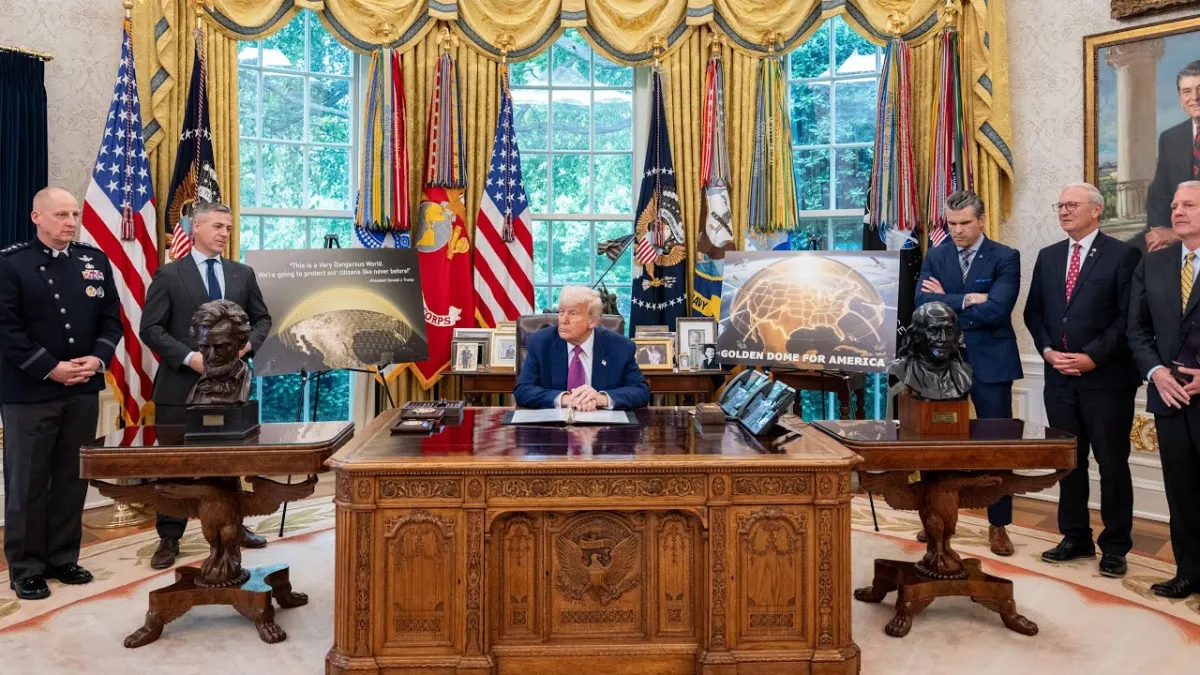
Trump Unveils $175 Billion “Golden Dome” Missile Defense Plan with Ambitious 3-Year Timeline

Michael noted that “there’s never been more effort in the department on this particular capability,” signaling a clear shift away from endless research and toward real-world application.

The money trail tells the story. The Trump administration’s fiscal year 2027 budget request includes $452 million for directed energy development under the Golden Dome umbrella—more than triple what was allocated in 2025.

The U.S. Army and Navy also plan to pour almost $676 million into the Joint Laser Weapon System, a containerized 150-300 kW platform positioned as the workhorse of the upcoming laser arsenal.

But while the enthusiasm is real, the engineering gauntlet remains brutal. The military’s record on laser weapons over the last decade reads like a lesson in frustration and failure.

From the Army’s high-profile Stryker-mounted systems that overheated in the desert, to the Navy’s abandoned HELIOS program, the obstacles have been technical, logistical, and bureaucratic.

Retired Lt. Gen. Robert Rasch once summed it up perfectly: “We can’t get by with the thought of having clean rooms out in combat.” It’s one thing to cut steel on a lab bench, another to fire lasers from a dusty command post in Iraq. That, in essence, has been the Achilles heel of directed energy—gorgeous in theory, clunky in combat.

Army Ditches Valkyrie Laser as War Secretary Signals New Path for Joint Laser Warfighting System
Artist rendering of the Indirect Fire Protection Capability-High Energy Laser. (Lockheed Martin)

Trump’s Golden Dome looks to change that by throwing serious political weight and financial muscle behind these long-stagnant programs.

Washington insiders used to chuckle at the mention of field-deployable lasers; now, thanks to Trump’s consistent vision and Hegseth’s no-nonsense execution at the War Department, the laughter has stopped.

Two developing systems may soon test whether the Pentagon finally figured it out. The Army’s Enduring High Energy Laser (E-HEL), a 30 kW modular platform built for rapid deployment and easy maintenance, could become the first official program of record for a laser weapon. The service plans to field 24 systems within five years, with prototypes ready by 2026.

It’s a practical step forward, designed specifically to avoid the pitfalls that sunk earlier efforts.

Next up is the Joint Laser Weapon System (JLWS), a Navy-led project targeting the 300-500 kW range. Development contracts for its Joint Beam Control System are expected in 2026, with hardware testing soon after.

The goal is for JLWS to be front and center during the Golden Dome demonstrations in 2028—a loud, visible symbol of Trump’s push for American military dominance through innovation.

Still, the question looms: can American industry rise to the challenge? Companies like Huntington Ingalls, nLight, and IPG Photonics are ramping up production capacities, but the supply chain for specialized optics and rare earth materials remains vulnerable—especially with China cornering those markets.
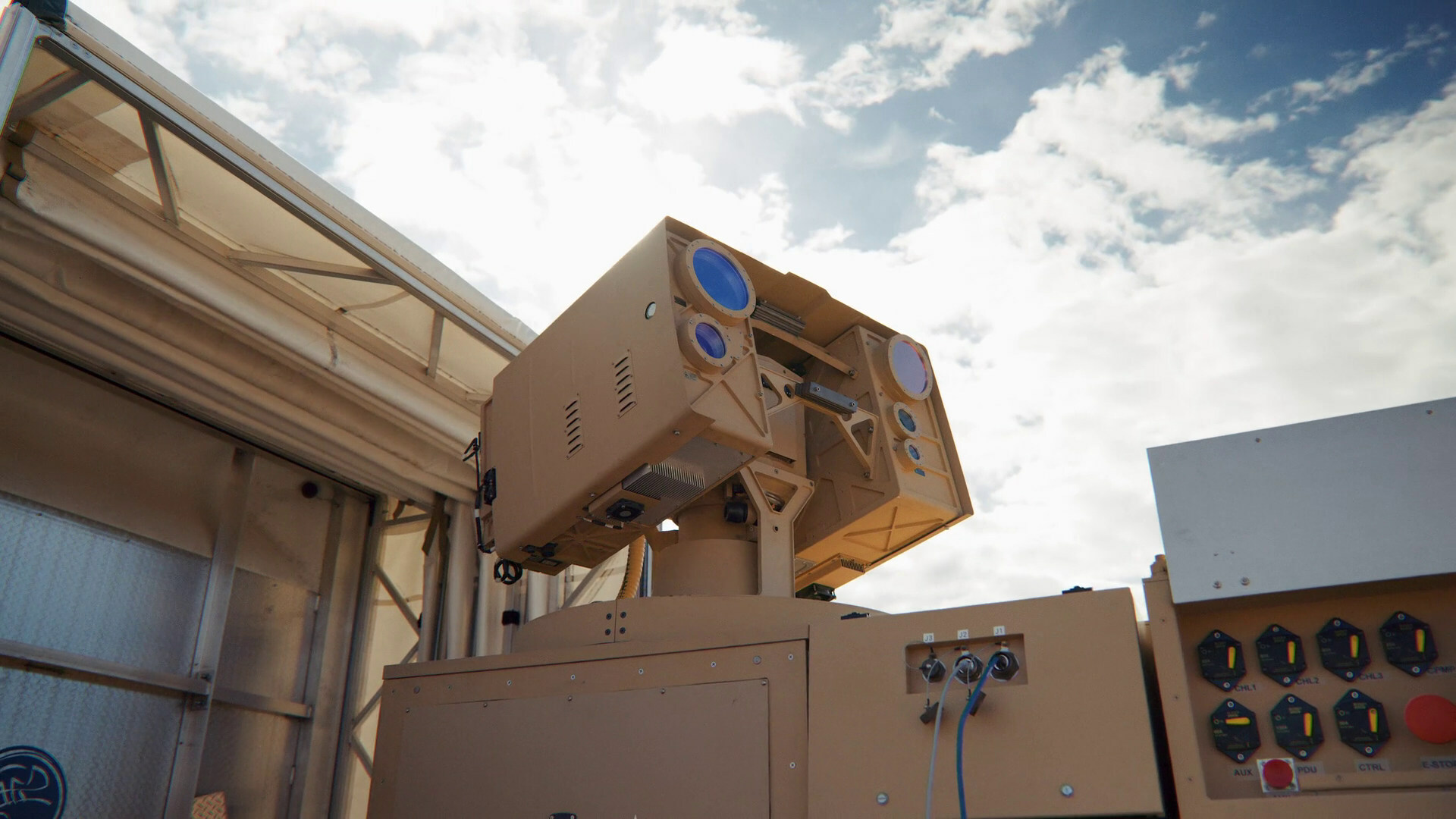
Laser Shield Goes Domestic: U.S. Eyes High-Energy Beams to Guard Skies
BlueHalo’s LOCUST Laser Weapon System (LWS) combines precision optical and laser hardware with advanced software, artificial intelligence (AI), and processing to enable and enhance the directed energy “kill chain”.

Building advanced lasers without depending on Beijing’s minerals will take creative logistics and unshakable political will.

For years, skeptics have said “laser weapons are always five years away.” Trump’s War Department is betting that this time will be different.

The 2028 Golden Dome demonstration aims to prove that directed energy can move from enthusiast dreams to enduring military deterrence.

As Retired Gen. Ellen Pawlikowski once admitted, the laser community earned a reputation for “overpromising and underdelivering.”

But under Trump’s leadership and Hegseth’s drive inside the War Department, the era of endless prototypes may finally be giving way to tangible battlefield power.

If the Pentagon delivers, this would mark a turning point in warfare—a shift where American troops can literally burn enemy threats from the sky with light itself. And for a nation tired of bureaucratic failures and tech stagnation, that’s a ray of hope worth backing.
News

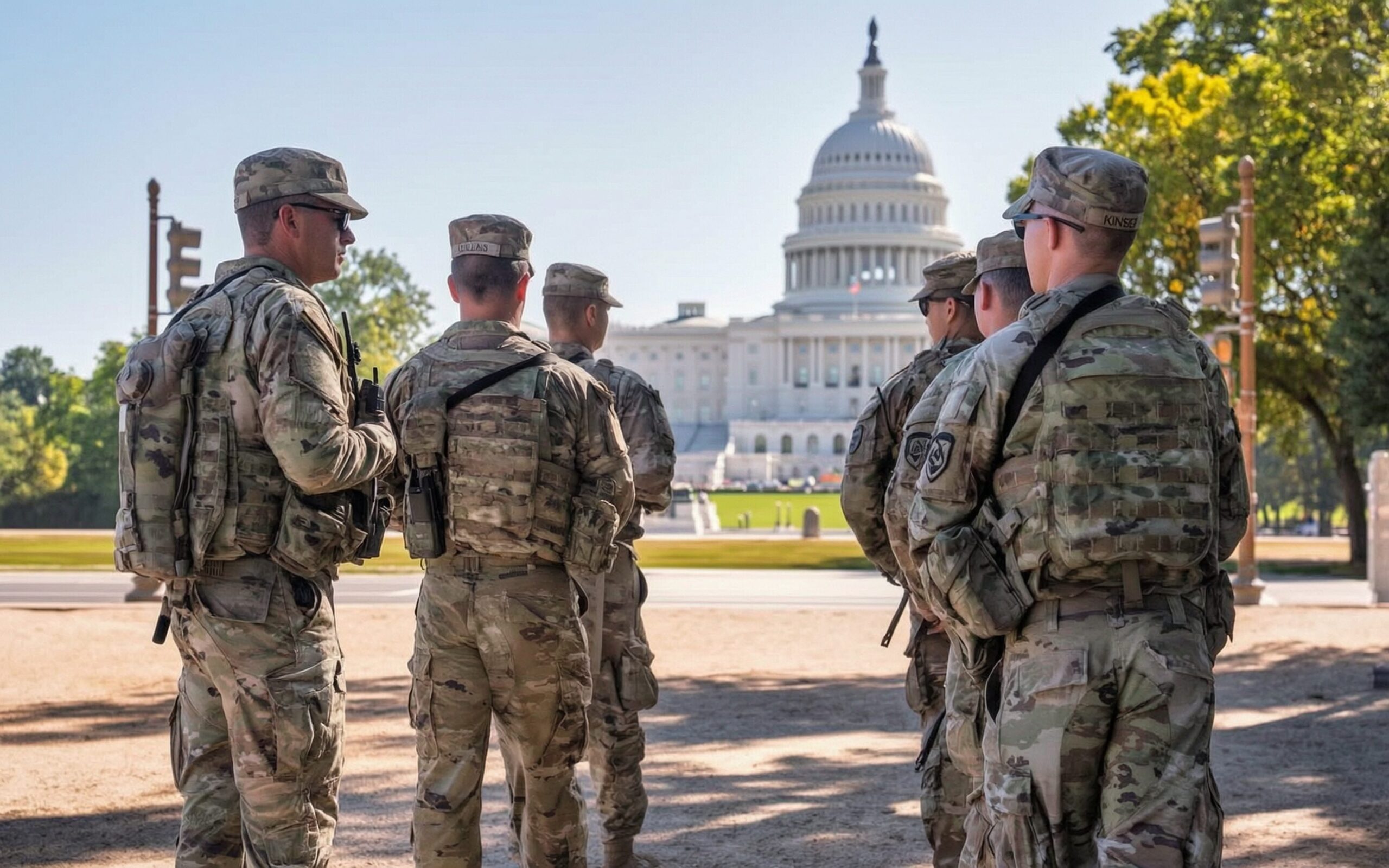
National Guard’s DC Presence Slammed by Critics as ‘Ineffective’ Despite Visible Results

A left-leaning think tank is claiming that thousands of National Guard troops patrolling Washington, D.C., have had “no measurable effect on violent crime.”

The report comes from the Niskanen Center, a group better known for Beltway theorizing than boots-on-the-ground perspective.

According to them, the Guard’s presence—over 2,000 uniformed troops stationed across the capital since August 2025—was supposedly a “misaligned and expensive” strategy.

The researchers complained that the deployment used “the wrong tool for the wrong locations,” calling out the daily cost of $607 per Guard member compared to the $384 in pay for a city police officer.

In essence, the study argues the city could have saved a few bucks by ignoring the restored sense of security that came with military presence on the streets.

The think tank admitted that some good came of the operation, noting a sharp 24% decline in opportunistic property crimes within six months of the Guard’s arrival.

That’s not exactly “no measurable effect,” but the Niskanen analysts were quick to minimize it—insisting that visible deterrence in public areas didn’t stop “violence between individuals with preexisting ties.”

Massive Troop Surge to Protect the Capital Sparks Fierce Backlash as Georgia Sends National Guard to DC
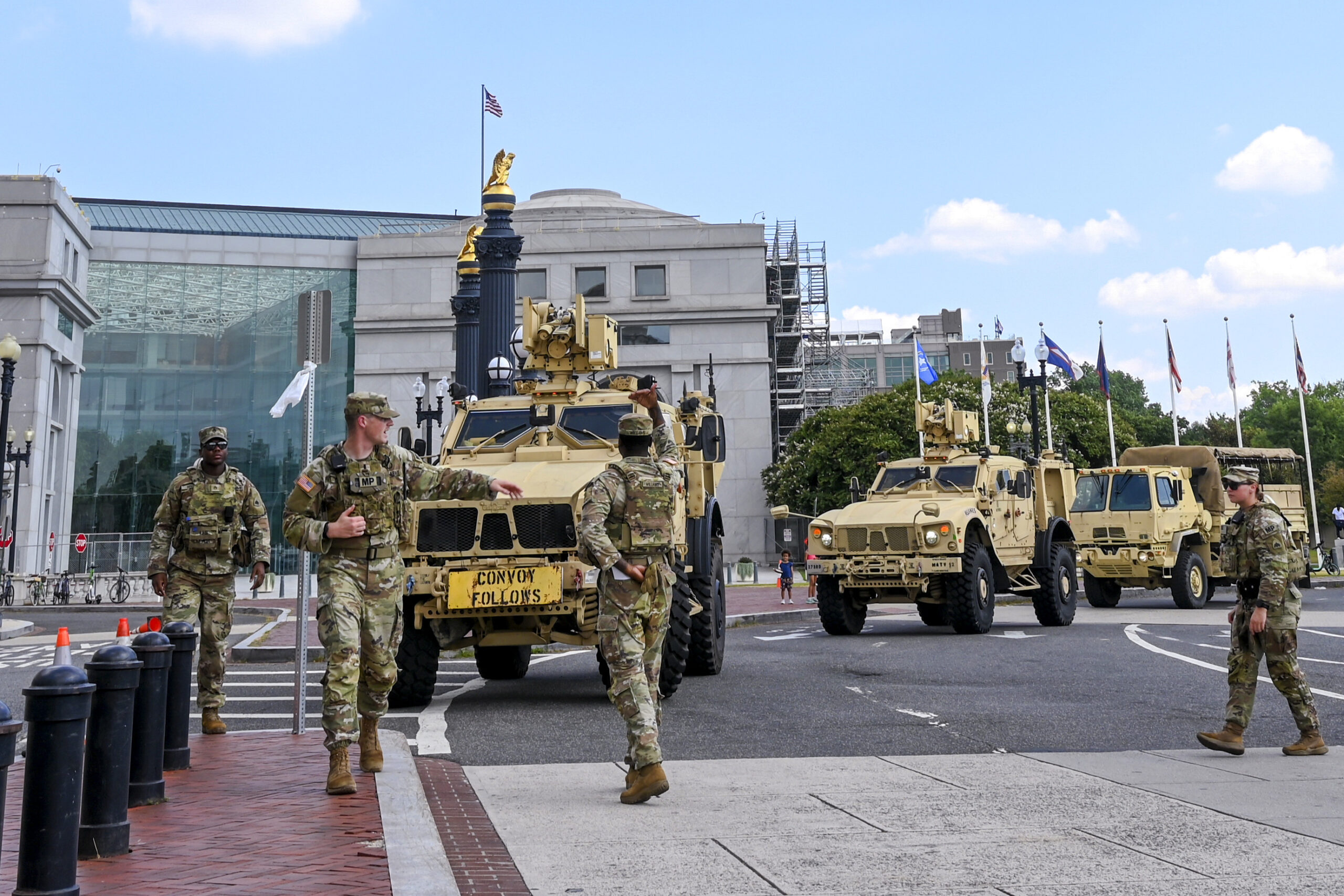
D.C. National Guard soldiers supporting Joint Task Force D.C. (JTF-DC) stand guard at Union Station in Washington D.C., Aug. 15, 2025. Approximately 800 National Guard service members comprise JTF-DC to support the DC Safe and Beautiful Taskforce. These National Guard service members provide critical support such as crowd management, presence patrols and perimeter control in support of law enforcement. D.C. Guard Soldiers and Airmen are proud to say, “we live here, we work here, we serve here.” (U.S. Air National Guard photo by Staff Sgt. Natalie Filzen)

Their field of vision, to no surprise, conveniently ignored the reality that property crime is overwhelmingly what affects everyday people trying to live and work safely in the nation’s capital.

Tourists, business owners, and residents are finally seeing fewer incidents in broad daylight—a victory that seems lost on the Beltway academics who wrote the report.

Still, critics within the think tank dismissed even that win by suggesting local police could have achieved “comparable or better outcomes” using “data-driven” methods, meaning more spreadsheets, fewer soldiers.

In typical bureaucratic fashion, the Niskanen team managed to diagnose success as failure because it didn’t fit their preferred narrative.

SecWar Signs Memo Authorizing Arming of National Guard in DC as They Prepare for New Mission
Two soldiers stand in the middle of a street at night and speak with two police officers standing in front of a police vehicle.
Army 2nd Lt. Harry Siegel and Sgt. 1st Class Nikolay Bashko, both assigned to Joint Task Force District of Columbia as part of the D.C. Safe and Beautiful Task Force, talk with Metropolitan Police Department officers near Nationals Park in Washington, Aug. 19, 2025.

The White House wasn’t having it. Spokeswoman Abigail Jackson fired back, calling the analysis “out-of-touch” and the authors “keyboard warriors” trying to cheap-shot President Donald Trump’s public safety agenda.

“President Trump has transformed D.C. from a crime-ridden city into a safe and beautiful haven,” Jackson said, praising both the president’s Safe and Beautiful Task Force and the Guard’s standing presence downtown.

That public presence has provided precisely what residents demanded: visible action. In an era where far too many cities drown in crime while politicians wring their hands, Washington under Trump’s leadership is now visibly secure and clean.

The National Guard has brought order where chaos once reigned—a deterrent that even critics can’t ignore, no matter how hard they try to twist the math.

President Trump, never one to buckle under noise from Washington policy circles, reaffirmed his commitment to keeping the Guard in place.

He said last week there are “no plans whatsoever” to pull troops out of the capital and intends to increase the deployment by 1,500 ahead of America’s 250th anniversary celebrations. It’s a move the administration sees as central to maintaining peace and safety during massive national events expected to draw millions.

Burgers, Booing, and a Bold Message: Vance and Hegseth Stand with Troops in Washington
Defense Secretary Pete Hegseth, center, Vice President JD Vance, right, and White House Deputy Chief of Staff Stephen Miller joined dozens of National Guardsmen for lunch at a Union Station burger eatery to thank the troops for their efforts to increase safety throughout Washington, Aug. 20, 2025.

For all the headline-chasing criticism, one undeniable fact remains: violent crime in the city has been trending downward, and that decline began well before any academic study claimed otherwise.

When the Guard hit the streets, the drop in property crime only accelerated, showing that presence matters—especially when that presence wears camouflage.

The researchers called the Guard’s mission “a misaligned footprint,” accusing the Trump administration of using military resources in areas with more cameras than crime. But by their own admission, places like tourist corridors and transportation hubs saw the biggest improvements in public safety.

For most Washington residents, that’s exactly where they want to see fewer thefts and assaults—not more academic nitpicking.

Critics of the deployment might not want to hear it, but ordinary Americans visiting the capital can now walk down Pennsylvania Avenue or through Union Station without worrying as much about getting robbed.

West Virginia Stands With President Trump as National Guard Deploys to Washington

That’s not theoretical, that’s tangible. And that’s precisely the kind of real-world impact that Beltway bureaucrats can’t quantify on a whiteboard.

The reality is that visible military presence disrupts opportunistic crime faster than any algorithm or “data model” ever could. Criminals think twice when they see the Guard on street corners—it’s called deterrence, and it works.

That’s something law-and-order leaders like Secretary of War Pete Hegseth have insisted on: peace through presence, not paperwork.

It’s no surprise that liberal think tanks never embrace success unless it comes wrapped in their bureaucratic buzzwords. Yet even they can’t erase the visible calm that’s returned to the District under President Trump’s leadership.

The numbers tell one story, but the people on the ground—the families, commuters, and shopkeepers—tell another: D.C. finally feels safe again.

News

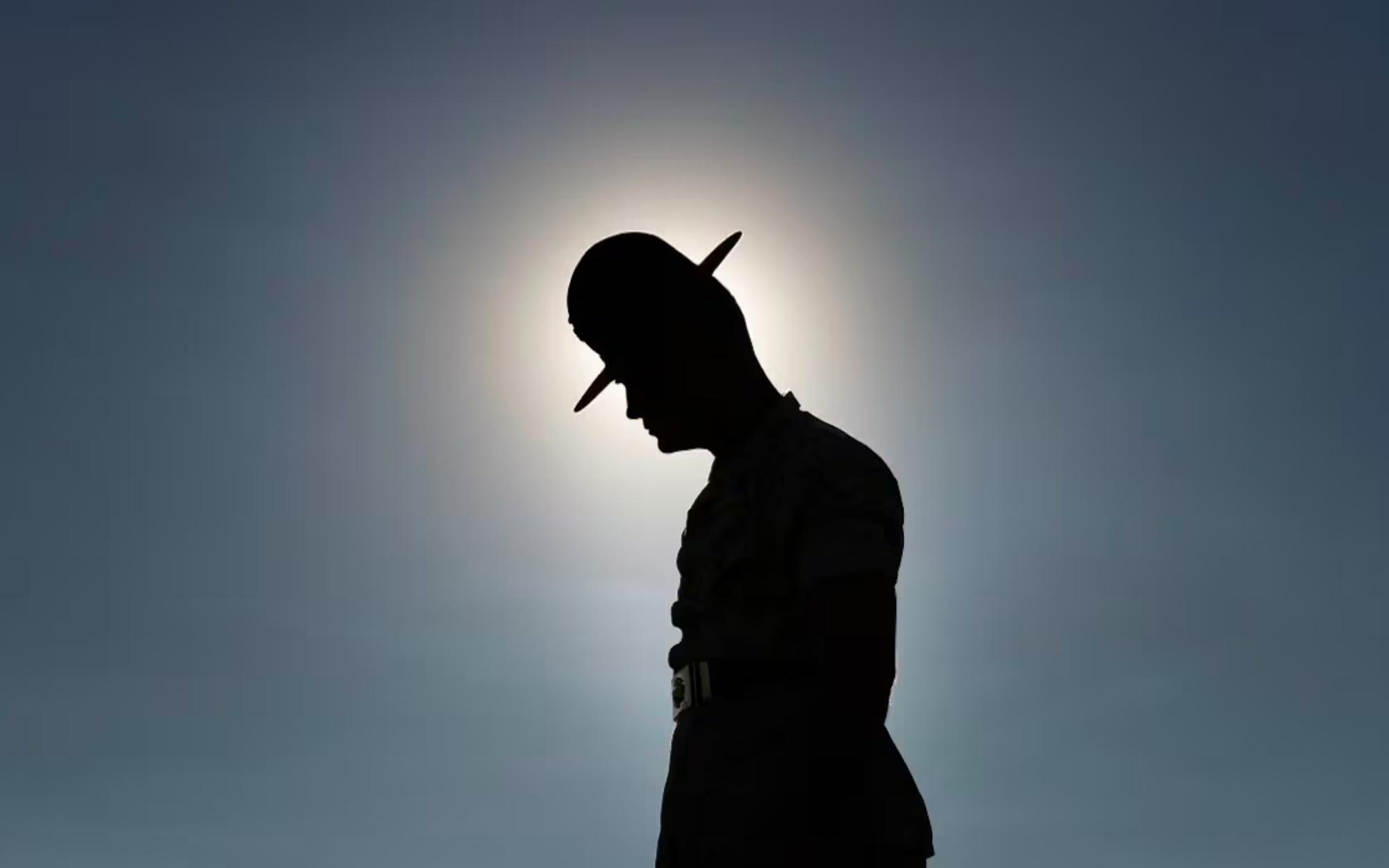
Marine Corps Drill Instructor Found Dead in Florida Hotel Room

The Marine Corps community is mourning the sudden and tragic loss of Sgt. Albert Haynes II, a dedicated drill instructor from Marine Corps Recruit Depot Parris Island, who was found deceased in a Florida hotel room on May 30.

His passing has sent shockwaves through the ranks of Marines who knew him as a disciplined leader and an exemplar of the Corps’ enduring values of honor, courage, and commitment.

According to a Marine Corps spokesperson, Sgt. Haynes, just 24 years old, was in Starke, Florida, to participate in a poolee event with the U.S. Marine Corps Recruiting Station in Jacksonville.

The event was part of the Corps’ ongoing mission to train, mentor, and prepare America’s next generation of Marines.

The Bradford County Sheriff’s Department is currently leading the investigation into his death. While officials have not yet released further details about the cause, the Marine Corps has confirmed that local authorities are treating the case with respect and diligence as they work with military investigators to determine exactly what happened.

Haynes hailed from Austin, Pennsylvania, a small-town American heartland community known for its strong patriotism and deep respect for military service. Those who served alongside him describe him as a Marine who carried himself with pride, discipline, and an unwavering commitment to duty well beyond his years.

At the time of his passing, Sgt. Haynes was assigned to Lima Company, 3rd Recruit Training Battalion at Parris Island — home of some of the toughest, most elite Marine training in the world.

The work of a drill instructor is grueling, demanding, and critical to the very foundation of the Marine Corps, making the loss of one so young and dedicated all the more devastating.

Haynes enlisted as an 0811 Field Artillery Cannoneer and completed the Field Artillery Basic Course at Fort Sill, Oklahoma, following his graduation from recruit training and Marine Combat Training. Like many Marines before him, his path reflected grit, sacrificial service, and commitment to the American creed.

Over his impressive, though short, career, Sgt. Haynes earned numerous awards recognizing his professionalism and achievements.

These include the Navy and Marine Corps Achievement Medal, with a gold star signifying a second award, the Marine Corps Good Conduct Medal, the Global War on Terrorism Service Medal, the Sea Service Deployment Ribbon with two bronze stars, and the National Defense Service Medal.

These reflect not only his individual excellence but also his contributions to the broader mission of the Marine Corps.

Fellow Marines remember Haynes not just as an instructor but as a brother in arms who inspired younger recruits to reach beyond their limits.

The role of drill instructor is among the most vital leadership positions in the Corps, transforming civilians into battle-ready Marines.

To lose one of their own in such circumstances is a blow that resonates deep within the warrior community.

Across social media and within the Corps’ tight-knit circles, Marines have expressed an outpouring of love and respect for Sgt. Haynes, calling him a “Marine’s Marine” and “the kind of leader the Corps needs.”

Many also emphasized the emotional and mental burdens faced by those who train the next generation — a heavy, often thankless responsibility that can take a toll on even the strongest among them.

As the investigation continues, commanders at Parris Island have pledged full cooperation with law enforcement and assured the public that the Corps will provide support to Sgt. Haynes’ family. The focus now turns to honoring his service and ensuring that justice and clarity follow in the wake of his tragic passing.

This tragedy serves as a solemn reminder that those who wear the uniform, even when not deployed in combat zones, face challenges both seen and unseen.

The brotherhood of the Corps will close ranks around the Haynes family, as Marines always do, to support and remember one of their own.

In the words of a fellow Parris Island instructor, “Sgt. Haynes lived every day as a Marine. He was driven by duty, and his legacy will be carried forward by every recruit whose life he helped shape at Parris Island.”

The investigation remains ongoing, but one fact is beyond dispute: Sgt. Albert Haynes II lived and served as a true United States Marine, giving everything to the service he loved and the country he swore to defend. Semper Fidelis.

News

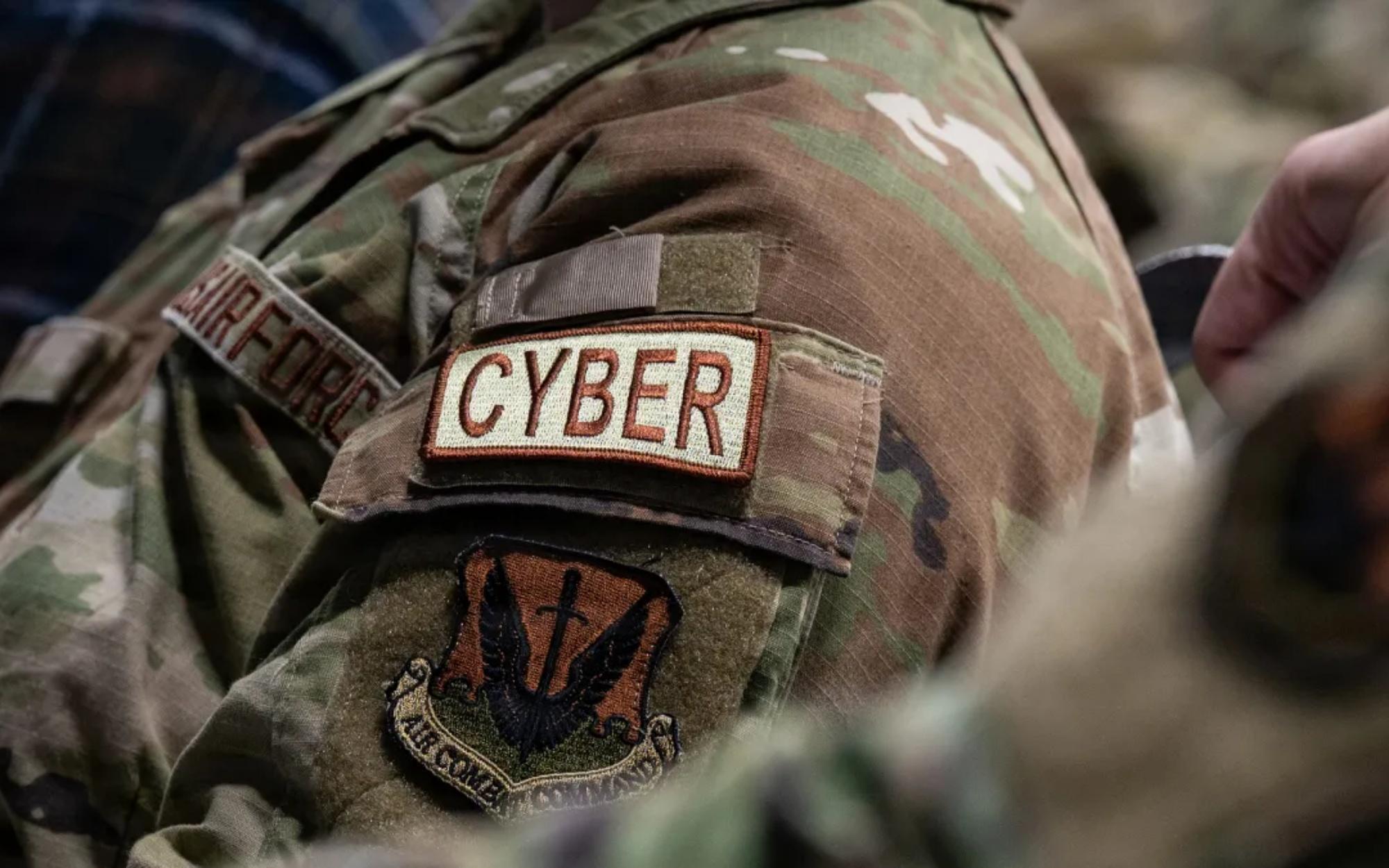
Cyber Command 2.0: New Report Pushes Officer-Only U.S. Cyber Force

A new report out of Washington’s think tank circuit is reigniting the debate over America’s cyber war footing, arguing that the U.S. is overdue for a standalone Cyber Force staffed entirely by officers and warrant officers—no enlisted ranks included.

The idea is simple: as digital warfare becomes the next battleground, the nation needs a fully professional, deeply technical corps of cyber warriors to meet the threat head-on.

Published jointly by the Center for Strategic and International Studies and the Foundation for Defense of Democracies, the proposal sketches out what a future Cyber Force could look like if Congress finally decides to give the green light.

The authors frame the new blueprint as a way to avoid the missteps of the Space Force rollout, when bureaucrats rushed construction before the blueprints were finished.

“They were told to break ground on construction without having hired an architect or sketched a blueprint,” said report co-lead Joshua Stiefel, a former House Armed Services Committee staffer. The report’s message is blunt: get it right before you launch it.

The think tanks estimate that standing up the new service could cost between $10 and $11 billion, though much of that funding already exists within current war budgets.

The Pentagon’s fiscal year 2027 budget already sets aside roughly $7.7 billion for cyber operations and another $2.8 billion in personnel costs across the services. The report argues that consolidating those fragmented funds under one roof would create greater efficiency and readiness.

Former Army Sergeant Pleads Guilty to Attempting to Sell U.S. Military Secrets to China
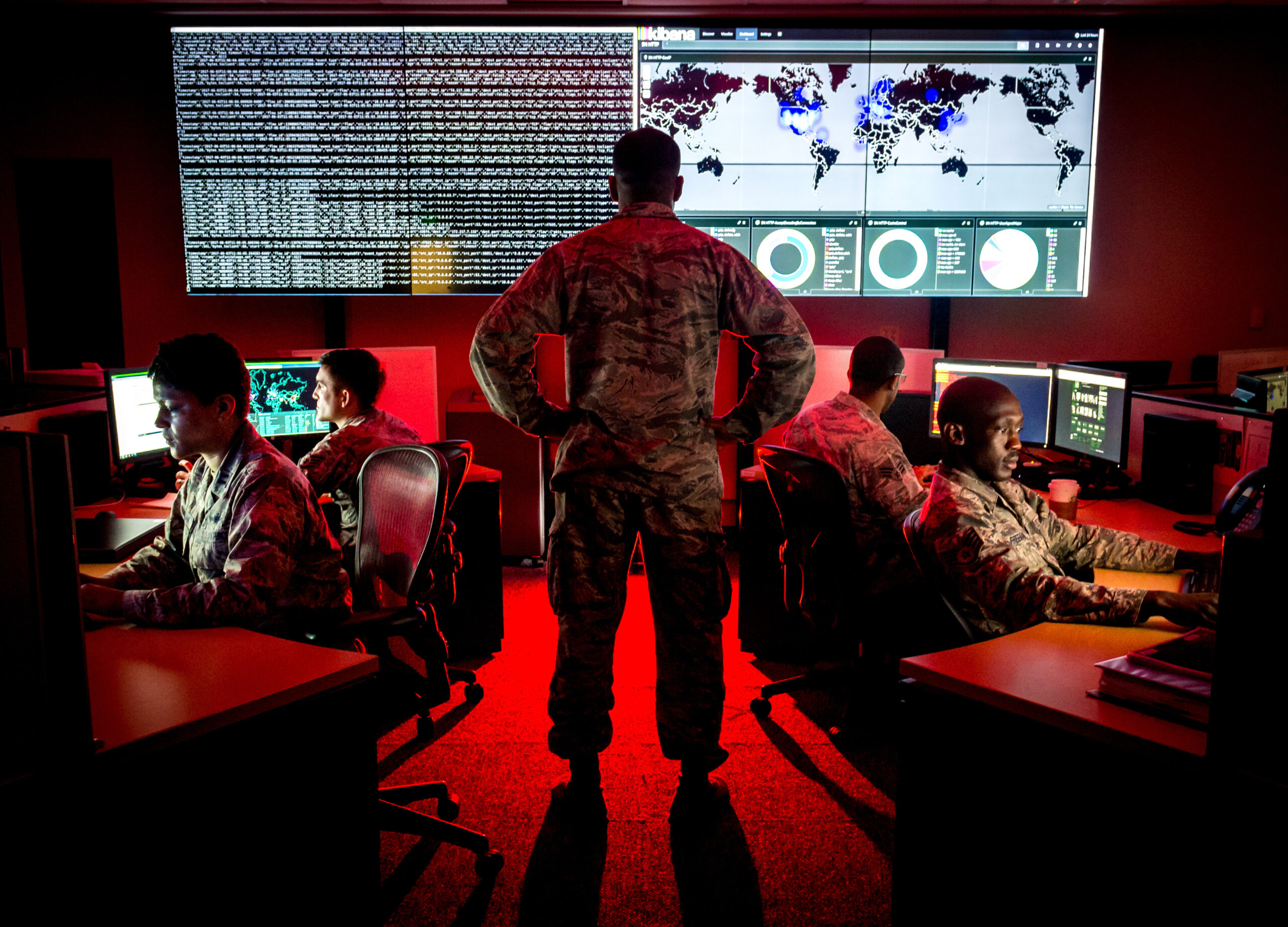
Cyber-warfare specialists serving with the 175th Cyberspace Operations Group of the Maryland Air National Guard engage in weekend training at Warfield Air National Guard Base, Middle River, Md., Jun. 3, 2017. (U.S. Air Force photo by J.M. Eddins Jr.)

“This isn’t new money,” Stiefel explained. “It’s money buried in four different budget silos. Unifying it means a better return for taxpayers and a stronger cyber front line.”

It’s a pitch for fiscal sanity and military efficiency that conservative defense hawks have long demanded from the Washington bureaucracy.

Under this proposal, the new Cyber Force would not absorb every existing cyber operator from across the services. Each branch would remain in charge of its own networks and data infrastructure.

The Cyber Force would instead focus on offensive and defensive missions—taking the fight deep into enemy systems, disabling their weapons, and conducting forward hunts inside allied networks to root out adversaries before they strike.

The report suggests that cyber warfare is now the moral equivalent of airpower. Every branch flies planes, but only the Air Force carries the authority and skill for global strike operations.

The same logic, the authors argue, should drive the creation of a professional, dedicated Cyber Force—one with the precision, expertise, and unified command authority that modern war demands.

Military Responds with More Suspensions Over Service Members’ Social Media Activity After Charlie Kirk Shooting
A recent Air Forces Central Command and 380th Air Expeditionary Wing policy prohibits all personnel from bringing portable electronic devices (PED) into most work centers on the installation. A PED is any electronic device that would have the capability to record audio, video, save notes or has wireless communication ability. PED’s can pose a threat to cyber security by allowing sensitive or classified information to be transferred illegally and allow adversaries to collect electronic signals emitted by classified systems. Examples of PEDs include, but are not limited to, BlackBerrys, cell phones, personal digital assistants (PDAs), laptops, MP3 players, iPods, iPads, digital photo frames, non-government USB devices/external hard drives, computer tablets, and GPS watches. (U.S. Air Force photo by Tech Sgt. Christina M. Styer/Released)

And in a provocative recommendation, the report proposes staffing this new service entirely with commissioned and warrant officers.

The authors claim that cyber operators already function as technical leaders, experts, and innovators—roles more aligned with officer-level responsibilities than traditional enlisted ones.

They even hint that existing enlisted cyber specialists could transfer in, receiving warrant officer or commissioned status based on merit and expertise.

“It’s not that we don’t value the enlisted cadre,” Stiefel clarified during a media call.

“We value them so much that we believe if they can make it through the cyber pipeline, they have more than earned the credibility, the merit, to wear a warrant officer’s collar device.”

That’s a refreshing break from bureaucratic rank rigidness—a recognition that skill and results matter more than paperwork and tenure.

The proposed Cyber Force would number about 30,000 personnel, including active-duty members, National Guardsmen, and civilians.

ts structure would feature hybrid “cyber combined arms” units blending software developers and combat operators to close the gap between innovation and execution.

Promotion systems would reward technical contribution and mission outcomes over administrative performance—a serious cultural shift from how the armed services usually promote talent.

Importantly, the structure includes no traditional reserve component.

Instead, the National Guard would serve both state and federal missions, giving governors and the War Department flexibility to respond to crises quickly.

The plan also calls for dedicated intelligence and legal teams to operate in cyberspace’s gray zones, where conflict often sits just short of open war.

For policymakers in Washington, this conversation isn’t new, but it’s heating up. Bipartisan lawmakers on Capitol Hill, including Senator Kirsten Gillibrand of New York, have floated amendments to create a Cyber Force under the 2027 war funding legislation.

Whether it passes remains uncertain, but interest is clearly growing. “It feels like a conversation where the volume continues to rise,” Stiefel noted.

Building the force under the Department of the Army—similar to how the Space Force operates under the Department of the Air Force—would be faster and cheaper than forming a completely new military department.

That’s a pragmatic approach that fits the conservative insistence on leaner government and decisive capability.

The stakes are obvious. America’s enemies, from China’s shadow hackers to Russia’s military cyber units, are striking at infrastructure, command systems, and even civilian networks with increasing boldness.

The U.S. can’t afford to meet those threats with fragmented bureaucracies or redundant structures scattered across the services. The idea behind the Cyber Force is to concentrate capability, streamline command, and bring a warfighter mentality to the digital front.

Whether Congress acts or not, this report puts Washington on notice: the next front line won’t be drawn in sand or sea lanes—it’s being coded in real time, keystroke by keystroke.

And only a focused, unified force will be ready to fight and win that war.

News

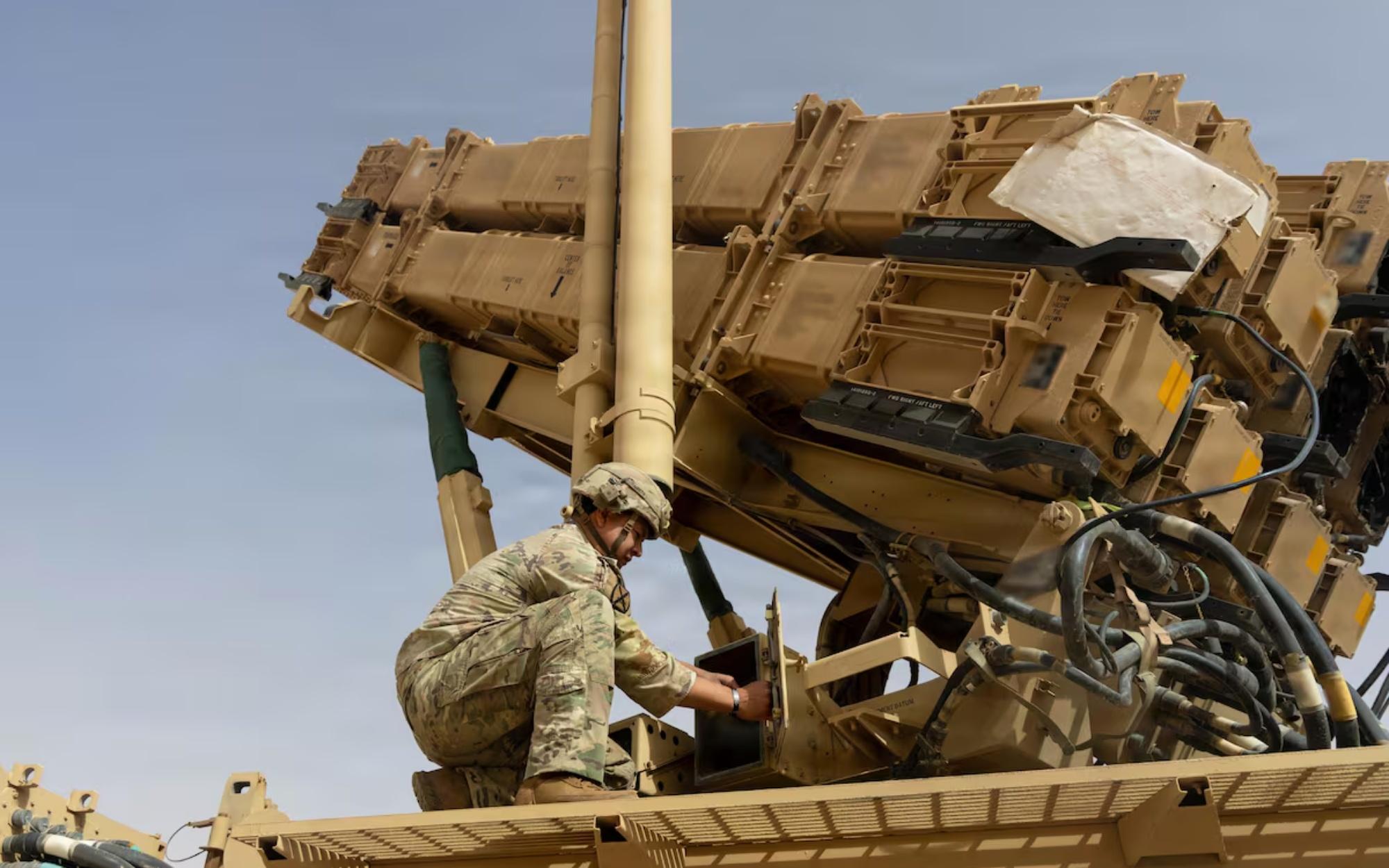
Army Builds New Missile Defense MOS to Merge Patriot and THAAD Expertise

The U.S. Army is rolling out a new career field aimed at tightening the bolts between two of America’s most powerful air defense systems.

The new military occupational specialty, designated Air and Missile Defense Systems Repairer (14W), will merge soldiers who currently operate and maintain the Patriot and Terminal High Altitude Area Defense (THAAD) systems into one unified role.

According to Army officials, the move is designed to sharpen combat readiness while streamlining the complex network of missile defense operators across the force.

The plan, set for full implementation on October 1, is a leap forward for an Army taking air and missile defense more seriously in an era when drones, hypersonics, and long-range threats are reshaping global battlefields.

Maj. Travis Shaw confirmed during discussions with the Association of the United States Army that the service is combining the existing 14E (Patriot Fire Control Operator) and 14T (Patriot Launching Station Enhanced Operator/Maintainer) specialties to create 14W.

The objective is clear: simplify the structure and produce cross-trained personnel capable of executing both mission sets under one modernized banner.

The Army has started recruiting volunteer soldiers in grades E-3 through E-7 for the new 14W specialty.

Roughly 300 troops are expected to transition during this initial round before the role officially comes online. It’s a move that signals the Army’s recognition of how vital integrated missile defense will be in future conflicts.

Pentagon to Quadruple THAAD Seeker Production with BAE Systems and Lockheed Martin
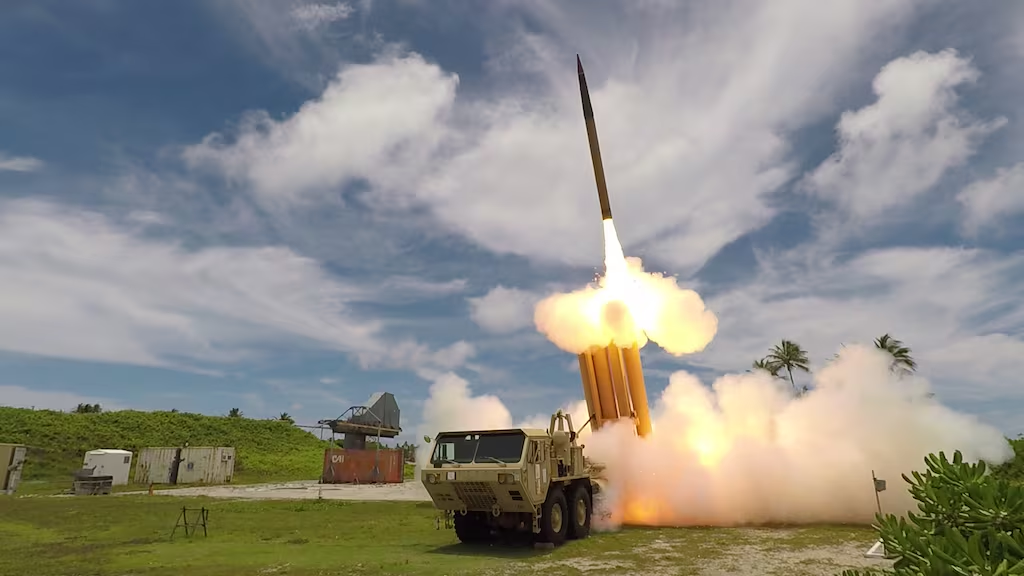
The Terminal High Altitude Area Defense system. (Lockheed Martin)

This consolidation arrives at a time when demand for missile and drone defense is climbing worldwide. From defending Israel against incoming rocket barrages to countering potential Iranian or North Korean threats, the Army’s capabilities are under increasing strain.

By blending Patriot and THAAD operations, the service hopes to ensure faster, more flexible responses in these high-pressure environments.

According to a report from the Congressional Research Service, the Army already maintains THAAD batteries in Guam and South Korea, while additional deployments continue across the Middle East. These powerful systems help protect key allies and safeguard American forces.

The Army is also set to take full operational control of THAAD by the end of fiscal year 2027, taking over a role traditionally managed by the Missile Defense Agency.

The unification makes operational sense. Both Patriot and THAAD systems have overlapping missions in intercepting enemy ballistic missiles.

THAAD Stays Put in Korea as Pentagon Pushes Back on Withdrawal Rumors
A U.S. soldier patrols the perimeter of a THAAD system on Mar. 19, 2023, during a South Korea-based training exercise. (Spc. Gregory Menke/U.S. Army)

As the Arms Control Association notes, THAAD neutralizes threats in the final phase of their flight path, while Patriot handles those reaching lower altitudes. Integrating the two platforms could yield a near-seamless shield against incoming attack.

Capt. Michael J. McTiernan explained this concept in the Army’s Line of Departure journal, highlighting the “any sensor, best shooter” approach. This doctrine means any launch or radar system can link with the best available missile battery for a given target, maximizing coverage and lethality.

McTiernan argued that integration enhances engagement opportunities, stretches the defended battlespace, and amplifies the Army’s overall deterrent punch.

Inside the Pentagon, senior leaders see this shift as critical for maintaining technological and tactical superiority.

THAAD Stays Put in Korea as Pentagon Pushes Back on Withdrawal Rumors
U.S. Terminal High Altitude Area Defense missile launchers point skyward at Naval Support Facility Deveselu, Romania, Sept. 1, 2019.

Col. Angela Chipman, chief of the Army Retention Division, described the move as “transformational,” noting that consolidating these skillsets builds “the type of agile talent [the Army] needs for current and future battlefields.”

This “agile talent” message echoes a broader modernization theme championed by War Secretary Pete Hegseth and the Trump-aligned national security team emphasizing strength through streamlined capability.

As near-peer adversaries like China and Russia invest in layered drone swarms and long-range missiles, America’s Army is moving quickly to keep its edge in both capability and manpower.

The 14W MOS also represents an investment in soldier flexibility. By training troops to operate across multiple systems, the Army ensures that every crew member has a broader understanding of how each part of the missile defense puzzle fits together.

U.S. Army Expands Air Defense Workforce with New 14W MOS
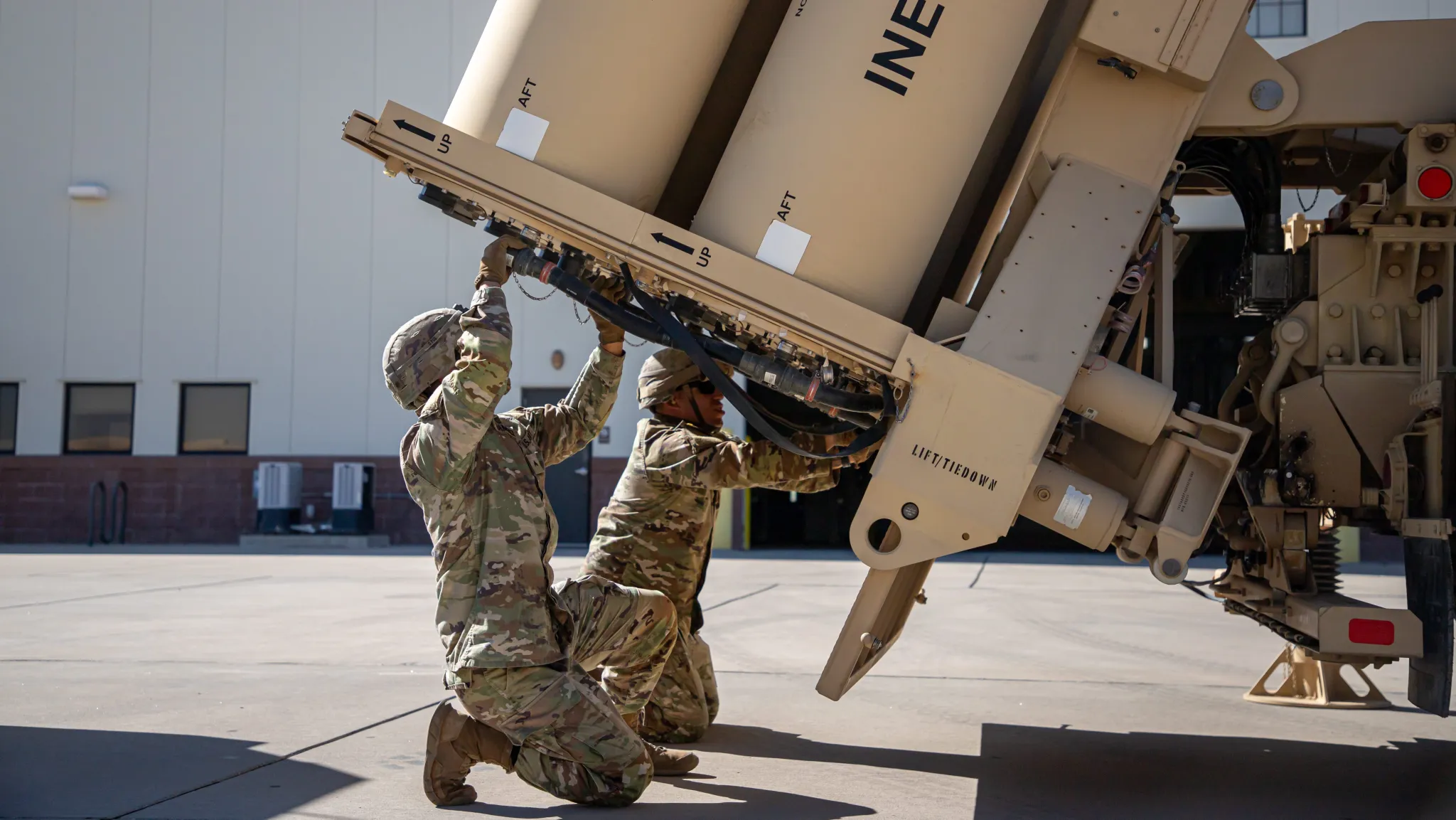
The Army is creating a new job for soldiers that will both operate and repair its Patriot and THAAD missile defense systems. Army photo by Sgt. David Poleski.

It builds depth, not just numbers, a point that’s often lost in bureaucratic discussions inside Washington.

Critics might call it reorganization, but anyone watching global flashpoints knows it’s something far more important: wartime adaptation.

The Army is positioning itself to fight in a world where air defense isn’t just about missiles from rogue states, but the emerging threat of precision-guided munitions and hypersonic weapons designed to overwhelm traditional systems.

Under the Trump-era resurgence of defense realism and readiness, this new MOS is the logical next step.

The Army is cutting waste, combining firepower, and making sure the next generation of warfighters are lethal, adaptable, and ready to defend this nation against whatever the next threat may be.

News

Navy Picks Seven Companies for At-Sea Unmanned Warship Trials

The U.S. Navy is moving full steam ahead in the race to dominate the unmanned seas, selecting seven companies to compete for the highly anticipated Medium Unmanned Surface Vessel, or MUSV, prototype testing this summer.

The announcement marks a major stride in expanding the fleet’s autonomous warfare capabilities, a mission backed solidly during President Donald Trump’s administration and now continuing under sustained funding from his “One Big Beautiful Bill.”

The project underscores a long-overdue shift in U.S. maritime policy—preparing the Navy for future fight scenarios in contested waters, especially across the increasingly tense Indo-Pacific.

According to the Navy, trials at sea will start next month, with participating companies vying for a $15 million prize and potential follow-on production contracts.

Testing is slated to wrap up by October, setting the stage for operational fielding of five to ten vessels by fiscal year 2027.

The selected firms—Sea Machines, Leidos, Saronic Technologies, Galliano Marine Services, PacMar Technologies, Birdon, and Huntington Ingalls Industries—represent a mix of traditional defense players and bold new names in maritime innovation.

It’s a deliberate choice by Navy leadership to tap into “non-traditional shipyards” and “commercially mature solutions” capable of rapidly fielding reliable naval technology, especially when old bureaucratic programs have dragged their keel for years.

U.S. Launches Uncrewed Drone Boats in Escalating Iran Clash
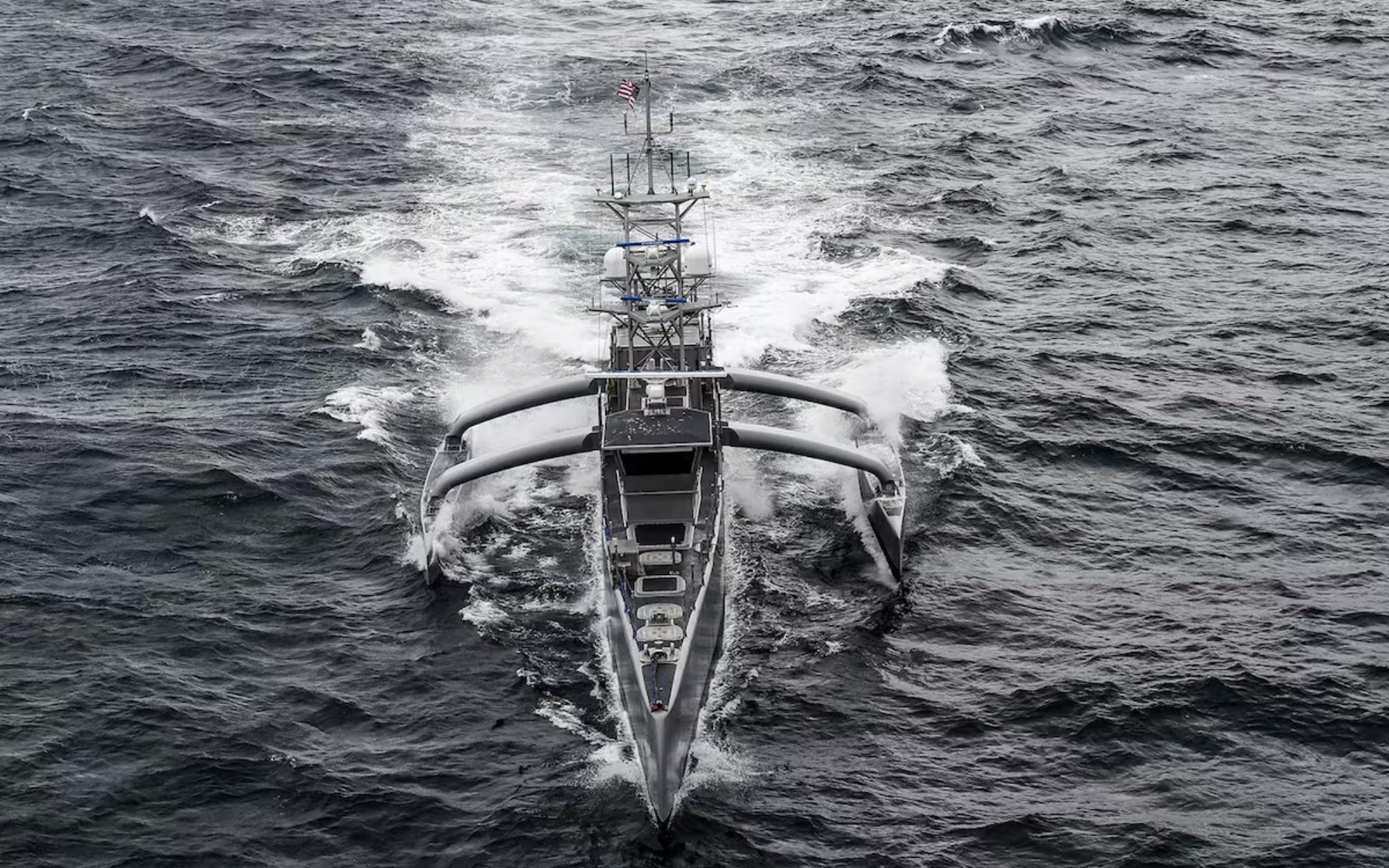
ATLANTIC OCEAN (Sep. 23, 2025) A U.S. Navy Global Autonomous Reconnaissance Craft (GARC) maneuvers in the Atlantic Ocean during UNITAS 2025, the 66th iteration of the world’s longest-running multinational maritime exercise. Unmanned and remotely operated vehicles and vessels extend the capability of interconnected manned platform sensors to enhance capacity across the multinational force. UNITAS, Latin for Unity, focuses on enhanced interoperability, building regional partnerships, and demonstrating U.S. Naval Forces Southern Command/U.S. 4th Fleet as the trusted maritime partner in the Caribbean, Central and South America. UNITAS 2025 also leads off a series of events celebrating the U.S. Navy 250th Birthday. (Official U.S. Navy photo)

At the heart of the initiative is an ambitious goal: boosting the Navy’s autonomous vessel count from four to thirty by 2030.

In a region dominated by Chinese naval expansion and aggressive maneuvers in the South China Sea, this push is not just about modernization—it’s about deterrence.

A smarter, leaner, autonomous fleet could patrol vital trade routes and military chokepoints faster, cheaper, and with fewer personnel at risk.

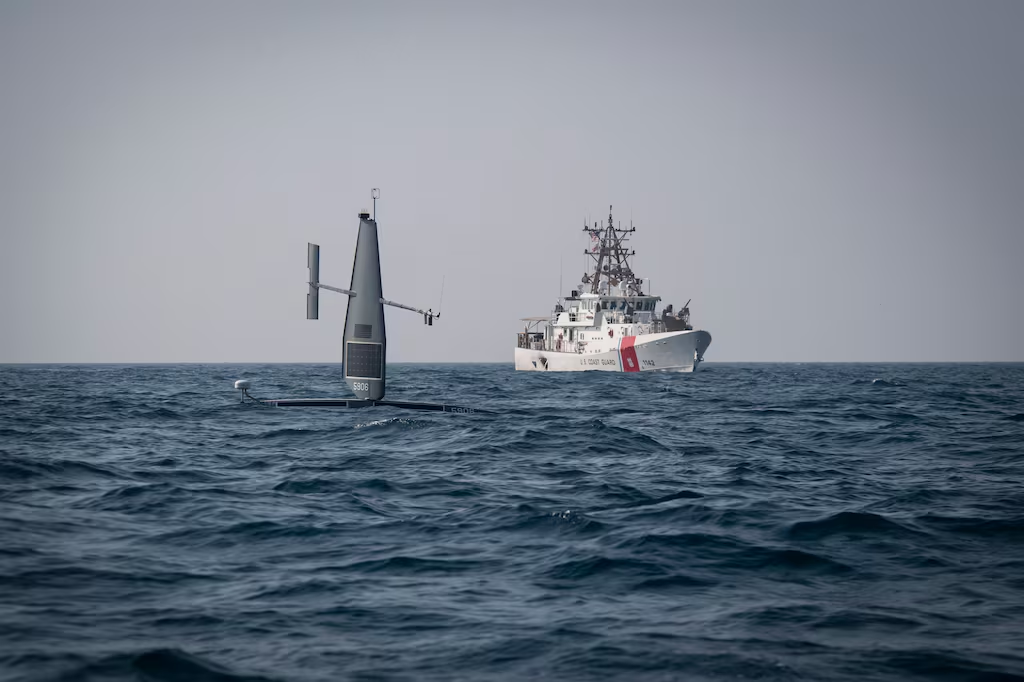
The Navy’s earlier successes with the Sea Hunter, Sea Hawk, Mariner, and Ranger unmanned craft have already demonstrated significant capability during five months of deployment in the Indo-Pacific last year.

These four vessels continue to serve as testing platforms, feeding the next generation of unmanned strategy that will define naval supremacy in the years ahead.

The MUSV initiative also comes on the heels of a transition away from the previous Modular Attack Surface Craft program, signaling a fresh direction for procurement.

Some companies reportedly bristled at the change after investing heavily in MASC designs, but the Navy’s new approach indicates an urgent need to adapt quickly—cutting red tape and replacing outdated procurement habits with faster, smarter acquisition under the Department of War’s evolving philosophy.

Ukrainian Underwater Drone Strike Hits Russian Sub, Signaling a New Era of Maritime Warfare [WATCH]

Technical requirements for the MUSVs are no small task. Each vessel must be able to travel 2,500 nautical miles at 25 knots while carrying a 25-ton payload in varying sea conditions.

They must operate autonomously day and night, through sea state seven—conditions rough enough to challenge even the toughest crewed ships. When commanded, the vessels must also maintain complete radio silence while still performing missions independently.

In short, these systems must be not only intelligent but also stealthy enough to disappear into the fog of war.

Perhaps most importantly, these unmanned ships will maintain full self-assessment systems, constantly monitoring and reporting their operational health to command stations without direct human input.

This self-sufficiency could redefine fleet readiness by reducing the need for continuous maintenance crews or expensive manned oversight at sea.

Inside the Navy’s Red Sea Drone Boat Experiments: A Glimpse Into the Future of Unmanned Maritime Operations

The strategy aligns perfectly with President Trump’s insistence on reindustrializing American defense manufacturing while encouraging innovation from private industry rather than layers of red tape within Pentagon bureaucracy.

His administration’s $2.1 billion allocation to the MUSV marketplace highlighted the kind of long-range thinking that drives serious military outcomes, not political talking points.

As the U.S. faces an increasingly aggressive Chinese navy, an unstable Middle East, and resurgent threats from rogue actors, projects like MUSV testing are more than experimental—they are essential for maintaining global maritime superiority.

Today’s wars are not just fought with ships and sailors but with technology, autonomy, and speed.

A Navy fleet capable of operating on its own terms—anywhere, anytime—is both a deterrent and a promise: the United States will always command the waters.

When sea trials begin next month, expect eyes from allies and adversaries alike watching closely.

Success will prove that the U.S. Navy can not only adapt to the next era of maritime warfare but lead it outright.

With innovative partners at the helm and warfighters pushing for results, the future of naval dominance looks a lot more autonomous—and a lot more American.

News

Trump Defends White House ‘Drone Port’ Project as Essential National Security Measure

President Donald Trump isn’t backing down from his vision of turning the White House into a high-tech fortress, complete with a sophisticated rooftop drone port.

Over the weekend, he tore into a federal judge’s decision to halt construction, invoking national security and sharply warning against judicial interference in matters of presidential protection.

In his unmistakable Truth Social style, Trump blasted U.S. District Judge Richard Leon, calling on him to “stop playing games with America’s Security.”

The president didn’t mince words, warning that if any harm came from these delays, Judge Leon would be “responsible for the Death and Destruction caused to our Country.”

Trump’s frustrations stem from a federal injunction placed on the $400 million White House ballroom project — a massive undertaking aimed at reimagining part of the East Wing as both a ceremonial space and a cutting-edge defensive installation.

A lawsuit, filed by the National Trust for Historic Preservation, claims that the ballroom’s expansion violated procedural limits because congressional authorization wasn’t secured first.

Leon agreed with that argument in March, ordering a halt to the work. But an appellate court later put that decision on pause, briefly giving the project new life as legal wrangling continues.

Trump, however, is moving ahead mentally and politically, presenting the entire endeavor as a matter of national survival rather than mere architecture.

In his Sunday post, Trump showcased digital renderings depicting the White House roof lined with snipers and military-grade drones prepped for rapid deployment. He declared the “DronePort at the White House Ballroom” would be the most sophisticated in the world, defending Washington “long into the future.”

He reminded Americans that the age of simple sidearms is long gone, proclaiming that modern weapons mean “we can no longer defend Washington, D.C., with rifles and pistols alone.”

Trump Unveils Plans for Fortress Ballroom with High-Tech Drone Base and Underground Military Hub [WATCH]

The president personally toured journalists through the site in May, proudly describing how the new ballroom complex will double as a military-grade structure — featuring a medical wing, missile-resistant roofing, and unlimited drone capacity.

“This is all my money and donors’ money,” Trump emphasized, an unsubtle reminder that taxpayers aren’t footing the bill. “On top of the roof, we’re going to have the greatest drone empire you’ve ever seen, and it’s going to protect Washington.”

Critics on the left and in the bureaucracy are predictably recoiling, painting the project as excessive or symbolic. But in the real world, the need for heightened White House security has rarely been clearer.

In just the past month, three separate armed threats have erupted within shouting distance of the president — including one gunman fatally shot near the White House itself after opening fire.

At the start of May, another man was wounded in a firefight near the Washington Monument with the Secret Service, while in late April, an armed individual carrying multiple weapons tried to breach the White House Correspondents’ Association dinner.

Those consecutive close calls underscore why Trump’s insistence on advanced protective measures isn’t vanity. It’s prudence.

Trump Defends White House ‘Drone Port’ Project As Essential National Security Measure
President Donald J. Trump shows concepts of White House Drone Port, June 1, 2026

Acting Attorney General Todd Blanche reinforced that point in filings urging courts not to hamstring the project due to bureaucratic quibbling. “This second attack on the President this month underscores that critical need for top-level, state-of-the-art security at the White House, including the Ballroom,” Blanche argued.

His office described the facility as essential for ensuring the president “can perform his constitutional duties in a safe and heavily secured facility.”

For Trump, the fight is not just against the red tape that bogs down nearly every modern construction project within the federal apparatus — it’s against the mindset that prioritizes optics over protection.

While historic preservation activists fret about sightlines and heritage façades, Trump is looking ahead at the realities of 21st-century warfare and the need to shield America’s command post from every conceivable threat.

The president’s approach toward security has always carried a distinctly modern edge. Where bureaucrats see aesthetics, he sees tactical advantage.

Where traditionalists see a ballroom, he sees a secure assembly space where command and celebration coexist safely under the same reinforced roof.

The “DronePort” may sound futuristic, but experts in modern security are already warning that airborne threats — including weaponized micro-drones — are the next major frontier of domestic and presidential protection.

Trump’s instinct, as usual, is to be two steps ahead of the institutional crowd, ready to equip America’s first fortress with tools fit for real-world dangers, not hypothetical ones.

And that, ultimately, may be the defining feature of Trump’s presidency: a relentless commitment to keeping America secure, regardless of who complains, stalls, or sues.

In an era when too many in Washington prioritize process over protection, it’s refreshing to see the commander in chief thinking like a guardian rather than a bureaucrat.

News

Farewell Flight: Marines Honor Legendary Harrier Jet’s Final Public Ride

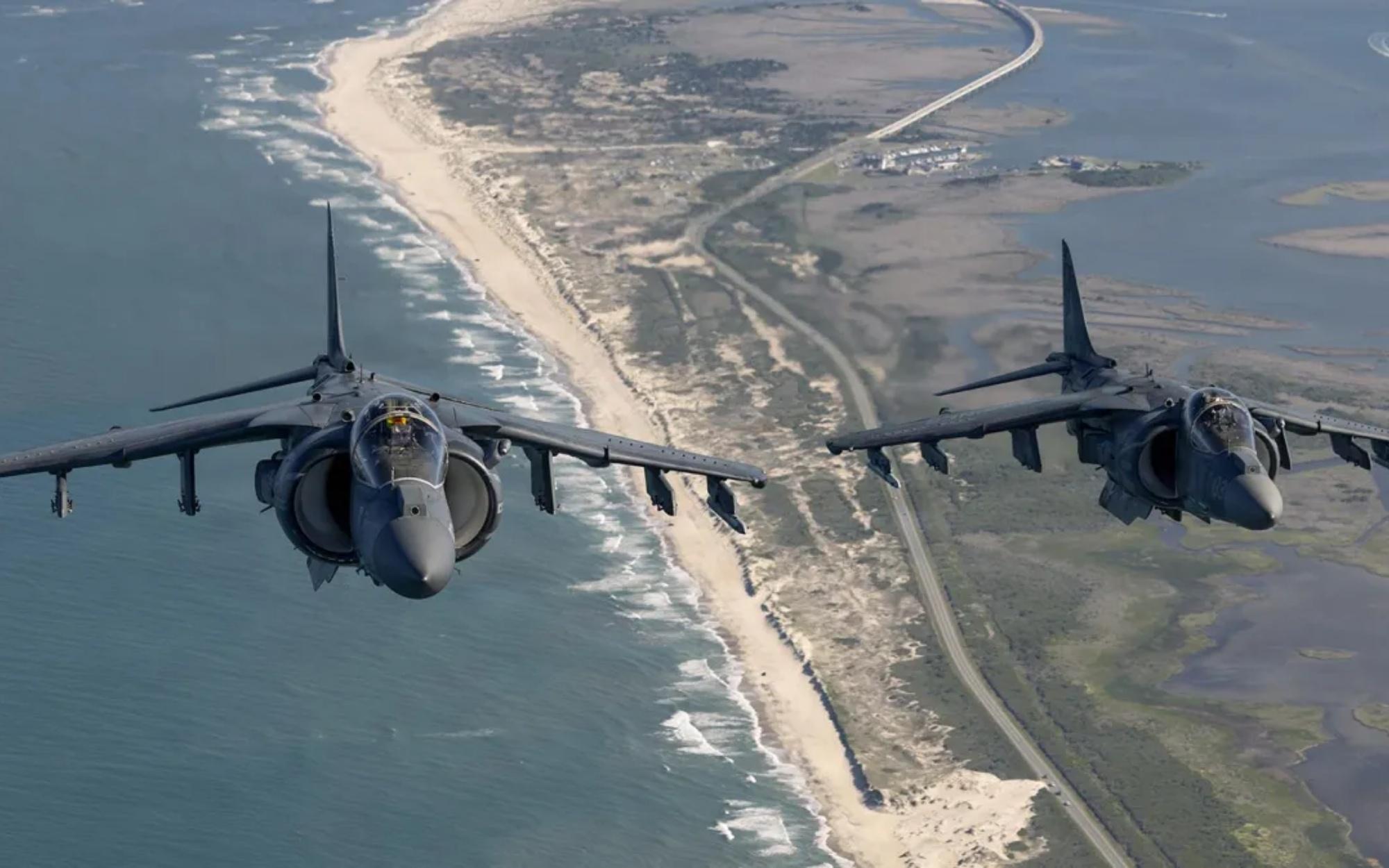
After more than four decades of roaring takeoffs, vertical landings, and battlefield heroics, the Marine Corps is saying goodbye to one of its most iconic warbirds—the AV-8B Harrier II.

This week, the jet that has defined Marine air power for a generation will make its final public flight at Marine Corps Air Station Cherry Point, North Carolina, closing a chapter written in grit, smoke, and American steel.

The “sundown” ceremony, scheduled for Wednesday, will mark the retirement of the Harrier from Marine service.

The aircraft, famous for its vertical takeoff and landing capabilities, has been a mainstay of Marine aviation since first entering service in 1985.

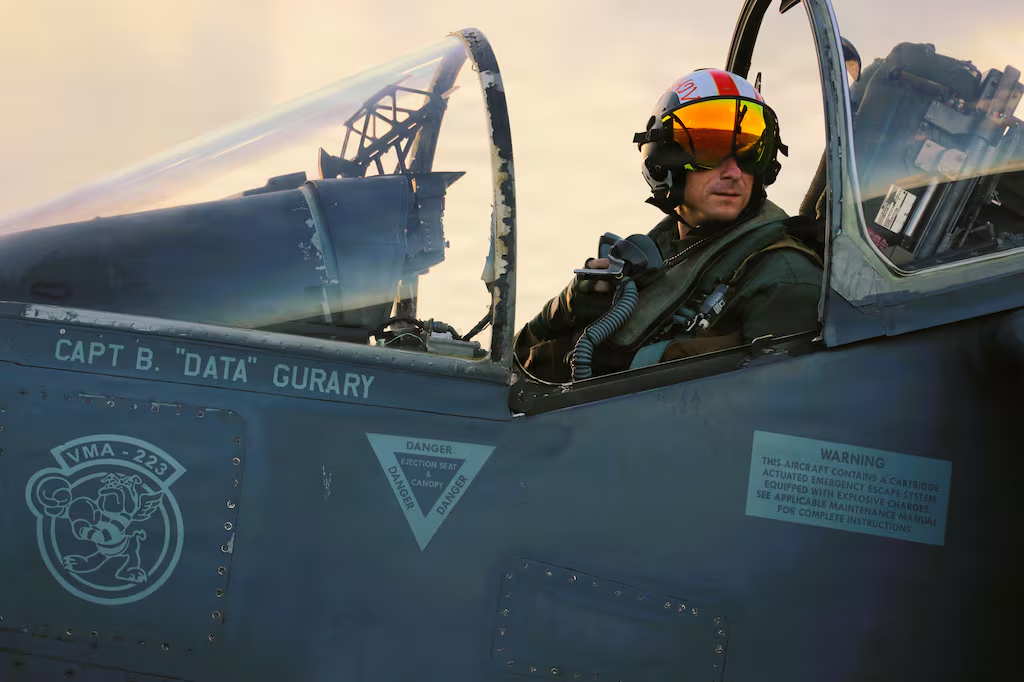
The retiring birds belong to Marine Attack Squadron 223, a unit that just last year was deployed to the Caribbean as part of a larger U.S. military operation culminating in the January 3 capture of Venezuelan strongman Nicolás Maduro.

The event will draw thousands of spectators, including active-duty Marines, retirees, and families who know what this jet has meant to the Corps.

Senior Marine Corps leaders and local officials will join them as a formation of five Harriers performs a powerful flyover before landing in front of the crowd.

For many, that thunderous roar from the Harrier’s Rolls-Royce engine will be the sound of patriotism one last time.

Though the ceremony celebrates the end of Harrier operations, the jets aren’t done just yet.

Marine officials say some of the aircraft will make a few more flights as they are ferried to museums or storage sites. The official deactivation of Marine Attack Squadron 223 is set for September, wrapping up nearly forty years of service.

“Ace of Spades” Takes Final Harrier Flight as Marine Corps Advances to F-35 Era

When retired, many of these tactical legends will find their final rest at the 309th Aerospace Maintenance and Regeneration Group at Davis-Monthan Air Force Base in Arizona—America’s famed aircraft “boneyard.” It’s where icons go to sleep under the desert sun.

The Harrier entered Marine service in 1985, building on the British combat-proven design that earned its fearsome “Black Death” moniker during the Falklands War.

Its ability to leap off short runways or even small ships gave Marines air power unlike any other.

When enemy fighters or insurgents thought they had a safe zone, the Harrier came from seemingly nowhere—clearing the field with precision ordnance and roaring away vertically before the dust settled.

Retired Marine Lt. Col. Mike “Gravy” Rountree, who flew Harriers between 2003 and 2011, recalled early days in Iraq when Marine squadrons operated with almost no support. “They were a gunny and a tank of gas and a couple of ordnance Marines,” Rountree recalled.

Harrier Sundown Celebration Honors Legacy as Marines Prepare for Fifth Generation Fleet
The AV-8B Harrier II+ will reach the end of its planned service life in fiscal year 2026. (U.S. Marine Corps)

“They were able to land the jet, turn the jet, launch the jet with minimum ground support, and it did not depend on any tankers.” That rough-and-ready independence defined the Harrier spirit.

Rountree called the aircraft unique not because of its hardware, but because of how Marines used it.

“The Harrier didn’t need an airfield,” he said. “All it needed was a Marine flying it.” That independence exemplified the Marine ethos—self-reliance, lethality, and raw determination.

Marine Expeditionary Units used that flexibility to bring an airborne punch wherever the fight was hottest.

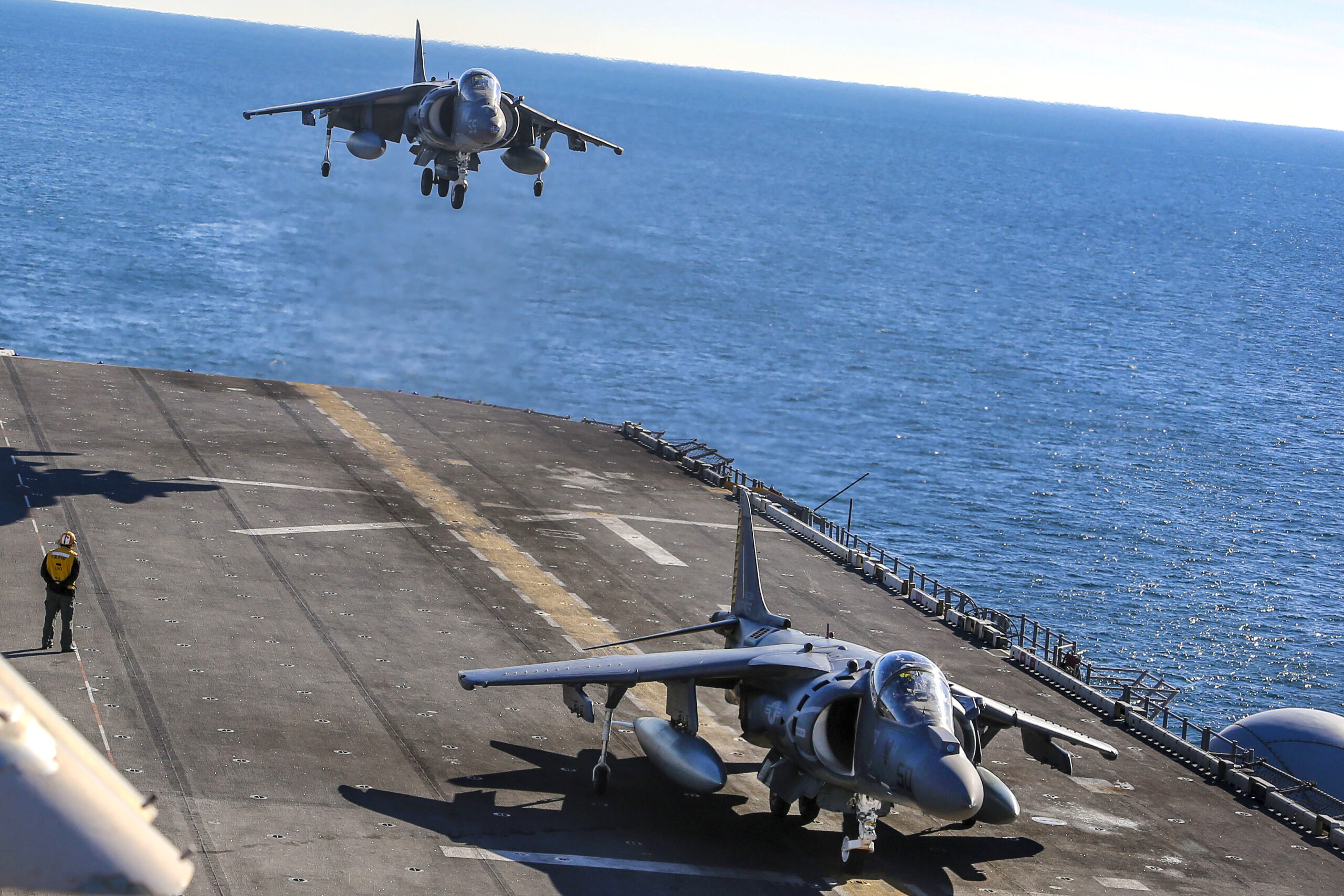
A Harrier could launch from an amphibious assault ship, support ground operations miles inland, and return to deck—all without needing traditional runways.

The jet gave every Marine commander a dedicated air power arm, tightening the Corps’ legendary Air-Ground Task Force concept.

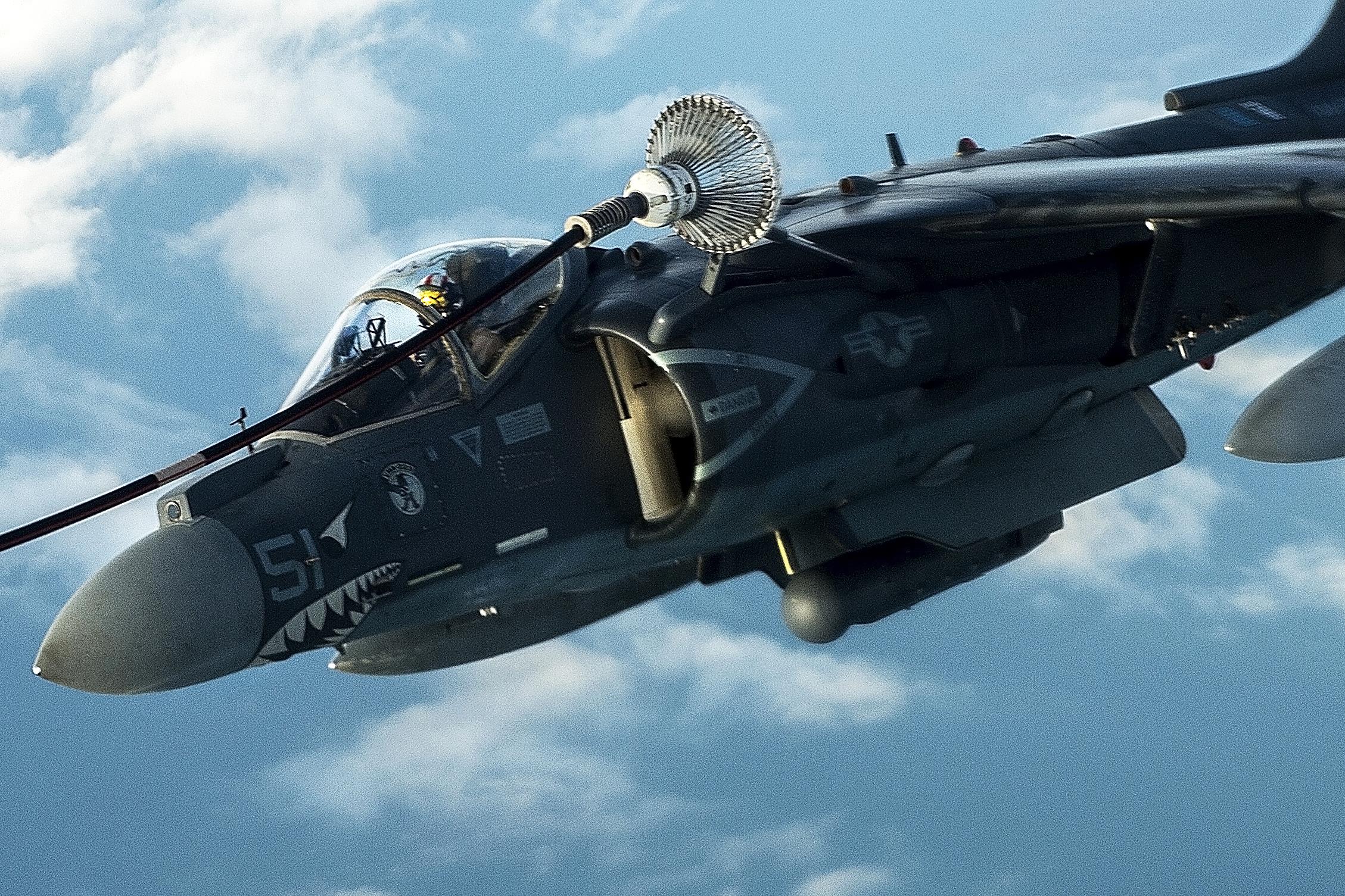
A U.S. Marine Corps AV-8B Harrier II receives fuel over Iraq while supporting Operation Inherent Resolve, Dec. 31, 2015. Operation Inherent Resolve is the coalition intervention against the Islamic State of Iraq and the Levant. U.S. Air Force photo by Tech. Sgt. Nathan Lipscomb
A Marine Corps AV-8B Harrier lands on the amphibious assault ship USS Iwo Jima during the Combined Composite Training Unit Exercise in the Atlantic Ocean, Nov. 20, 2017. The Harrier crew is assigned to Marine Medium Tilt-rotor Squadron 162 (REIN), 26th Marine Expeditionary Unit. Marine Corps photo by Cpl. Jon Sosner

“Now that MAGTAF commander, that ground commander, has his own air force with him all the time,” Rountree said.

“It’s not bringing a bomber’s weight of ordnance, but it’s bringing close air support fires right where it’s needed.”

The Harrier’s combat record speaks volumes. During the first Persian Gulf War, Marine Harriers were the first to the fight, flying 3,380 sorties totaling more than 4,000 flight hours while sustaining an astonishing mission readiness rate above 90 percent.

That kind of reliability didn’t come from fancy bureaucratic contracting—it came from Marines with grease-stained hands keeping their birds combat ready under fire.

Retired Marine Maj. Michael Decker, now with the RAND Corporation, noted that Harriers operated as close as 40 miles from the Kuwaiti border in 1991.

Their short runway requirement let them stay near the fight, something no other American jet could do at the time.

A U.S. Marine Corps AV-8B Harrier II receives fuel over Iraq while supporting Operation Inherent Resolve, Dec. 31, 2015. Operation Inherent Resolve is the coalition intervention against the Islamic State of Iraq and the Levant. U.S. Air Force photo by Tech. Sgt. Nathan Lipscomb

As the last Harriers shut down their engines this week, generations of Marines will recall what that distinct, ear-pounding sound meant.

The Harrier was never just a machine; it was a Marine’s promise to the guy on the ground—that no matter how rough it got, close air support was coming fast.

The torch now passes to newer aircraft like the F-35B, which continues the vertical takeoff legacy with cutting-edge technology.

But there will always be a soft spot in Marine history for the stubborn, rugged, jump-jet workhorse that proved what American innovation and Marine grit could do together.

The Harrier is not just a retired aircraft—it’s a reminder that American warfighters will always find a way to dominate the sky, no matter the odds.

One final roar over Cherry Point will drive that truth home.

News

U.S. Forces Hammer Iranian Targets After Drone Shootdown, Intercept Missiles Over Kuwait

American forces didn’t mince words or fire this weekend as they struck back at Iran’s latest aggression.

According to U.S. Central Command, the War Department’s precision strikes pounded Iranian command-and-control sites and radar installations following Tehran’s reckless shootdown of a U.S. MQ-1 drone operating legally over international waters.

U.S. fighter jets destroyed multiple Iranian air defense assets, a ground control station, and two suicide drones attempting to disrupt commercial and military traffic in international sea lanes.

In typical fashion, Iran thought it could poke the United States with impunity.

It quickly learned that President Trump’s military does not tolerate direct threats to American forces or allies.

CENTCOM described the response as “measured and deliberate,” language that underscores both the restraint and the readiness of U.S. forces.

While no American lives were lost, the strikes sent a clear signal: the War Department will not stand idle as Iran escalates.

The problem for the Islamic Republic is that every time it tests the Trump administration’s resolve, it exposes its own vulnerabilities.

The United States has the best-trained military on Earth, commanded under a War Secretary, Pete Hegseth, who believes in peace through overwhelming strength. And once again, that doctrine worked precisely as intended.

US Navy Takes Out Two Iranian Tankers Defying Blockade in Strait of Hormuz
An F/A-18E Super Hornet taxis on the flight deck of Nimitz-class aircraft carrier USS Abraham Lincoln on April 16, 2026. (U.S. Navy)

CENTCOM confirmed that even amid heightened military activity, the ceasefire that began April 12 remains technically in effect.

Yet everyone knows this so-called “ceasefire” is hanging by a thread thin enough to slice paper. Iranian militias and naval units continue testing limits in the Gulf, hoping American patience will falter. It won’t.

On May 25, U.S. forces carried out additional strikes on Iranian missile launch sites and boats actively laying naval mines.

Those aggressive Iranian operations directly threatened international shipping lanes and put countless lives at risk. Washington’s answer was swift and surgical—American hardware neutralized those hostile positions before they could cause greater harm.

Then, just as tensions seemed to cool, Tehran tried again. On Sunday evening, Iran launched two ballistic missiles aimed toward U.S. forces stationed in Kuwait.

The attack accomplished little besides proving that Trump’s military deterrence strategy is still needed.

Both missiles were intercepted midflight, an achievement demonstrating American technological superiority and constant readiness.

Naval Blockade Sparks Showdown as Destroyer Halts Iranian-Bound Cargo Vessel
The destroyers Spruance, front, and Decatur alongside the fleet oiler Carl Brashear. (U.S. Navy photo by MC2 Will Gaskill)

While military commanders handle operations on the ground, the Trump administration continues diplomatic maneuvering at the highest level. Reports suggest Washington and Tehran have been engaged in overtures about a potential deal that could end the Iran war.

But in a classic Trump move, the president reportedly modified the deal terms to force Tehran into accountability—a step critics say could finally bring real results after decades of failed “talks.”

The proposed resolution would not only wind down hostilities but also ensure Israel’s right to defend itself is not undercut. Iran would have to lift its blockade of the Strait of Hormuz, reopening one of the world’s most strategic waterways.

For years, Iranian forces have used that strait as leverage against global trade and American influence. That leverage may soon be gone.

The pattern is as predictable as ever: Iran provokes, the U.S. retaliates, and the world watches to see if the regime can take a hint.

Each strike reminds the mullahs in Tehran that they’re not dealing with the indecisive bureaucracy of the Obama years—they’re up against the no-nonsense leadership of President Trump and War Secretary Hegseth, who put results before rhetoric.

As always, American forces remain focused on mission success, safety of personnel, and deterrence of future attacks. This is not nation-building or appeasement; it’s strategic dominance.

It’s the reassertion of what the War Department was meant to do: protect American lives and interests anywhere on the map.

Iran’s repeated provocations only prove how effective U.S. force projection truly is. Their desperation to disrupt stability in the Gulf region is a sign of weakness, not strength.

Every missile they launch and every drone they lose chips away at their shrinking power base and emboldens their internal opposition.

For now, the United States stands ready, steady, and fully capable of defending every inch of international waters, airspace, and land where our forces operate.

Iran, take note: when you fire at America, you will get hit back harder—and faster—every single time.

News

Hegseth Sounds Alarm Over China’s Aggression, Demands Allies Step Up Their Game

War Secretary Pete Hegseth made it crystal clear in Singapore: China’s military surge is not something to shrug off, and America’s allies across Asia need to stop relying on Washington’s wallet and start investing in their own defense.

Standing before an audience of international defense leaders at the Shangri-La Dialogue—the top Asian security summit—Hegseth didn’t mince words. He said the world’s “rightful alarm” over China’s expanding military footprint is entirely justified.

Beijing’s buildup, he warned, aimed to tilt the regional balance of power toward a single dominating force: the Chinese Communist Party.

Hegseth spoke with the kind of clarity and conviction that’s become his signature under President Trump’s leadership.

“A Pacific dominated by any hegemon would unravel the regional balance of power,” Hegseth asserted, leaving no doubt which hegemon he was referring to. “No state, including China, can impose its will on the region.”

For decades, too many nations expected the United States to foot the bill for their security. Hegseth was blunt that those days are over.

He backed Trump’s insistence that America’s wealthier partners shoulder more of their own defense burdens. The War Secretary called on allies to push defense spending to 3.5% of GDP while the U.S. pours $1.5 trillion into maintaining its edge.

“Less Shangri-La, more ships, more subs,” Hegseth quipped, highlighting that endless conferences don’t stop aggression—military strength does.

China Bets on AI as U.S. Military Edge Grows, Yet Beijing Moves Cautiously

It was a wake-up call to those who still think talking circles replace putting steel in the sea.

Hegseth stressed that stability requires resolve, not rhetoric.

“What allies want, and what the United States delivers, is strength that is disciplined, resolve that is steady, and leadership confident enough to carry a big stick,” he said, echoing a distinctly Rooseveltian tone that resonated deeply among the allied representatives.

Interestingly, Hegseth kept the door open for measured cooperation with Beijing, noting that U.S.-China military communication has improved under Trump’s pragmatic diplomacy.

“We are meeting more frequently with our Chinese counterparts,” he said, emphasizing that open channels don’t mean soft policies—they mean managing risks from a position of strength.

Chinese delegate Zhou Bo, a retired People’s Liberation Army colonel, admitted relations had “improved,” attributing it to President Trump’s recent visit to China.

U.S. Commander Says China’s Bullying in South China Sea Has Failed, Allies Poised to Bolster Deterrence
190116-N-ES994-0043 BEIJING (Jan. 14, 2019) Chief of Naval Operations (CNO) Adm. John Richardson visits the People’s Liberation Army (Navy) (PLA(N)) headquarters in Beijing. Richardson is on a three-day visit to Beijing and Nanjing to continue the ongoing dialog between the two heads of navy and encourage professional interactions at sea, specifically addressing risk reduction and operational safety measures to prevent unwanted and unnecessary escalation. (U.S. Navy Photo by Chief Mass Communication Specialist Elliott Fabrizio/Released)

That acknowledgment alone was a diplomatic victory in a region wary of China’s growing influence.

Still, Hegseth refused to indulge any illusions. Beijing skipped the summit for a second year running, continuing its habit of avoiding open forums where its intentions might be challenged.

Last year, Chinese officials accused Hegseth of being “vilifying.” This year, they got a sober reality check wrapped in calm authority.

On the issue of burden-sharing, Hegseth reaffirmed Trump’s long-held position: “The era of the United States subsidizing the defense of wealthy nations is over. We need partners, not protectorates.”

That line drew applause from U.S. allies who’ve recognized the need to invest more seriously in their own security.

He praised nations stepping up: South Korea boosting readiness against northern aggression, Australia committing to regional security, and Japan rebuilding its military posture.

“Tokyo and Washington must each pull our weight,” he said, highlighting Japan’s recent defense modernization as a model for others in the Indo-Pacific.

China, Iran and Russia Hold Joint Naval Drills in Mideast

Pivoting briefly to the Middle East, Hegseth dismissed claims that America’s attention was drifting away from the Indo-Pacific toward Iran. He reaffirmed U.S. capability to handle both theaters simultaneously.

“If necessary, we are more than capable of resuming strikes,” he said, making clear that American deterrence remains as sharp as ever.

When asked about Taiwan—the flashpoint China hates being reminded of—Hegseth remained tight-lipped but confident. The island awaits an arms package rumored to be worth $14 billion, but final approval, he said, rests with President Trump.

“Those decisions will depend on the president and the nature of that relationship,” Hegseth told reporters, signaling continuity in U.S. policy despite renewed engagement with Beijing.

Trump himself, back in Washington, continues his doctrine of peace through strength—demanding allies contribute to their own security and enemies think twice before challenging American power.

Hegseth’s message in Singapore carried that same spirit across the Pacific: strength is shared, but leadership must be earned.

For decades, the U.S. carried the burden of safeguarding free nations. Now, under Trump and Hegseth, America’s allies are being invited—not begged—to stand tall beside her.

The message couldn’t be clearer: China’s challenge will be met not with appeasement, but with power, partnership, and purpose.


Scroll to Top