Author name: Common Defense

News

House Bill Moves to Block Military Hospital Cuts and Closures

House lawmakers are finally stepping in to stop the slow bleed of military healthcare under the War Department’s latest restructuring schemes.

A draft defense bill currently under review would halt all closures and service reductions at military hospitals and clinics — a move that couldn’t come soon enough for troops and their families tired of Washington’s bureaucratic reshuffling.

The House Armed Services Committee’s personnel subcommittee has proposed language that would prevent the Department of War from carrying through with its years-long plan to downsize dozens of treatment facilities.

The draft version of the Fiscal 2027 National Defense Authorization Act (NDAA) would even compel the War Department to reverse changes already implemented at 41 sites.

In short, lawmakers are telling the Pentagon brass to pump the brakes and hand over transparency.

The bill would force the Defense Health Agency (DHA) to submit quarterly updates to Congress, giving lawmakers a clear window into any prospective cuts, realignments, or closures that could gut the quality of care for military personnel and their dependents.

Wartime Doctors Without War Wounds? Alarming New Report Exposes Military Medical Readiness Crisis
Trauma surgeons and nurses perform a mock surgery on a simulated casualty at Schofield Barracks, Hawaii, Feb. 27, 2020. Army photo by Sgt. 1st Class Thomas Duval.

The pushback comes seven years after a major reorganization of the military health system was enacted through the Fiscal 2017 NDAA.

The original goal was bureaucratic efficiency — transferring hospital operations to the DHA, reducing administrative overlap, and focusing more resources on preparing combat medics and surgeons for war. It sounded good on paper.

But in practice, those reforms produced exactly what many critics feared: empty waiting rooms, fewer patients, and doctors losing hands-on experience.

Senior enlisted leaders have repeatedly sounded the alarm that the stripped-down model has left military physicians without enough case volume to maintain readiness-level proficiency.

By 2020, the plan had already cut or consolidated 48 facilities, with some hospitals stripped down to basic ambulatory centers that no longer served retirees or dependents.

VA Reverts to Pre-2022 Policy, Halting Onsite Abortions at Veterans Hospitals
Army Lt. Col. Charles Foley, right, performs a surgical procedure with a Chadian armed forces surgeon during the Medical Readiness Exercise in N’Djamena, Chad, June 17, 2024. The exercise allows military health professionals from the U.S. and Africa to exchange medical techniques.

The intent was to push non-active-duty patients into the private sector with government-paid coverage, but that scheme imploded as private networks grew overstretched and military families faced longer drives for basic care.

Even the War Department ultimately admitted the strategy wasn’t working. Late last year, it reversed course, promising to bring 7 percent of patients back under military care by 2026. Officials also paired up with local hospital systems to make sure that military doctors maintain sharp trauma and surgical skills through civilian rotation programs.

Still, members of Congress from both parties have grown frustrated by the Department’s evasive communication.

Lawmakers say they’ve been kept in the dark about facility downsizing and patient transfer plans at major installations, including West Point’s Keller Army Community Hospital and Fort Leonard Wood’s new “hospital” that was opened as a glorified clinic.

Wartime Doctors Without War Wounds? Alarming New Report Exposes Military Medical Readiness Crisis
Army medical personnel inspect a patient used to simulate a combat casualty before performing a mock surgery on June 1, 2025, at Fort Irwin, California. Army photo by Staff Sgt. Ian Valley.

That sort of quiet transformation by bureaucratic decree didn’t fly with the subcommittee.

The new draft measure specifically prohibits carrying through with the 41 targeted reductions and obliges the DHA to restore staffing and services to their March 2026 levels. It’s an institutional reset — and a warning shot to the top brass.

Among the targeted sites are key facilities across the Army, Navy, and Air Force, including the Eisenhower Army Medical Center at Fort Gordon and Naval Hospital Beaufort in South Carolina.

Others on the chopping block include Air Force medical groups from Georgia to California that, under the War Department’s original plan, would have scrapped nutrition, chiropractic, or pediatric services altogether.

The proposal also protects the Desert Sage Community-Based Medical Home at Fort Bliss, previously earmarked for shutdown, which would have cut care for an already-overburdened soldier population. Under this bill, that plan is officially on hold.

Notably, even some War Department officials are trying to downplay the chaos. Dr. Stephen Ferrara, formerly the acting Assistant Secretary for Health Affairs, said last fall that “no list” of closures existed, calling the review process nothing more than “good governance.”

DoW Fraud Scandal at Davis-Monthan: Airman and Spouse Accused of Looting Military Medical Supplies Worth Millions
An Air Force pharmacy technician is accused of stealing millions in medical gear and supplies meant for his base’s pharmacy. Air Force photo by Airman 1st Class Karina Lopez.

Lawmakers didn’t buy it, and neither should the military families who’ve watched base hospitals shrink while bureaucrats talk about “supply and demand mismatches.”

Groups representing troops and veterans have also been pressing Congress to ensure that data, not red tape, guide the reforms.

Karen Ruedisueli of the Military Officers Association of America said the organization wants “rigorous, data-based analysis and mitigation planning” before any further shifts to civilian care take place. Translation: stop experimenting on the military’s medical system.

The House Armed Services Committee plans to finalize the NDAA markup later this week, sending it to the full House floor for debate. The Senate will tackle its version next week, though that chamber has kept its draft language under wraps.

If this bill clears committee and becomes law, it would mark a rare and long-overdue course correction — one that prioritizes readiness and troop care over bureaucratic “efficiency.” For once, the Capitol might actually be saving something worth protecting.

And at a time when America’s fighting forces need every bit of strength and preparation possible, halting the health care cut parade is not just smart policy, it’s mission essential.

News

Army Launches Push to Bring Boot Manufacturing Back to U.S. Soil

The U.S. Army is putting its foot down—literally—on foreign-made gear. After decades of outsourcing, the service is calling on American manufacturers to step up and make better boots that are entirely produced on U.S. soil.

The Army’s goal is to both upgrade the quality of footwear for America’s warfighters and reignite an American manufacturing base that globalist trade policies and corporate outsourcing have nearly dismantled.

According to the Army’s newly released Request for Information (RFI), the mission is clear: “Support re-shoring of the domestic footwear industry, improve capabilities for the domestic military footwear industrial base, and ultimately provide the best performing footwear technology to the warfighter.”

That’s a tall order, especially considering that 99% of all footwear sold in the U.S. in 2020 was imported, largely from factories in Asia.

After years of watching Chinese factories pump out cheap shoes—including those marketed directly to service members—some in the Pentagon finally seem ready to reclaim American production capability.

The RFI outlines several key areas where companies must prove their worth. The Army wants to see real strategies for increasing domestic output, adopting high-tech and automated manufacturing methods, and demonstrating flexibility to produce different types of military boots.

Companies must also show how they’ll make U.S.-made boots more cost-effective, durable, and high-performing compared with their foreign counterparts.

There’s one major requirement that separates contenders from pretenders—manufacturers must already operate in the U.S. and comply with the longstanding Berry Amendment. That 1941 law bars the War Department from using taxpayer funds for uniforms, gear, or textiles produced overseas.

U.S. Air Force Updates Uniform Standards: New Boot Requirements, Eyelash Ban, and OCP Rules
The Air Force updated uniform rules to require all combat boots to be between 8 and 12 inches tall. Above, Tech Sgt. Erick Sowinski, 911th Security Forces, practices a rope climb at the Pittsburgh International Airport Air Reserve Station, Pennsylvania, May 1, 2021. Air Force photo by Tech. Sgt. Richard Kaulfers

Unfortunately, Congress and prior administrations have looked the other way as more and more dollars flowed to Chinese manufacturers under the guise of “choice” for service members.

The Army now wants to rein that in, asking companies to show hard numbers on how they plan to expand annual output, reduce costs, and improve defect rates. On top of that, prototype boots demonstrating performance improvements will earn bonus points.

This initiative comes through the Supporting Warfighters through Innovative Footwear Technologies (SWIFT) program, established by Congress in 2024. SWIFT’s goal is to connect manufacturers, suppliers, and research universities to develop better gear and restore enduring American capability in military-grade footwear production.

Interestingly, this renewed focus aligns with a legislative effort being pushed in Congress. The Better Outfitting Our Troops Act—appropriately shortened to the BOOTS Act—was introduced for fiscal year 2025 by Senator Tammy Duckworth of Illinois.

It would require that any combat boots sold to or used by troops, whether issued or voluntarily purchased with uniform allowances, must be made entirely in America.

While the Berry Amendment already requires issued uniforms to come from U.S. sources, it’s been widely ignored in the optional boot market. Many service members use their allowances to buy imported boots online or at military exchanges, where foreign-made footwear—including Chinese-manufactured pairs—line the shelves.

As William McCann, executive director of the United States Footwear Manufacturers Association, bluntly put it, “Foreign-made boots manufactured in China and other Asian factories are openly sold through official military exchanges, online storefronts, and retail channels targeting military personnel, sending taxpayer dollars to support foreign manufacturers.”

That “optional boot” market represents a staggering $250 million in annual commercial sales—most of it heading straight overseas. McCann and other advocates say that American manufacturers have the know-how and technology to bring all that production back home.

What they’ve lacked is the institutional willpower and procurement consistency from Washington to make it feasible again.

Now, with the SWIFT program funded and the BOOTS Act gaining traction, there’s a path to not only rebuild this capability but also to give American troops the top-quality footwear they deserve.

After all, if we expect soldiers to depend on their boots for miles of rough terrain, harsh climates, and battlefield conditions, they shouldn’t be made in a foreign factory that doesn’t share America’s interests.

Restoring American supply chains strengthens both national security and industrial readiness—two priorities that pro-Trump conservatives like War Secretary Pete Hegseth and patriotic lawmakers have long championed. Rebuilding our warfighting base starts with producing exactly what our troops wear and use.

The Army’s call to restore domestic boot production is long overdue but undeniably welcome.

Reviving this sector isn’t just about stitching leather and rubber; it’s about reclaiming control of a strategic manufacturing capability that belongs in American hands.

No warfighter should ever have to depend on China for battlefield essentials.

America built the boots that won two world wars. It’s past time we lace up that legacy again.

News

Medal of Honor Legend Bruce Crandall, Hero of Ia Drang, Passes Away at 93

Retired Colonel Bruce P. Crandall, a name etched permanently in the chronicles of American military heroism, has passed away at the age of 93.

The Medal of Honor recipient and Vietnam War legend died on May 31, leaving behind a legacy of extraordinary courage, loyalty, and leadership that defined an entire generation of warriors.

Crandall was more than a pilot. He was an icon of grit and self-sacrifice, flying headfirst into the most dangerous battles of Vietnam to save his comrades when others had been ordered to stand down.

His heroic actions during the 1965 Battle of Ia Drang, chronicled in the acclaimed book and film “We Were Soldiers Once … and Young,” immortalized him among America’s bravest.

Born in February 1933 in Olympia, Washington, Crandall was an athlete with dreams of joining the New York Yankees before destiny called him elsewhere.

Drafted into the Army in 1953, he traded a baseball mitt for helicopter controls — and soon proved he was born to lead men through fire.

During the Battle of Ia Drang in November 1965, Crandall commanded a fleet of helicopters delivering troops into Landing Zone X-Ray, deep in enemy territory. When orders came down for medical evacuation missions to stop due to heavy enemy fire, Crandall refused to accept defeat.

The men on the ground — the soldiers of the 1st Battalion, 7th Cavalry — were pinned down, running out of ammunition and bleeding badly. To Crandall, that was all that mattered.

Medal of Honor Legend Bruce Crandall, Hero of Ia Drang, Passes Away at 93
Ret. Col. Bruce Crandall poses with a UH-60 Black Hawk helicopter from Task Force Lobos, 1st Air Cavalry Brigade, in Afghanistan on March 28, 2012. (U.S. Army)

As Col. “Tony” Nadal radioed in desperation for help, Crandall didn’t wait for permission. He lightened his helicopter by removing his door gunner and equipment, saying simply, “If you have infantry on the ground, you can’t shoot up their backside.”

Then, alongside his friend Major Ed Freeman, he launched into history.

Despite hailstorms of enemy fire, Crandall and Freeman flew 22 separate missions into the inferno. They brought in ammo, pulled out the wounded, and refused to stand down until over 70 soldiers were saved.

For those trapped on the ground, his Huey became a lifeline of courage and faith.

His Medal of Honor citation captures the essence of that day: “Major Crandall’s voluntary decision to land under the most extreme fire instilled in the other pilots the will and spirit to continue to land their own aircraft, and in the ground forces the realization that they would be resupplied and that friendly wounded would be promptly evacuated.”

That courage transformed the course of the battle and inspired every man within earshot of his radio. Crandall’s bravery wasn’t limited to one day — throughout his two tours in Vietnam, he completed nearly 1,000 combat missions.

In one 1966 operation, he personally rescued 12 wounded soldiers from dense jungle terrain, further solidifying his reputation as a relentless warrior and compassionate leader.

Medal of Honor Legend Bruce Crandall, Hero of Ia Drang, Passes Away at 93
Crandall’s UH-1D Iroquois helicopter climbs skyward after discharging a load of infantrymen on a search-and-destroy mission in Vietnam. (U.S. Army)

Crandall’s second tour ended tragically in 1968 when his helicopter crashed, leaving him with a broken back and multiple serious injuries.

True to his spirit, he fought through five months of recovery and continued to serve until a stroke eventually grounded him permanently in the early 1970s. He retired from active Army service in 1977.

Originally awarded the Distinguished Service Cross for his heroism at Ia Drang, Crandall’s recognition was later upgraded to the Medal of Honor, presented by President George W. Bush in 2007 — a moment that brought overdue appreciation for his unmatched valor.

For those who knew him, though, Crandall’s greatness wasn’t limited to medals or citations. Friends, soldiers, and fellow veterans recalled a man of deep humility, quick humor, and unwavering loyalty.

According to the Congressional Medal of Honor Society, “He will be remembered for the warmth of his wit, the depth of his humility, and the fierce loyalty he gave to the people and communities he loved.”

His story stands as a stark reminder of a time when American soldiers were cut from tougher cloth. While bureaucrats debated in Washington, warriors like Crandall took matters into their own hands — risking everything for the men beside them.

As modern America continues to grapple with the meaning of courage and service, Crandall’s life is a powerful lesson in both. He didn’t need permission to do what was right. He saw his brothers in arms bleeding in the dirt of Vietnam and chose action while others hesitated.

With his passing, the roll of living Medal of Honor recipients now stands at 63 — a somber reminder that the great generation of warriors who carried the torch through our hardest wars is dwindling.

Bruce Crandall embodied the creed of fighting for liberty, faith, and honor, and his story will continue to light the way for those who wear the uniform today.

America salutes you, Colonel Crandall. Mission accomplished.

News

Hackers Hijack Senior Space Force Official’s Instagram with Anti-American Propaganda

Hackers managed to seize control of a top U.S. Space Force official’s Instagram account over the weekend, filling it with anti-American propaganda and pro-Iranian imagery in a disturbing display of digital warfare against a senior military leader.

The account, belonging to Chief Master Sergeant of the Space Force John Bentivegna, was compromised for several hours on Sunday before the malicious posts were taken down early Monday morning.

The hacked posts, according to military officials and online observers, were not subtle.

They included Islamic revolutionary imagery, anti-U.S. captions, and historical references crafted to demoralize Americans and embarrass the U.S. military.

The hackers clearly aimed to blend information warfare with social media manipulation—a tactic that hostile regimes have used for years against the United States.

By early Monday, the unauthorized content was removed thanks to assistance from Meta, Instagram’s parent company.

A Space Force spokesperson confirmed the breach but gave few details on how long the hackers held the account or who was behind it.

“This incident serves as a good reminder that online threats are constantly evolving, and users must remain alert to suspicious activity while exercising strong cybersecurity practices,” the spokesperson said.

That sanitized statement aside, the attack was more than an embarrassing inconvenience—it was a shot across the bow of America’s newest military branch and a bold propaganda play by adversaries looking for any opportunity to humiliate U.S. leadership.

Even the slightest lapse in cyber hygiene becomes a weapon for those determined to undermine American power online.

Before the content was scrubbed, screenshots of the posts circulated across unofficial military pages including Reddit’s r/AirForce and the widely followed Facebook group Air Force amn/nco/snco. One of the most widely shared images depicted Imam Ali holding the Sword of Zulfiqar, a symbol of justice in Islamic tradition. Another image showed Husayn ibn Ali, a figure revered in Shia Islam.

But the hackers didn’t stop there. They also uploaded an audio clip of “Hanoi Hannah,” a notorious Vietnamese propagandist who broadcast messages aimed at demoralizing American troops during the Vietnam War.

The audio included Arabic text that roughly translated to, “This is your fate if you get close to the Middle East.” The message was clear: enemies of the U.S. were drawing historical parallels to America’s lowest military moments and gloating about them.

Following that unsettling clip, another story featured a distorted image of Ali Larijani, an Iranian national security figure, with a caption reading “I set foot in America.”

The timing was intentional—Larijani’s recent death during an Israeli airstrike only further fueled Tehran’s martyrdom narrative. When hackers appropriate those figures into their propaganda, it’s a reminder that the digital battlespace is just as real as any ground fight.

Bentivegna’s account also featured a bizarre image from the TV series *Game of Thrones* showing Jon Snow in a battle scene, emblazoned with Arabic text translating to “Army of the Red One.”

The post included a message urging followers to “ban the accounts of the haters,” a likely reference to suppressing critics of their ideology.

This cocktail of pop culture, Islamic symbolism, and anti-American rhetoric shows how adversarial information warfare has evolved into something deliberately viral.

Bentivegna himself addressed the issue on Facebook late Sunday night, writing that “appropriate teams” were working to recover the compromised account.

He urged followers not to interact with suspicious messages, adding that the situation serves as a reminder of how cybersecurity affects everyone.

That’s a fair point, but make no mistake—this wasn’t a random case of spam. It was a pointed act of digital hostility aimed squarely at a high-ranking member of the U.S. military.

Even more telling, the same hacker group reportedly infiltrated the Instagram page of former President Barack Obama’s White House archive account, posting similar pro-Iranian symbols and a photograph of slain Iranian commander Qasem Soleimani.

One caption crowed, “The White House is under Shiites’ control.” It wasn’t true, of course, but in the world of psychological operations, perception is the battlefield.

The broader implications are chilling. U.S. lawmakers have already warned the Pentagon that adversaries are exploiting military members’ digital footprints and location data to track deployments and identify troop positions.

When personal accounts of senior leaders are breached, it sends a message of vulnerability that enemies are keen to exploit.

Meanwhile, credible threats targeting U.S. service members have been increasingly routed through digital channels linked to the Islamic Revolutionary Guard Corps.

Emails, texts, and fake social media messages often target troops both deployed and at home with manipulation tactics. The Bentivegna breach fits right into that pattern—an operation meant to erode morale, sow confusion, and dent public confidence in the U.S. military establishment.

This latest incident should serve as a wake-up call for every member of the armed forces and for the War Department itself.

America’s adversaries aren’t just fighting on the ground or in the skies anymore—they’re battling for influence, perception, and chaos online.

And if they can take over even one senior officer’s social media account to spread their propaganda, they’ll consider it a minor victory in the ongoing cyber war against the United States.

News

U.S. Troop Presence in Lithuania Under Review Amid Global Realignment

Lithuania’s defense minister confirmed this week that the future presence of U.S. troops in his country is currently “under review,” signaling yet another shift as Washington adjusts its military posture in Europe amid larger global realignments.

While the Biden administration continues to fumble its foreign policy credibility, Eastern European allies are left wondering when the next U.S. rotation will arrive—and with what firepower.

Robertas Kaunas, Lithuania’s defense minister, told reporters in Vilnius that although Washington has provided assurances that a new group of American troops will deploy to Lithuania, no firm details have been shared.

“The next rotation is currently under review because the number of U.S. troops in Europe is changing, this naturally leads to a review of the regional stance,” Kaunas said, reflecting the uncertainty felt across NATO’s eastern flank.

For the first time since 2020, Lithuania may be left without a U.S. armored battalion of about 1,000 troops on its soil.

That’s no small concern for a nation sharing a border with Russia and Belarus—two regimes ever eager to test NATO’s resolve. America’s troops currently stationed there are completing their expected rotation, yet the next group, initially scheduled to arrive shortly after, has not been announced.

U.S. Troop Presence in Lithuania Under Review Amid Global Realignment
Army Staff Sgt. Trey D. Wogan receives a coin from Lithuanian Armed Forces Lt. Col. Darius Žūkas during the closing ceremony of Iron Wolf 22 at Pabradė Training Area, Lithuania, Oct. 28, 2022. The Lithuanian Armed Forces-hosted military exercise operates in conjunction with U.S. and NATO allies.

Kaunas said he raised the issue with U.S. War Secretary Pete Hegseth during the Shangri-La Dialogue in Singapore last week.

“We have assurance that the next rotation in Lithuania will arrive, but when exactly, and with which capabilities, and at what size—this is due to be announced,” he told reporters. In other words, all reassurance, but no schedule.

While the bureaucrats in Washington debate force posture, Lithuania continues to pull its weight. The small Baltic nation has tripled its defense budget since 2022, now spending a remarkable 5.4% of its GDP on national defense—well above NATO’s basic 2 percent requirement.

That commitment demonstrates not just seriousness, but also how smaller U.S. allies are stepping up even when political leadership in Washington wobbles.

According to Kaunas, U.S. officials have said that the Baltic region remains of “critical importance” to both NATO and the United States, acknowledging Lithuania’s significant defense investments.

Yet the math on troop commitments continues to fluctuate, suggesting a recalibration of priorities as Washington balances deterrence in Europe with commitments to the Middle East and Pacific.

Currently, the U.S. forces in Lithuania consist of two battalions from the Texas-based 1st Cavalry Division, including Abrams tanks, Bradley fighting vehicles, and Paladin self-propelled howitzers.

These units were the first to operate from Lithuania’s new purpose-built facilities at the Pabrade military base, just miles from the Belarusian border. It’s a modern site built precisely to accommodate U.S. armor and long-term rotational deployments.

U.S. Troop Presence in Lithuania Under Review Amid Global Realignment
Army Pfc. Dakota Spautz takes cover behind a tree during a combined training exercise with Lithuanian troops at the Kairai Training Area, Lithuania, Feb. 21, 2021.

If the next rotation is delayed or downsized, that modernization will stand silent, a symbol of Lithuania’s readiness but Washington’s hesitation.

The minister’s diplomatic phrasing—“under review”—suggests decisions are being made at higher political levels rather than through military necessity on the ground.

It’s no secret that the Biden administration’s posture toward Europe has been confused at best. Pulling troops here, adding them there, talking tough but acting softly—it’s a pattern repeating across multiple global theaters.

It’s the exact opposite of the doctrine of peace through strength once emphasized by President Trump and now echoed by War Secretary Hegseth.

In Trump’s years, clarity mattered. Allies knew America was serious about deterrence, and adversaries—especially Moscow—knew better than to test U.S. resolve.

Under Biden, vague statements about “reviews” and “regional adjustments” have only emboldened adversaries and unsettled partners who depend on clear U.S. backing.

Still, Lithuania remains optimistic, if only out of strategic necessity. It must publicly trust that U.S. promises hold weight, while privately preparing for cases where they might not.

Given its proximity to both Russia and Belarus, maintaining even a small but steady U.S. presence is critical for deterrence.

For all the talk of NATO unity, it is Lithuania and its Baltic neighbors that continue to live with the daily reality of Russian intimidation, cyber intrusions, and hybrid threats. While Western Europe debates budgets, countries like Lithuania act.

U.S. Troop Presence in Lithuania Under Review Amid Global Realignment
U.S. soldiers move out in an open field during a training exercise in Rukla, Lithuania Feb. 2, 2015.

The problem, as Kaunas subtly hinted, is whether Washington’s “review” will keep pace with that reality.

The next steps will likely depend on the broader global posture being pieced together by Hegseth and his team.

Balancing multiple hotspots—Middle East tensions, Pacific deterrence, and NATO’s eastern frontier—requires more than political talking points. It demands decisive military leadership and the will to keep America’s word abroad.

Lithuania has done its part by building infrastructure, committing funding, and standing shoulder-to-shoulder with American forces. Now it waits for action, not adjectives, from Washington.

In an era where strength deters chaos, the words “under review” shouldn’t describe America’s commitment to its allies living on the edge of tyranny.

News

Rubio Grills Lawmakers as Fragile Iran Ceasefire Teeters On the Brink [WATCH]

Secretary of State Marco Rubio didn’t mince words Tuesday when he faced lawmakers over the shaky ceasefire between the United States and Iran.

After a relentless 38-day bombing campaign dubbed Operation Epic Fury, Rubio painted a stark picture of Iran’s resilience — largely powered by drones so cheap and easy to replace that American air power can barely make a dent in their stockpile.

“They still have a lot of drones because these are easy to make,” Rubio told the Senate Foreign Relations Committee.

The secretary emphasized that drone warfare has become a global contagion, reshaping battlefields from the Middle East to Eastern Europe.

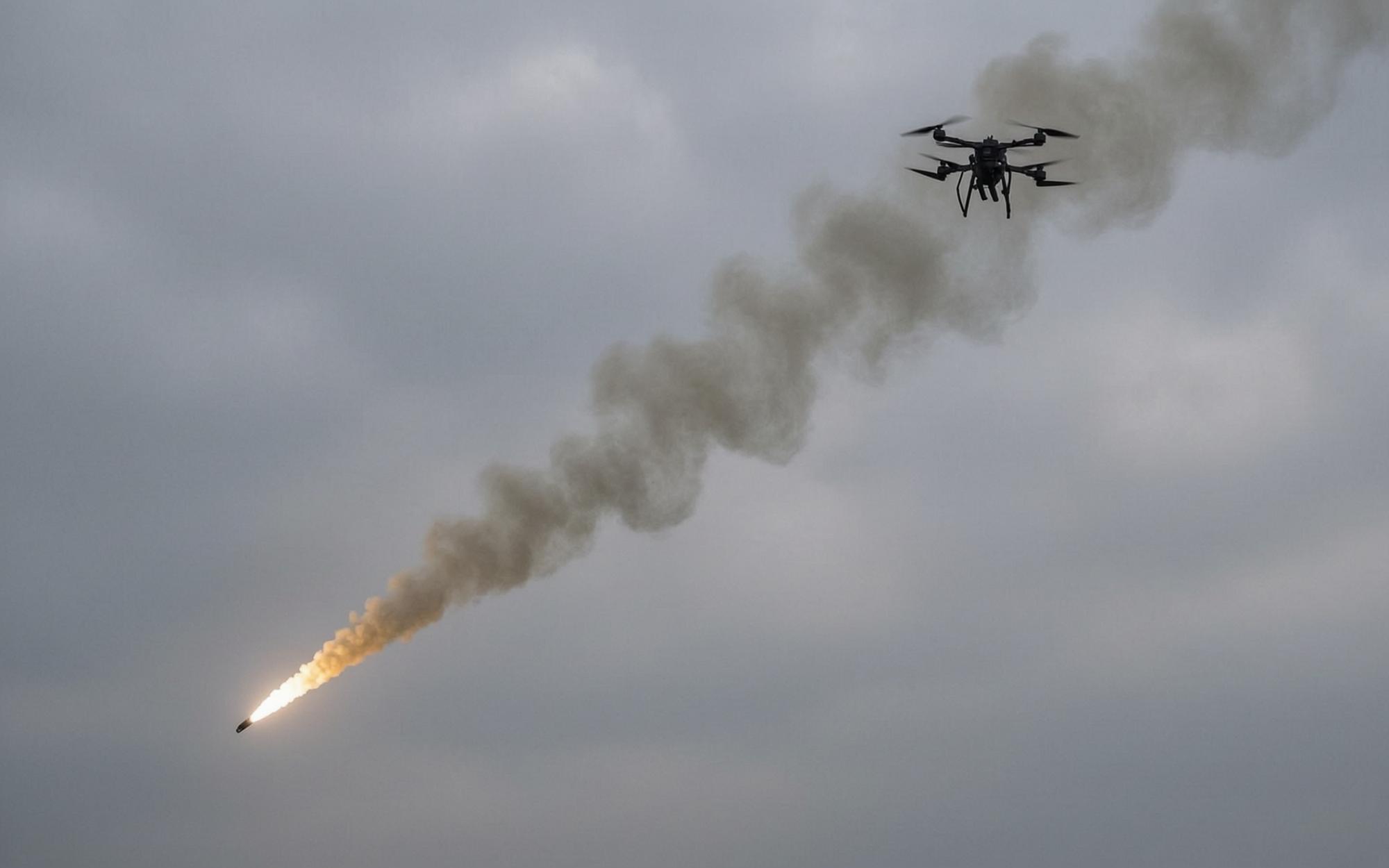
Iran’s Shahed-136 drones, he explained, epitomize this new reality — minimal cost, maximum impact.

At about $20,000 to $50,000 a piece, these delta-winged kamikaze drones can be cranked out like toys in a factory, each carrying an explosive warhead ready to turn into a flying bomb on impact.

That low-cost innovation has kept the Islamic Republic’s arsenal dangerous even amid American airstrikes hammering Iranian infrastructure.

Rubio, however, was quick to point out that America has achieved major victories in the campaign.

He argued that U.S. forces successfully crippled Tehran’s Navy, gutted its military production capabilities, and made Iranian missile manufacturing a shadow of what it once was.

“There is no Iranian Navy,” Rubio declared in a biting moment of bravado. “It lies at the bottom of the ocean, and will soon, within a number of years, be prime fishing spots because they’ll turn into reefs.”

The comment earned laughter from some senators, but behind the humor sits a hard truth — Iran’s warfighting machine has taken a serious beating.

Even so, the peace holding over the region is built on fragile ground. Over the weekend, U.S. Central Command announced what it described as “self-defense strikes” on Iranian radar and drone control centers.

Almost simultaneously, Iran claimed to have retaliated by targeting American personnel at a base in Kuwait. That attack failed, and U.S. officials confirmed no casualties, but the exchange spoke volumes about how quickly this “ceasefire” could unravel.

Rubio explained to lawmakers that negotiating peace with the Iranian regime is a painstaking process, involving backchannels, mediators, and inconsistent interlocutors. “These are not like talks with Switzerland,” he said dryly.

Yet he hinted that progress is possible, suggesting that Tehran has shown limited interest in talking about its nuclear program — a soft admission that the changing battlefield might finally be forcing the regime’s hand.

According to Rubio, the current peace framework unfolds in two stages.

The first centers on reopening the Strait of Hormuz. In that phase, Iran would cut tolls, clear mines from its own waters, and commit to halting attacks on international shipping — conditions Rubio called “the predicate that opens the door to phase two.”

That next step, he said, will demand that Tehran seriously negotiate the disposal of its deeply buried enriched uranium and accept “severe and long-term limitations” on future enrichment.

The plan sounds straightforward on paper, but diplomacy in the Middle East rarely travels a straight line.

Iranian state outlets, Fars and Tasnim News, now claim Tehran has gone radio silent after Israeli Prime Minister Benjamin Netanyahu ordered new strikes into Lebanon aimed at Hezbollah.

Those attacks, Iranian officials claim, violated the regional truce and shattered any pretext of calm.

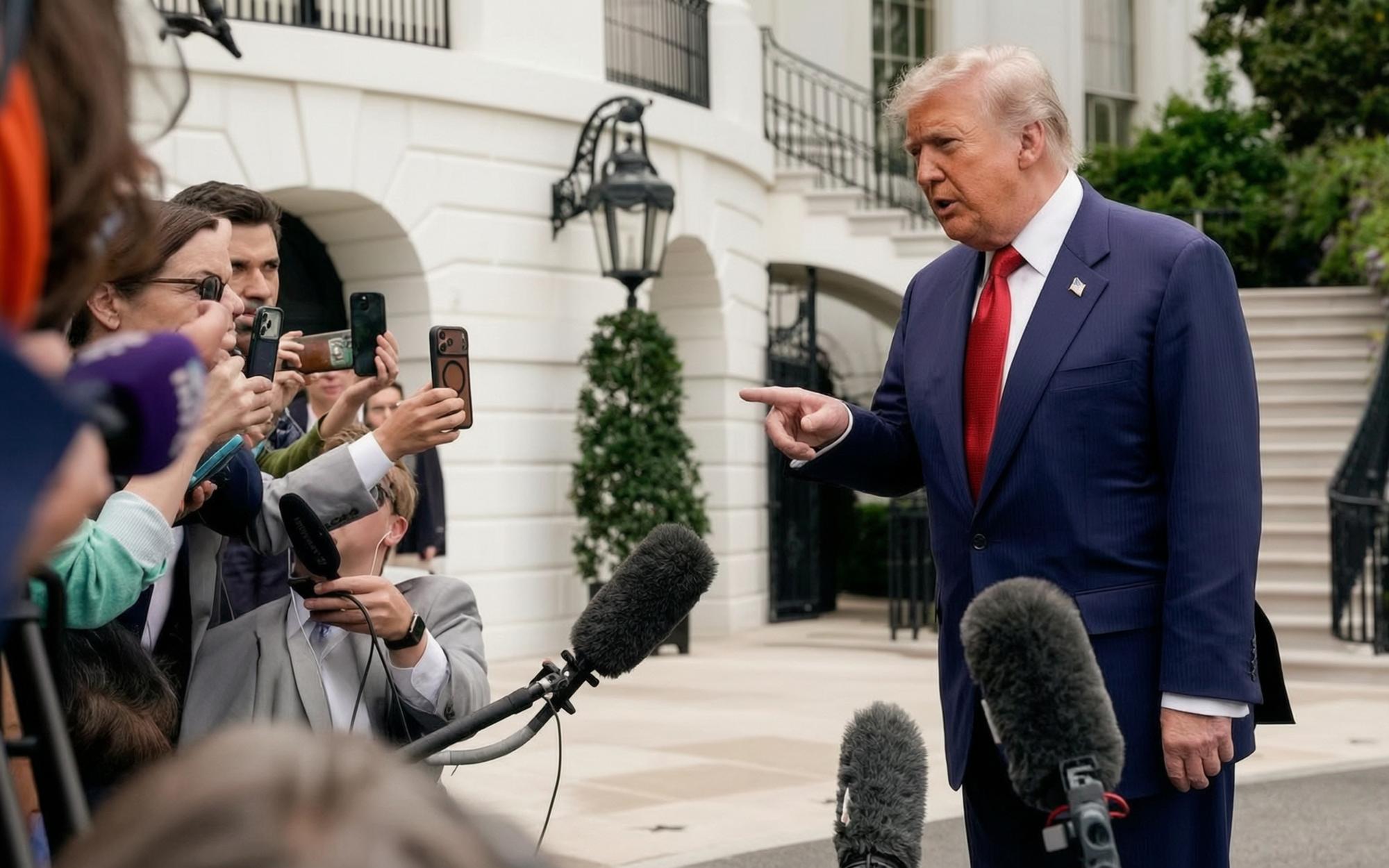
President Donald Trump quickly pushed back against those reports with a post on Truth Social, confidently asserting that talks with Iran “have been going on continuously,” listing activity every day leading up to Tuesday.

The president’s message was clear — the U.S. isn’t backing down, and diplomacy hasn’t stopped.

Still, the growing conflict between Israel and Hezbollah threatens to derail the fragile balance. Netanyahu seems intent on finishing the job in Lebanon, asserting Israel’s right to pursue terrorists wherever they hide.

Iran, in turn, insists that a true ceasefire with Washington must include peace on all fronts, including Lebanon.

“The ceasefire between Iran and the U.S. is unequivocally a ceasefire on all fronts, including in Lebanon,” Iranian Foreign Minister Seyed Abbas Araghchi said Monday. “Its violation on one front is a violation of the ceasefire on all fronts.”

For now, the uneasy truce remains perched on the edge of collapse. Rubio’s remarks revealed both how much progress the Trump administration has made in breaking the Iranian military’s backbone and how quickly old hostilities could flare back to life.

The war effort may have succeeded spectacularly at sea and in the skies, but diplomacy on the ground is proving more dangerous.

From Rubio’s confident tone to President Trump’s refusal to concede momentum, the message from Washington was unmistakable: America isn’t done yet, and Iran’s days of intimidation are numbered.

Operation Epic Fury might have ended its air campaign, but the political storm it unleashed continues to reshape the Middle East with every passing hour.

WATCH BELOW:

News

U.S. Military Aims to Unleash Battle-Ready Laser Arsenal by 2028 Under Trump’s Golden Dome Plan

The Pentagon’s laser dream might finally hit the battlefield—and this time, it’s being fueled by President Donald Trump’s Golden Dome initiative to fortify the homeland with cutting-edge missile defense technology rooted in directed energy.

According to Undersecretary for Research and Engineering Emil Michael, who testified before the Senate Armed Services Committee on May 19, the science of these high-energy laser weapons is essentially complete.

What’s left now, he said, is the hard part: mass-producing them and ensuring they can be maintained by soldiers in the field, not just Ph.D.s in lab coats.

Michael told lawmakers that the United States now possesses a “suite of directed energy products” ranging from low-power systems to high-end laser weapons.

The task ahead, he said, is scaling those prototypes into deployable assets suitable for large-scale production and field use.

That effort is being supercharged by Trump’s Golden Dome project, a nationwide missile defense system relying in large part on directed energy.

Some in Washington mocked the concept at first, but Trump—backed strongly by War Secretary Pete Hegseth—has transformed it into a cornerstone of America’s technological resurgence.

Michael said the plan’s “big reliance” on laser technology has dramatically accelerated research and development, particularly after lessons learned in Iran.

The Pentagon plans to show off these field-ready laser weapons by the summer of 2028 as part of several Golden Dome demonstration events.

Trump Unveils $175 Billion “Golden Dome” Missile Defense Plan with Ambitious 3-Year Timeline

Michael noted that “there’s never been more effort in the department on this particular capability,” signaling a clear shift away from endless research and toward real-world application.

The money trail tells the story. The Trump administration’s fiscal year 2027 budget request includes $452 million for directed energy development under the Golden Dome umbrella—more than triple what was allocated in 2025.

The U.S. Army and Navy also plan to pour almost $676 million into the Joint Laser Weapon System, a containerized 150-300 kW platform positioned as the workhorse of the upcoming laser arsenal.

But while the enthusiasm is real, the engineering gauntlet remains brutal. The military’s record on laser weapons over the last decade reads like a lesson in frustration and failure.

From the Army’s high-profile Stryker-mounted systems that overheated in the desert, to the Navy’s abandoned HELIOS program, the obstacles have been technical, logistical, and bureaucratic.

Retired Lt. Gen. Robert Rasch once summed it up perfectly: “We can’t get by with the thought of having clean rooms out in combat.” It’s one thing to cut steel on a lab bench, another to fire lasers from a dusty command post in Iraq. That, in essence, has been the Achilles heel of directed energy—gorgeous in theory, clunky in combat.

Army Ditches Valkyrie Laser as War Secretary Signals New Path for Joint Laser Warfighting System
Artist rendering of the Indirect Fire Protection Capability-High Energy Laser. (Lockheed Martin)

Trump’s Golden Dome looks to change that by throwing serious political weight and financial muscle behind these long-stagnant programs.

Washington insiders used to chuckle at the mention of field-deployable lasers; now, thanks to Trump’s consistent vision and Hegseth’s no-nonsense execution at the War Department, the laughter has stopped.

Two developing systems may soon test whether the Pentagon finally figured it out. The Army’s Enduring High Energy Laser (E-HEL), a 30 kW modular platform built for rapid deployment and easy maintenance, could become the first official program of record for a laser weapon. The service plans to field 24 systems within five years, with prototypes ready by 2026.

It’s a practical step forward, designed specifically to avoid the pitfalls that sunk earlier efforts.

Next up is the Joint Laser Weapon System (JLWS), a Navy-led project targeting the 300-500 kW range. Development contracts for its Joint Beam Control System are expected in 2026, with hardware testing soon after.

The goal is for JLWS to be front and center during the Golden Dome demonstrations in 2028—a loud, visible symbol of Trump’s push for American military dominance through innovation.

Still, the question looms: can American industry rise to the challenge? Companies like Huntington Ingalls, nLight, and IPG Photonics are ramping up production capacities, but the supply chain for specialized optics and rare earth materials remains vulnerable—especially with China cornering those markets.

Laser Shield Goes Domestic: U.S. Eyes High-Energy Beams to Guard Skies
BlueHalo’s LOCUST Laser Weapon System (LWS) combines precision optical and laser hardware with advanced software, artificial intelligence (AI), and processing to enable and enhance the directed energy “kill chain”.

Building advanced lasers without depending on Beijing’s minerals will take creative logistics and unshakable political will.

For years, skeptics have said “laser weapons are always five years away.” Trump’s War Department is betting that this time will be different.

The 2028 Golden Dome demonstration aims to prove that directed energy can move from enthusiast dreams to enduring military deterrence.

As Retired Gen. Ellen Pawlikowski once admitted, the laser community earned a reputation for “overpromising and underdelivering.”

But under Trump’s leadership and Hegseth’s drive inside the War Department, the era of endless prototypes may finally be giving way to tangible battlefield power.

If the Pentagon delivers, this would mark a turning point in warfare—a shift where American troops can literally burn enemy threats from the sky with light itself. And for a nation tired of bureaucratic failures and tech stagnation, that’s a ray of hope worth backing.

News

National Guard’s DC Presence Slammed by Critics as ‘Ineffective’ Despite Visible Results

A left-leaning think tank is claiming that thousands of National Guard troops patrolling Washington, D.C., have had “no measurable effect on violent crime.”

The report comes from the Niskanen Center, a group better known for Beltway theorizing than boots-on-the-ground perspective.

According to them, the Guard’s presence—over 2,000 uniformed troops stationed across the capital since August 2025—was supposedly a “misaligned and expensive” strategy.

The researchers complained that the deployment used “the wrong tool for the wrong locations,” calling out the daily cost of $607 per Guard member compared to the $384 in pay for a city police officer.

In essence, the study argues the city could have saved a few bucks by ignoring the restored sense of security that came with military presence on the streets.

The think tank admitted that some good came of the operation, noting a sharp 24% decline in opportunistic property crimes within six months of the Guard’s arrival.

That’s not exactly “no measurable effect,” but the Niskanen analysts were quick to minimize it—insisting that visible deterrence in public areas didn’t stop “violence between individuals with preexisting ties.”

Massive Troop Surge to Protect the Capital Sparks Fierce Backlash as Georgia Sends National Guard to DC
D.C. National Guard soldiers supporting Joint Task Force D.C. (JTF-DC) stand guard at Union Station in Washington D.C., Aug. 15, 2025. Approximately 800 National Guard service members comprise JTF-DC to support the DC Safe and Beautiful Taskforce. These National Guard service members provide critical support such as crowd management, presence patrols and perimeter control in support of law enforcement. D.C. Guard Soldiers and Airmen are proud to say, “we live here, we work here, we serve here.” (U.S. Air National Guard photo by Staff Sgt. Natalie Filzen)

Their field of vision, to no surprise, conveniently ignored the reality that property crime is overwhelmingly what affects everyday people trying to live and work safely in the nation’s capital.

Tourists, business owners, and residents are finally seeing fewer incidents in broad daylight—a victory that seems lost on the Beltway academics who wrote the report.

Still, critics within the think tank dismissed even that win by suggesting local police could have achieved “comparable or better outcomes” using “data-driven” methods, meaning more spreadsheets, fewer soldiers.

In typical bureaucratic fashion, the Niskanen team managed to diagnose success as failure because it didn’t fit their preferred narrative.

SecWar Signs Memo Authorizing Arming of National Guard in DC as They Prepare for New Mission
Two soldiers stand in the middle of a street at night and speak with two police officers standing in front of a police vehicle.
Army 2nd Lt. Harry Siegel and Sgt. 1st Class Nikolay Bashko, both assigned to Joint Task Force District of Columbia as part of the D.C. Safe and Beautiful Task Force, talk with Metropolitan Police Department officers near Nationals Park in Washington, Aug. 19, 2025.

The White House wasn’t having it. Spokeswoman Abigail Jackson fired back, calling the analysis “out-of-touch” and the authors “keyboard warriors” trying to cheap-shot President Donald Trump’s public safety agenda.

“President Trump has transformed D.C. from a crime-ridden city into a safe and beautiful haven,” Jackson said, praising both the president’s Safe and Beautiful Task Force and the Guard’s standing presence downtown.

That public presence has provided precisely what residents demanded: visible action. In an era where far too many cities drown in crime while politicians wring their hands, Washington under Trump’s leadership is now visibly secure and clean.

The National Guard has brought order where chaos once reigned—a deterrent that even critics can’t ignore, no matter how hard they try to twist the math.

President Trump, never one to buckle under noise from Washington policy circles, reaffirmed his commitment to keeping the Guard in place.

He said last week there are “no plans whatsoever” to pull troops out of the capital and intends to increase the deployment by 1,500 ahead of America’s 250th anniversary celebrations. It’s a move the administration sees as central to maintaining peace and safety during massive national events expected to draw millions.

Burgers, Booing, and a Bold Message: Vance and Hegseth Stand with Troops in Washington
Defense Secretary Pete Hegseth, center, Vice President JD Vance, right, and White House Deputy Chief of Staff Stephen Miller joined dozens of National Guardsmen for lunch at a Union Station burger eatery to thank the troops for their efforts to increase safety throughout Washington, Aug. 20, 2025.

For all the headline-chasing criticism, one undeniable fact remains: violent crime in the city has been trending downward, and that decline began well before any academic study claimed otherwise.

When the Guard hit the streets, the drop in property crime only accelerated, showing that presence matters—especially when that presence wears camouflage.

The researchers called the Guard’s mission “a misaligned footprint,” accusing the Trump administration of using military resources in areas with more cameras than crime. But by their own admission, places like tourist corridors and transportation hubs saw the biggest improvements in public safety.

For most Washington residents, that’s exactly where they want to see fewer thefts and assaults—not more academic nitpicking.

Critics of the deployment might not want to hear it, but ordinary Americans visiting the capital can now walk down Pennsylvania Avenue or through Union Station without worrying as much about getting robbed.

West Virginia Stands With President Trump as National Guard Deploys to Washington

That’s not theoretical, that’s tangible. And that’s precisely the kind of real-world impact that Beltway bureaucrats can’t quantify on a whiteboard.

The reality is that visible military presence disrupts opportunistic crime faster than any algorithm or “data model” ever could. Criminals think twice when they see the Guard on street corners—it’s called deterrence, and it works.

That’s something law-and-order leaders like Secretary of War Pete Hegseth have insisted on: peace through presence, not paperwork.

It’s no surprise that liberal think tanks never embrace success unless it comes wrapped in their bureaucratic buzzwords. Yet even they can’t erase the visible calm that’s returned to the District under President Trump’s leadership.

The numbers tell one story, but the people on the ground—the families, commuters, and shopkeepers—tell another: D.C. finally feels safe again.

News

Marine Corps Drill Instructor Found Dead in Florida Hotel Room

The Marine Corps community is mourning the sudden and tragic loss of Sgt. Albert Haynes II, a dedicated drill instructor from Marine Corps Recruit Depot Parris Island, who was found deceased in a Florida hotel room on May 30.

His passing has sent shockwaves through the ranks of Marines who knew him as a disciplined leader and an exemplar of the Corps’ enduring values of honor, courage, and commitment.

According to a Marine Corps spokesperson, Sgt. Haynes, just 24 years old, was in Starke, Florida, to participate in a poolee event with the U.S. Marine Corps Recruiting Station in Jacksonville.

The event was part of the Corps’ ongoing mission to train, mentor, and prepare America’s next generation of Marines.

The Bradford County Sheriff’s Department is currently leading the investigation into his death. While officials have not yet released further details about the cause, the Marine Corps has confirmed that local authorities are treating the case with respect and diligence as they work with military investigators to determine exactly what happened.

Haynes hailed from Austin, Pennsylvania, a small-town American heartland community known for its strong patriotism and deep respect for military service. Those who served alongside him describe him as a Marine who carried himself with pride, discipline, and an unwavering commitment to duty well beyond his years.

At the time of his passing, Sgt. Haynes was assigned to Lima Company, 3rd Recruit Training Battalion at Parris Island — home of some of the toughest, most elite Marine training in the world.

The work of a drill instructor is grueling, demanding, and critical to the very foundation of the Marine Corps, making the loss of one so young and dedicated all the more devastating.

Haynes enlisted as an 0811 Field Artillery Cannoneer and completed the Field Artillery Basic Course at Fort Sill, Oklahoma, following his graduation from recruit training and Marine Combat Training. Like many Marines before him, his path reflected grit, sacrificial service, and commitment to the American creed.

Over his impressive, though short, career, Sgt. Haynes earned numerous awards recognizing his professionalism and achievements.

These include the Navy and Marine Corps Achievement Medal, with a gold star signifying a second award, the Marine Corps Good Conduct Medal, the Global War on Terrorism Service Medal, the Sea Service Deployment Ribbon with two bronze stars, and the National Defense Service Medal.

These reflect not only his individual excellence but also his contributions to the broader mission of the Marine Corps.

Fellow Marines remember Haynes not just as an instructor but as a brother in arms who inspired younger recruits to reach beyond their limits.

The role of drill instructor is among the most vital leadership positions in the Corps, transforming civilians into battle-ready Marines.

To lose one of their own in such circumstances is a blow that resonates deep within the warrior community.

Across social media and within the Corps’ tight-knit circles, Marines have expressed an outpouring of love and respect for Sgt. Haynes, calling him a “Marine’s Marine” and “the kind of leader the Corps needs.”

Many also emphasized the emotional and mental burdens faced by those who train the next generation — a heavy, often thankless responsibility that can take a toll on even the strongest among them.

As the investigation continues, commanders at Parris Island have pledged full cooperation with law enforcement and assured the public that the Corps will provide support to Sgt. Haynes’ family. The focus now turns to honoring his service and ensuring that justice and clarity follow in the wake of his tragic passing.

This tragedy serves as a solemn reminder that those who wear the uniform, even when not deployed in combat zones, face challenges both seen and unseen.

The brotherhood of the Corps will close ranks around the Haynes family, as Marines always do, to support and remember one of their own.

In the words of a fellow Parris Island instructor, “Sgt. Haynes lived every day as a Marine. He was driven by duty, and his legacy will be carried forward by every recruit whose life he helped shape at Parris Island.”

The investigation remains ongoing, but one fact is beyond dispute: Sgt. Albert Haynes II lived and served as a true United States Marine, giving everything to the service he loved and the country he swore to defend. Semper Fidelis.

News

Cyber Command 2.0: New Report Pushes Officer-Only U.S. Cyber Force

A new report out of Washington’s think tank circuit is reigniting the debate over America’s cyber war footing, arguing that the U.S. is overdue for a standalone Cyber Force staffed entirely by officers and warrant officers—no enlisted ranks included.

The idea is simple: as digital warfare becomes the next battleground, the nation needs a fully professional, deeply technical corps of cyber warriors to meet the threat head-on.

Published jointly by the Center for Strategic and International Studies and the Foundation for Defense of Democracies, the proposal sketches out what a future Cyber Force could look like if Congress finally decides to give the green light.

The authors frame the new blueprint as a way to avoid the missteps of the Space Force rollout, when bureaucrats rushed construction before the blueprints were finished.

“They were told to break ground on construction without having hired an architect or sketched a blueprint,” said report co-lead Joshua Stiefel, a former House Armed Services Committee staffer. The report’s message is blunt: get it right before you launch it.

The think tanks estimate that standing up the new service could cost between $10 and $11 billion, though much of that funding already exists within current war budgets.

The Pentagon’s fiscal year 2027 budget already sets aside roughly $7.7 billion for cyber operations and another $2.8 billion in personnel costs across the services. The report argues that consolidating those fragmented funds under one roof would create greater efficiency and readiness.

Former Army Sergeant Pleads Guilty to Attempting to Sell U.S. Military Secrets to China
Cyber-warfare specialists serving with the 175th Cyberspace Operations Group of the Maryland Air National Guard engage in weekend training at Warfield Air National Guard Base, Middle River, Md., Jun. 3, 2017. (U.S. Air Force photo by J.M. Eddins Jr.)

“This isn’t new money,” Stiefel explained. “It’s money buried in four different budget silos. Unifying it means a better return for taxpayers and a stronger cyber front line.”

It’s a pitch for fiscal sanity and military efficiency that conservative defense hawks have long demanded from the Washington bureaucracy.

Under this proposal, the new Cyber Force would not absorb every existing cyber operator from across the services. Each branch would remain in charge of its own networks and data infrastructure.

The Cyber Force would instead focus on offensive and defensive missions—taking the fight deep into enemy systems, disabling their weapons, and conducting forward hunts inside allied networks to root out adversaries before they strike.

The report suggests that cyber warfare is now the moral equivalent of airpower. Every branch flies planes, but only the Air Force carries the authority and skill for global strike operations.

The same logic, the authors argue, should drive the creation of a professional, dedicated Cyber Force—one with the precision, expertise, and unified command authority that modern war demands.

Military Responds with More Suspensions Over Service Members’ Social Media Activity After Charlie Kirk Shooting
A recent Air Forces Central Command and 380th Air Expeditionary Wing policy prohibits all personnel from bringing portable electronic devices (PED) into most work centers on the installation. A PED is any electronic device that would have the capability to record audio, video, save notes or has wireless communication ability. PED’s can pose a threat to cyber security by allowing sensitive or classified information to be transferred illegally and allow adversaries to collect electronic signals emitted by classified systems. Examples of PEDs include, but are not limited to, BlackBerrys, cell phones, personal digital assistants (PDAs), laptops, MP3 players, iPods, iPads, digital photo frames, non-government USB devices/external hard drives, computer tablets, and GPS watches. (U.S. Air Force photo by Tech Sgt. Christina M. Styer/Released)

And in a provocative recommendation, the report proposes staffing this new service entirely with commissioned and warrant officers.

The authors claim that cyber operators already function as technical leaders, experts, and innovators—roles more aligned with officer-level responsibilities than traditional enlisted ones.

They even hint that existing enlisted cyber specialists could transfer in, receiving warrant officer or commissioned status based on merit and expertise.

“It’s not that we don’t value the enlisted cadre,” Stiefel clarified during a media call.

“We value them so much that we believe if they can make it through the cyber pipeline, they have more than earned the credibility, the merit, to wear a warrant officer’s collar device.”

That’s a refreshing break from bureaucratic rank rigidness—a recognition that skill and results matter more than paperwork and tenure.

The proposed Cyber Force would number about 30,000 personnel, including active-duty members, National Guardsmen, and civilians.

ts structure would feature hybrid “cyber combined arms” units blending software developers and combat operators to close the gap between innovation and execution.

Promotion systems would reward technical contribution and mission outcomes over administrative performance—a serious cultural shift from how the armed services usually promote talent.

Importantly, the structure includes no traditional reserve component.

Instead, the National Guard would serve both state and federal missions, giving governors and the War Department flexibility to respond to crises quickly.

The plan also calls for dedicated intelligence and legal teams to operate in cyberspace’s gray zones, where conflict often sits just short of open war.

For policymakers in Washington, this conversation isn’t new, but it’s heating up. Bipartisan lawmakers on Capitol Hill, including Senator Kirsten Gillibrand of New York, have floated amendments to create a Cyber Force under the 2027 war funding legislation.

Whether it passes remains uncertain, but interest is clearly growing. “It feels like a conversation where the volume continues to rise,” Stiefel noted.

Building the force under the Department of the Army—similar to how the Space Force operates under the Department of the Air Force—would be faster and cheaper than forming a completely new military department.

That’s a pragmatic approach that fits the conservative insistence on leaner government and decisive capability.

The stakes are obvious. America’s enemies, from China’s shadow hackers to Russia’s military cyber units, are striking at infrastructure, command systems, and even civilian networks with increasing boldness.

The U.S. can’t afford to meet those threats with fragmented bureaucracies or redundant structures scattered across the services. The idea behind the Cyber Force is to concentrate capability, streamline command, and bring a warfighter mentality to the digital front.

Whether Congress acts or not, this report puts Washington on notice: the next front line won’t be drawn in sand or sea lanes—it’s being coded in real time, keystroke by keystroke.

And only a focused, unified force will be ready to fight and win that war.


Scroll to Top