Author name: Chase Brennan

News

Do Democrats Even Hear the ‘Stupid Things That Come Out of Their Mouths’: Mike Lawler

A Fox News segment featuring comments from House Minority Leader Hakeem Jeffries and an exchange between Tomi Lahren and Rep. Mike Lawler highlighted sharp divisions over Venezuela, President Donald Trump’s record, and broader economic and health care policy.

The discussion followed remarks from Jeffries criticizing the idea that the United States president could improve conditions in Venezuela.

In a video clip aired during the segment, Jeffries questioned the premise that American leadership could positively influence Venezuela’s future, tying the issue to domestic policy disputes.

“To address the Republican health care crisis. So the notion that he’s going to run Venezuela and make life better for the Venezuelan people, of course, is belied by the facts as to what he’s done as president here in the United States of America,” Jeffries said.

Lahren responded by challenging Jeffries’ assessment and pointing to reactions from Venezuelans themselves. Turning to Lawler, she raised the issue of public sentiment in Venezuela and asked for his response.

“Congressman, really interesting, because the Venezuelan people seem to be pretty excited about the possibility of freedom in their country. But what do you make of Hakeem Jeffries there and his assessment?” Lahren asked.

Lawler rejected Jeffries’ criticism and forcefully defended President Trump’s record while condemning Venezuela’s former leadership.

He began by dismissing what he described as Democratic rhetoric surrounding the issue.

“I don’t even know if they hear themselves talk half the time with the stupid things that come out of their mouths. I mean, I’m sorry,” Lawler said.

He then turned directly to Venezuela’s former president.

“Nicolás Maduro was a despot, a dictator, a brutal murderer, a Marxist who has run his country into the ground.”

Lawler cited Venezuela’s economic collapse as evidence of failed leadership.

“Poverty rates have skyrocketed. You want to talk about health care, you want to talk about food insecurity. This is a man who is sitting on oil, who is sitting on minerals, and has destroyed his economy,” he said.

He added that criticism of President Trump in that context was misplaced.

“And they’re criticizing President Trump.”

Lawler contrasted the current economy under President Trump with the prior administration, arguing the difference was significant.

“Look, when you look at Joe Biden’s economy versus President Trump’s economy, it’s night and day,” he said.

He credited Trump-era policies with economic growth.

“The fact is, the economy is growing. We have job creation. Costs are coming down.”

He also pointed to tax policy as a central achievement.

“We delivered the largest tax cut in American history, that when people go to file their taxes this April, they will see significant reduction in their tax burden because of what we have done,” Lawler said.

“The economy is booming, and this year it is going to really prove fruitful with the policies that we’ve enacted.”

While acknowledging ongoing challenges, Lawler placed responsibility for health care costs squarely on Democrats and the Affordable Care Act.

“Yes, there are issues to deal with, like health care, but by the way, that is because of Obamacare, because Obamacare has failed to actually reduce health care costs,” he said.

Lawler continued by citing long-term trends since the law’s passage.

“That’s their policy. That is their chief policy that they put in place, that they said would reduce health care costs in America, they have skyrocketed over 15 years by 96% meanwhile, insurance company profits are up 2,000%,” he said.

He concluded by accusing Democrats of avoiding accountability.

“Because Obamacare was written by the insurance companies for the insurance companies, but Democrats never seem to want to be honest about how to deal with these problems,” Lawler said.

“They just want to point the finger, blame President Trump and kick and scream.”

WATCH:

News

‘Will Donald Trump’s Drive-By Liberation of Venezuela Give Us $2 Gas?’: Peter St Onge

Economist Peter St Onge argued that President Trump’s intervention in Venezuela could eventually lead to significantly lower gas prices for American consumers, while also reshaping global oil markets. In a detailed statement, St Onge outlined how Venezuela’s collapse under socialism removed millions of barrels of oil from global production and how a potential recovery could reverse that damage.

“Will Donald Trump’s drive by liberation of Venezuela. Give us $2 gas,” St Onge asked, framing the issue around energy prices facing American families.

He described Venezuela’s trajectory over the past quarter century, saying, “In case you blinked, Donald Trump just liberated Venezuela from 25 years of socialism that turned the country from one of the richest in Latin America to one of the poorest in the world, with food shortages, constant blackouts, malnourished children, 1000s of nurses, police, women and school teachers turning to prostitution.”

St Onge characterized the scenes following the regime’s collapse as celebratory.

“Yes, socialism is ugly, and just like that, it is over these streets of Caracas filled with jubilation,” he said.

“Children sang, abuelas gushed thanks to Donald Trump regime bureaucrats remembered they have relatives in Miami.”

While noting the humanitarian and political significance for Venezuela, St Onge shifted focus to how the situation could affect the United States.

“So this is all grand for Venezuela, but what about the American people?” he asked.

“The two keys are, who’s on the hook for rebuilding Venezuela, and what does this do to oil prices, which is historically Venezuela’s biggest export, it’s basically Venezuela’s only export.”

According to St Onge, President Trump has indicated that rebuilding would not rely on U.S. taxpayers.

“So first the nation building. Trump promises Venezuela will be rebuilt with oil company money as international companies rush in to develop Venezuela’s vast oil reserves that were neglected under the socialists,” he said.

He described this approach as realistic given Venezuela’s resource base, stating,

“This is plausible on paper. Venezuela has the largest oil reserves in the world, more than Saudi Arabia. And before socialism, Venezuela was one of the biggest oil exporters in the world.”

St Onge explained that socialist policies devastated production.

“Now under socialism that collapsed 80% removing almost two and a half million barrels from global production, more than Kuwait exports today,” he said.

He added that major energy firms could play a central role in recovery if political stability is established.

“Exxon or Chevron would happily invest 10s of billions if they feel that they can trust the new government, which would allow that new government to rebuild infrastructure so Venezuela can be a free lunch if Washington and its tax funded army of NGOs stay out.”

The potential payoff for Americans, St Onge argued, lies in fuel prices.

“That brings us to the benefit for the American people, gas prices,” he said.

“Two and a half million is enough to knock oil prices five or 10% maybe more, with non linearities that trickles into lower prices at the pump, potentially close to $2 if oil stays below 50.”

He noted that cheaper prices would not depend solely on Venezuelan oil flowing directly to U.S. markets.

“Note, the price impact is not necessarily Venezuelan oil coming to the US. It could be exported anywhere in the world and still lower prices,” St Onge said.

He added, however, that the United States would likely play a major role due to refinery capacity.

“But a lot of it will come to the US, since Venezuelan crude is viscous and the specialized refineries are in Texas and Louisiana.”

St Onge described a scenario in which American refiners benefit economically while consumers see relief at the pump.

“So we take that oil, we re export it to Europe or China, book the profits and the federal taxes while Americans get cheap gas,” he said.

“In fact, everybody on earth gets cheap gas.”

He cautioned that any benefits would take time to materialize. “Cheap Oil will not happen overnight,” St Onge said.

“In fact, oil could surge in the near term, because current Venezuela output could be disrupted. While oil markets do not like drama, and regime change is drama.”

According to St Onge, even with significant investment, recovery will be slow.

“Moreover, even with deep pockets at Exxon and Chevron, it will take years to get Venezuela back to full production,” he said.

“We’re looking at 2027 or 8 at the earliest.”

St Onge also warned that instability remains a major risk.

“And all this assumes Venezuela does not descend back into chaos,” he said.

“For the moment, the regime is decapitated, but the goons are still waiting to see who’s in charge.”

He concluded by framing the stakes of the situation.

“If Venezuela goes the way Trump hopes, it could be the first war in a generation where the American people actually benefit,” St Onge said.

“If not, it could be a brand new basket case that destabilizes the entire region.”

WATCH:

News

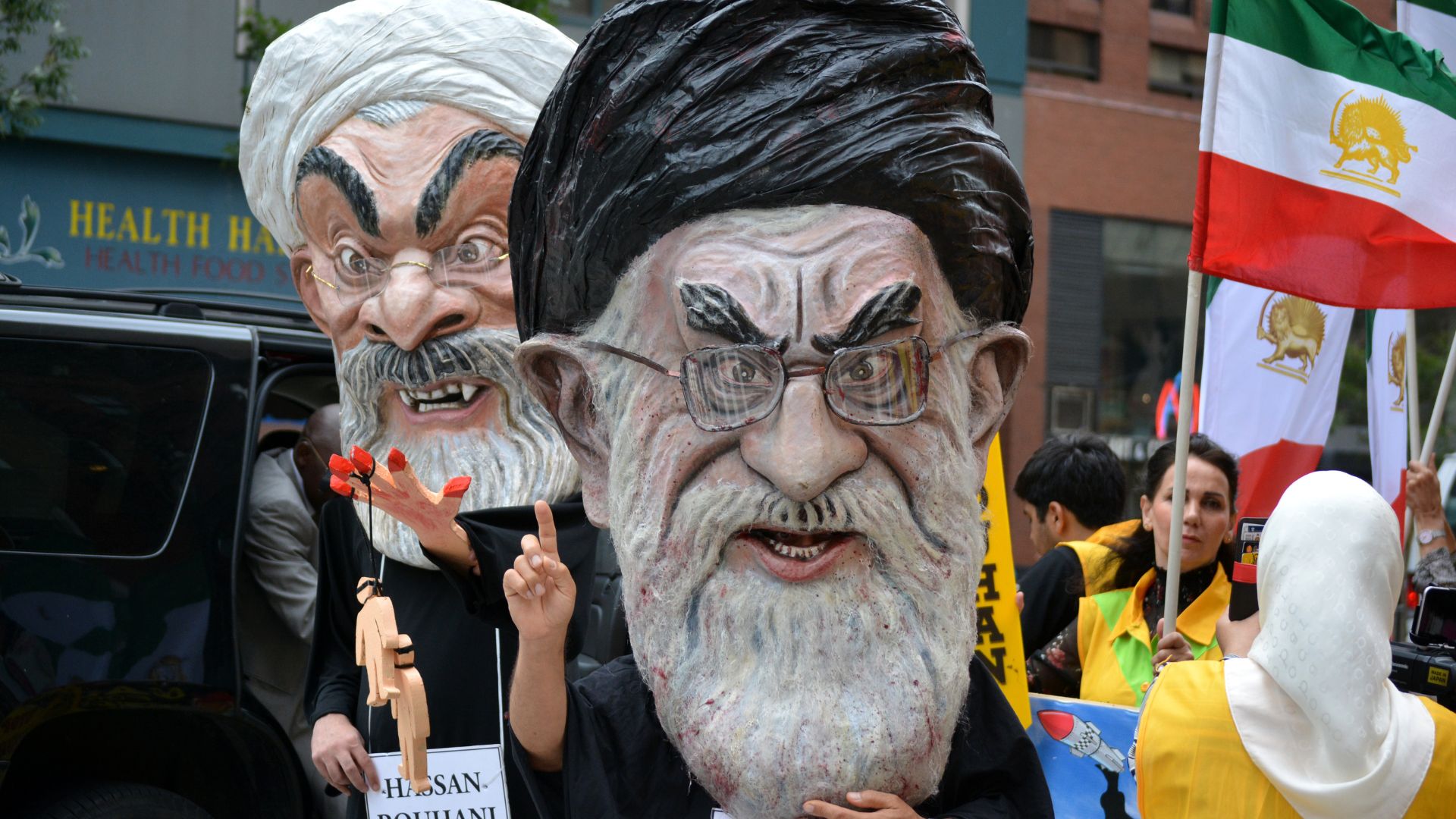
Trump Can Do to Iran’s Regime What He Just Did to Maduro in Venezuela: Iranian Activist

Ida Turan issued a public appeal arguing that President Trump could apply a strategy similar to his actions in Venezuela to confront Iran’s ruling regime, describing what she characterized as widespread corruption, repression, and violence carried out by Iranian leaders.

Her remarks framed Iran as a global security threat while calling on the United States to take decisive action in support of the Iranian people.

In her statement, Turan directly addressed the possibility of President Trump taking action against Iran’s leadership, citing his prior approach toward Venezuela.

“Can President Trump do something similar to what he did in Venezuela, but this time for Iran? Short answer is, hell yeah,” Turan said.

She argued that Trump previously relied on criminal allegations to justify action against Venezuela’s leadership, stating, “Trump had to use a non political crime to target Venezuela’s top political leader. He declared Madero, the head of the drug cartel and responsible for killing Americans.”

Turan then turned to Iran’s leadership, arguing that Supreme Leader Ali Khamenei holds direct responsibility for military actions carried out by the Islamic Republic.

“Now what would be the legal excuse for Khamenei? Khamenei is not just a supreme leader. He is also the commander in chief and bears direct responsibility for all military operations of the Islamic Republic,” she said.

Turan asserted that Iran’s leadership and the Islamic Revolutionary Guard Corps have been responsible for attacks on Americans, including an alleged assassination attempt on President Trump.

“The Iranian regime and IRGC have been responsible for countless killings of Americans, including the failed plot to assassinate Trump himself,” she said.

According to Turan, President Trump’s stated objectives in Venezuela provide a framework for addressing Iran.

“We all know that Trump’s main goal in Venezuela is to fight corruption and stabilize Venezuela, a true win win for America and the people in Venezuela,” she said, adding that Iran’s situation is “similar, even worse.”

Turan described the Iranian government as “practically a death cult that occupied Iran as made life hell for its own people and made the entire world unsafe with proxy wars funding terrorists and para Palestine networks in the West.”

Turan also criticized the international community, particularly China and Russia, for blocking action against Iran at the United Nations.

She argued that geopolitical and economic interests have prevented accountability.

“So the question is, why can’t this corrupt, repressive terrorist regime be brought down through legal international terminals and the UN because China and Russia block every resolution against it, and we do it,” she said.

Turan pointed to economic and military cooperation between Tehran, Beijing, and Moscow, stating, “The regime sells cheap oil to China and provides Shahi drones to Russia for the war in Ukraine. In return, those two countries keep the regime alive to protect their own interests.”

Referencing President Trump’s 2020 decision to eliminate Iranian General Qassem Soleimani, Turan said the precedent already exists for targeted action.

“In 2020 Trump eliminated Soleimani, a top Iranian general, because he had made Iraq unsafe for American soldiers,” she said.

Turan urged similar decisiveness now, adding, “Yes, President Trump can do this again, and we, the people of Iran, plead with him to do it.”

Turan emphasized that her appeal was not a call for a military invasion.

“We are not asking for invasion. We are asking for protection, support and decisive action, because we cannot fight this repressive regime with empty hands,” she said.

She contrasted President Trump with previous U.S. leadership, saying, “There are very few world leaders that have shown true decisiveness. Obama betrayed us and the world by making deals that kept this regime alive.”

Addressing concerns about instability following regime change, Turan argued that Iran’s national identity sets it apart from other conflict zones.

“Iran’s situation is fundamentally different. We Iranians have a very strong Persian identity. We are not proud Muslims. We are proud Iranian this deep patriotism vaccinate us against those who create chaos, Islamist leftist colonialists and separatists,” she said.

Turan also pointed to Prince Reza bahrabi as a unifying figure for Iranians.

“Our Prince in exile, Reza bahrabi, has shown true interest in stepping in for his people,” she said, stressing that the issue is symbolic rather than a restoration of monarchy. “But no, it is not about restoring the monarchy. It is about having a symbol,” Turan said.

She concluded by calling for U.S. and Israeli support in rebuilding Iran, comparing it to postwar reconstruction efforts.

“We need America’s and our historic ally Israel to help us to reconstruct Iran, just like the Help America gave to France, Germany, Japan to rebuild the ruins after World War Two,” she said.

Turan described President Trump as widely admired among Iranians, stating, “President Trump is extremely popular in Iran. The people of Iran call him the president of hearts.” She ended her remarks with a direct appeal: “We know that Trump will come to our aid, but we plead with him to act soon before this regime kills even more of our young people in the process.”

WATCH:

News

Venezuela’s 300 Billion Barrels of Oil Back in Play After Maduro Arrest

Following the capture of Venezuelan President Nicolás Maduro, the United States is now positioned to exert significant influence over the future of the world’s largest proven oil reserves, as the Trump administration signals interest in reviving the country’s long-dormant energy sector.

Venezuela, a country nearly twice the size of California, sits atop extraordinary petroleum wealth.

With more than 300 billion barrels of proven oil reserves, the South American nation holds larger reserves than long-established energy producers such as Saudi Arabia, Iran, and Kuwait.

Estimates place Venezuela’s reserves at roughly 20 percent of the global total, nearly four times the amount held by the United States.

Despite the scale of its reserves, Venezuela’s oil industry has been largely incapacitated for years.

Much of the country’s petroleum consists of heavy and extra-heavy crude, which is significantly more difficult and expensive to extract and refine than lighter grades of oil.

Production of this type of crude requires specialized equipment, continuous maintenance, and advanced refining capabilities.

Those systems have steadily deteriorated over the past decade as a result of prolonged underinvestment, U.S. sanctions, political instability, and the collapse of state-run oil company operations.

As infrastructure declined, production fell sharply, leaving much of Venezuela’s oil wealth effectively locked underground.

Comparable situations have unfolded in other energy-rich nations such as Iran and Libya, where political turmoil, financial distress, and degraded infrastructure have limited output despite vast reserves.

In Venezuela’s case, the deterioration has been particularly severe, with refineries, pipelines, and production facilities falling into disrepair.

Over the weekend, President Donald Trump said his administration intends to move quickly to revive Venezuela’s oil industry by encouraging investment from major U.S. energy companies.

Speaking during a news conference at Mar-a-Lago, Trump said American firms would play a central role in restoring production capacity.

“We are going to have our very large United States oil companies go in, spend billions of dollars, fix the badly broken oil infrastructure and start making money for the country,” Trump said.

Trump did not specify a timeline for the effort or identify which companies might be involved, but his remarks signaled a potential shift in U.S. policy toward direct engagement with Venezuela’s energy sector following Maduro’s removal from power.

So far, American energy companies have stopped short of committing to new operations in Venezuela.

Chevron remains the only major U.S. oil company with a presence in the country, operating under limited authorizations granted by the U.S. government.

In a statement to Fox News Digital, Chevron said it was monitoring developments while adhering to legal requirements.

“Chevron remains focused on the safety and well-being of our employees, as well as the integrity of our assets,” a company spokesperson said, adding that the firm is following “relevant laws and regulations.”

ConocoPhillips, another major U.S. energy producer with a historical presence in Venezuela, also responded cautiously.

In a statement to Fox News Digital, the company said it is tracking developments and evaluating broader implications.

“ConocoPhillips is monitoring the developments in Venezuela as well as the potential implications for global energy supply and stability,” a spokesperson said.

“It would be premature to speculate on any future business activities or investments.”

Other U.S. oil companies have not publicly commented on whether they would consider reentering Venezuela, where years of nationalization, contract disputes, and sanctions have made foreign investment highly risky.

The prospect of restoring Venezuela’s oil output carries significant implications for global energy markets.

With production currently far below historical levels, any substantial increase could affect global supply dynamics, particularly if U.S. companies are able to rehabilitate infrastructure and bring heavy crude back online at scale.

For now, the administration’s plans remain in early stages.

The focus, according to Trump’s remarks, is on stabilizing and repairing Venezuela’s oil infrastructure while positioning U.S. companies to play a leading role in the sector’s recovery.

How quickly that vision can be realized will depend on regulatory decisions, security conditions, and whether major energy firms decide the potential rewards outweigh the long-standing risks associated with operating in Venezuela.

News

Trump Puts a Few Latin Leaders On Notice After Arrest of Venezuela’s Maduro

President Donald Trump issued pointed warnings to several Latin American governments following a U.S. operation that resulted in the arrest of Venezuelan President Nicolas Maduro, who is now in U.S. custody on American soil.

The comments came after an overnight operation into early Saturday that led to Maduro’s capture.

In remarks addressing the regional implications of the action, Trump characterized parts of Latin America as major sources of narcotics flowing into the United States and warned neighboring governments that further action could follow.

Trump directed his remarks toward Mexico, Colombia, and Cuba, linking those countries to drug trafficking concerns and regional instability.

Cuba, which has had decades of strained relations with Washington dating back to the Cold War, was included in the warnings alongside Mexico and Colombia.

During the comments, Trump again described Maduro as a “narco-terrorist” and addressed a question about how the operation could affect neighboring countries.

He directly linked Maduro to Colombian President Gustavo Petro while discussing cocaine production and trafficking.

“He has cocaine mills, he has factories where he makes cocaine, and they’re sending it into the United States,” Trump said of the Colombian leader, adding, “he does have to watch his ass.”

Trump’s remarks about Cuba were less direct but suggested future discussion and potential action.

He said his administration intended to focus on the Cuban population as well as Cuban-Americans living in the United States.

“It’s going to be something we’ll end up talking about,” Trump said, referring to Cuba.

He added that Washington wants to “help the people” of the country, which he described as similar to Venezuela.

“It’s very similar in the sense that we want to help the people in Cuba, but we also want to help the people who were forced out of Cuba and are living in this country,” Trump said, referencing Cuban-Americans who have fled the island nation and settled in the United States.

Trump also focused on Mexico during his remarks, turning attention to drug cartels operating south of the U.S. border.

He addressed Mexican President Claudia Sheinbaum Pardo while discussing cartel influence and what he described as the Mexican government’s inability to confront those organizations.

Trump said that drug cartels are effectively running the country and claimed that Mexican authorities are fearful of them.

He said action would be required to address the situation.

“They’re running Mexico… I’ve asked her numerous times: ‘Would you like us to take out the cartels?’ ‘No, no, no, Mr. President, no, no, no, please.’ So we have to do something,” Trump said in a phone interview with Fox.

Mexico moved quickly to condemn the U.S. military action in Venezuela following Maduro’s arrest.

Colombian President Gustavo Petro also criticized the operation, describing it as an “assault on the sovereignty” of Latin America.

Similar criticism was echoed by several BRICS nations and other countries in the Global South, which issued statements opposing the U.S. action.

Trump’s remarks came amid heightened regional tensions following the Venezuela operation.

The administration has emphasized that the action targeted narcotics trafficking and individuals it has accused of participating in criminal enterprises, while critics have argued it represents a broader assertion of U.S. power in the region.

As Trump addressed the fallout from the operation, his comments made clear that the administration views drug trafficking and cartel influence as interconnected regional issues extending beyond Venezuela.

His statements indicated that the capture of Maduro could mark the beginning of increased pressure on other governments that Washington believes are linked to narcotics production or trafficking networks.

The warnings to Mexico, Colombia, and Cuba followed the administration’s declaration that Maduro is now in U.S. custody and that American forces played a role in securing the operation.

While Trump did not announce specific new actions against the other countries, his comments placed their governments on notice as the administration continues to frame regional drug trafficking as a national security issue for the United States.

News

Kamala Harris Slams Maduro Arrest, Internet Slams Her Back

Former Vice President Kamala Harris criticized President Donald Trump on Saturday for ordering the capture of Venezuelan leader Nicolás Maduro, calling the operation “unlawful and unwise,” remarks that quickly sparked widespread backlash on social media.

Harris issued her criticism in a lengthy post on X as news continued to emerge about the U.S. military and law enforcement operation that resulted in Maduro’s arrest and transfer to the United States to face federal charges.

“Donald Trump’s actions in Venezuela do not make America safer, stronger, or more affordable,” Harris wrote.

She accused President Trump of misleading the American public and claimed the operation carried significant risks and costs without clear justification.

That Maduro is a brutal, illegitimate dictator does not change the fact that this action was both unlawful and unwise,” Harris said.

“We’ve seen this movie before. Wars for regime change or oil that are sold as strength but turn into chaos, and American families pay the price.”

Harris further argued that Americans oppose such actions and suggested the President’s motives were tied to energy interests rather than security or democratic principles.

“The American people do not want this, and they are tired of being lied to,” she wrote.

“This is not about drugs or democracy. It is about oil and Donald Trump’s desire to play the regional strongman.”

In her statement, Harris also accused Trump of undermining opposition figures in Venezuela and acting without proper legal authority.

“If he cared about either, he wouldn’t pardon a convicted drug trafficker or sideline Venezuela’s legitimate opposition while pursuing deals with Maduro’s cronies,” she wrote.

She concluded by warning that the operation could have long-term consequences.

“The President is putting troops at risk, spending billions, destabilizing a region, and offering no legal authority, no exit plan, and no benefit at home,” Harris said.

“America needs leadership whose priorities are lowering costs for working families, enforcing the rule of law, strengthening alliances, and — most importantly — putting the American people first.”

Harris’s remarks contrasted sharply with the outcome of the operation itself.

Maduro was captured during an overnight operation in Venezuela without any reported U.S. military casualties. Federal prosecutors in the Southern District of New York have charged Maduro with Narco-Terrorism Conspiracy, Cocaine Importation Conspiracy, Possession of Machineguns and Destructive Devices, and Conspiracy to Possess Machineguns and Destructive Devices against the United States.

President Trump later posted video footage of the strikes that preceded the arrest, which targeted at least four sites around Caracas.

The White House said the operation was conducted with precision and without the loss of American life.

Maduro arrived in New York Saturday evening and is now being held in federal custody. His first court appearance is expected as soon as Monday in New York City.

Harris’s criticism drew immediate and intense reaction on X, where users challenged her statements and pointed to past positions taken by the Biden-Harris administration.

Several commenters noted that during the Biden-Harris administration, the U.S. government maintained a $25 million bounty for information leading to Maduro’s arrest, a point highlighted publicly by Article III Project Senior Counsel Will Chamberlain.

Others questioned Harris’s assertion that the operation lacked legal authority, citing the long-standing indictments against Maduro and U.S. efforts over multiple administrations to hold him accountable for alleged drug trafficking and related offenses.

Harris’s post also revived comparisons to earlier statements made by Joe Biden.

During the 2020 campaign, Biden criticized Trump by saying he “admires thugs and dictators like Nicolas Maduro.”

Critics online contrasted that statement with the Biden-Harris administration’s record in office, during which Maduro remained in power and no comparable action was taken to remove him.


News

Communists Rally in Times Square Demanding Narco-Terrorists Dictator Maduro’s Release

Communist and leftist activists gathered in New York City’s Times Square following the U.S. military capture of Venezuelan leader Nicolás Maduro, calling for his release and condemning the American operation that transferred him to the United States to face federal narco-terrorism charges.

The demonstration took place after Maduro was taken into U.S. custody and flown out of Venezuela.

Protesters were seen holding signs reading “Release Maduro” and displaying images of Maduro alongside slogans including “Stand with the Bolivian Revolution.”

Participants waved communist flags and accused the United States of unlawfully detaining the Venezuelan leader.

One protester who addressed the crowd alleged that the United States had “kidnapped” Maduro and argued that the operation was driven by American efforts to gain control over Venezuela’s oil reserves.

A booth set up at the gathering distributed communist literature and recruited supporters opposed to what organizers described as U.S. imperialism.

The protest drew attention not only because of its message but also because of the visible presence of ideological organizing in a major public space.

Observers reported that activists used the event to sign up new members, distribute printed materials, and promote opposition to U.S. foreign policy.

New York City Mayor Zohran Mamdani issued a statement after news broke of Maduro’s capture, publicly criticizing the U.S. action.

Mamdani described the operation as unlawful and warned of its potential effects on city residents.

“Unilaterally attacking a sovereign nation is an act of war and a violation of federal and international law,” Mamdani said.

“This blatant pursuit of regime change doesn’t just affect those abroad, it directly impacts New Yorkers, including tens of thousands of Venezuelans who call this city home. My focus is their safety and the safety of every New Yorker, and my administration will continue to monitor the situation and issue relevant guidance.”

Mamdani’s comments were circulated widely as the Times Square protest unfolded, drawing attention to differing reactions within New York City to the developments in Venezuela.

At the same time, Venezuelans supporting the Trump administration’s actions were also present in Times Square.

Some were seen confronting left-wing demonstrators advocating for Maduro’s release.

Others expressed gratitude toward President Donald Trump for authorizing the operation that led to Maduro’s removal from power and transfer to the United States.

The opposing demonstrations reflected deep divisions within the Venezuelan diaspora and among political activists in the city.

While leftist groups called for Maduro’s release and denounced U.S. involvement, Venezuelan opponents of the regime described the capture as a long-awaited step toward accountability.

Similar scenes of celebration have been reported among Venezuelans in other countries following Maduro’s removal.

Venezuelan communities abroad have publicly marked the development after years of political unrest and economic decline under Maduro’s leadership.

Maduro has been accused by the United States of leading the Cartel of the Suns, a drug trafficking organization alleged to have funneled large quantities of narcotics into the United States.

U.S. authorities have long maintained that the group operated with the protection of senior Venezuelan officials.

Maduro has been in power since 2013, when he succeeded longtime Venezuelan leader Hugo Chávez.

His most recent election has been widely disputed, with multiple countries refusing to recognize him as Venezuela’s legitimate president.

International criticism of his government has focused on allegations of election irregularities, political repression, and corruption.

The political and economic crisis in Venezuela has led to one of the largest displacement events in the Western Hemisphere.

According to the United Nations refugee agency, approximately 8 million people have fled Venezuela since 2017 amid ongoing instability and economic collapse.

News

Whistleblowers: Minnesota’s New Paid Leave Law is Ripe for Fraud

Minnesota lawmakers are raising alarms over Governor Tim Walz’s newly enacted taxpayer-funded paid leave law, warning that vague language and minimal oversight could leave the program vulnerable to widespread abuse even before it fully takes effect.

The new law allows nearly all Minnesota residents to qualify for up to 20 weeks of paid leave per year for family care or medical reasons, with benefits capped at $1,420 per week and funded by taxpayers.

The program is projected to cost between $1 billion and $1.5 billion annually, though Republican lawmakers caution that the final price tag could climb significantly.

Fox News correspondent Garrett Tenney reported that concerns are already emerging from within state government.

“Already whistleblowers in state government are saying that people are planning to scam it,” Tenney said.

“Under the new law, almost every resident is eligible to take up to 20 weeks of paid leave a year to take care of family or for medical reasons, with taxpayers footing the bill and paying out a percentage of a person’s salary up to $1,420 a week.”

Tenney noted that while the official cost estimate ranges from one to one and a half billion dollars annually, critics argue the lack of clear guardrails could drive costs far higher.

“The program is projected to cost between one and one and a half billion dollars a year, but Republican lawmakers say that could go up dramatically thanks to how vaguely the law is written, making it ripe for fraud,” he said.

State Representative Nolan West detailed what he described as one of the law’s most problematic provisions: the ability to designate a single person each year as someone requiring care, with limited verification requirements.

“One thing that people don’t know, you can designate one person annually as the person you care for,” West said.

“So I can designate my uncle living in Florida, go on vacation, and it’s up to your employer to investigate whether you’re really caring for that person or not.”

West said the responsibility placed on employers to police potential abuse creates an environment with little accountability.

“Like that’s just there’s no guardrails,” he said.

“It’s going to be ridden with fraud, just like we see in our other systems. The honor system is not the best way to distribute all his money.”

Republican lawmakers argue that similar government programs relying on self-reporting and limited enforcement have historically been exploited, and they fear the paid leave law will follow the same pattern.

They say the combination of broad eligibility, high payouts, and minimal verification invites misuse.

Despite the warnings, Governor Walz has downplayed concerns raised by critics of the program.

“Despite the growing scandal around the alleged fraud already taking place, Governor Tim Walz is dismissing those concerns from Republican lawmakers,” Tenney said.

WATCH:

News

These Atlanta Churches Have Over a Thousand Voters Registered to Their Addresses

David Khait alleged that more than 1,000 people were registered to vote from a single address in Fulton County, Georgia, and said the address, 01 Washington Street Southwest, is a church located near the Georgia Capitol.

“Why would 1000 people be registered to vote from one single location to 01 Washington Street Southwest, and when you come here, you realize that this is actually a church,” Khait said.

Khait said he discovered the registrations while reviewing voter registration lists from a previous election cycle and said the volume of registrations from one location raised concerns.

“What was happening when we were looking through the voter registration list from the previous election cycle is I noticed well over 1000 people registered from one single location come to find out it’s a church,” he said.

Khait said further review led him to believe the registrations were part of an organized effort involving Democrat donors.

“When we looked into it further, we realized what was actually happening here. It’s actually a very well organized plan by Democrat donors like George Soros,” Khait said.

Khait claimed that organizations funded by George Soros registered homeless individuals to vote using the church’s address.

“George Soros poured in millions into an organization here in Atlanta that did what they went around this entire place and signed up all the homeless people,” he said.

The Heir: Inside the (Not So) Secret Network of Alex Soros

Khait said the church is commonly occupied by homeless individuals and said the activity occurred during daytime hours.

“It’s during the day right now, so you don’t see all the homeless people. But usually this place is filled with homeless people,” Khait said.

Khait said the church is located directly across from the Georgia Capitol.

“And to make things even crazier, if we turn around, this place is directly across the Georgia capitol,” he said.

Khait said another nearby location showed similar voter registration numbers.

“The building right next to 201 Washington Street is actually a Catholic church,” Khait said.

Khait said that location, at 48 Martin Luther King Jr Drive Southwest, had more than 2,000 registered voters.

“Well, guess what? This place 48 Martin Luther King Jr, drive southwest, has registered over 2000 people to vote from one single location,” he said.

Khait said the registrations were tied to what he described as a progressive organization registering homeless individuals.

“And guess who it was? It was the progressive organization signing up homeless people that are literally right across the street,” he said.

Khait said weather conditions at the time did not reflect typical activity in the area.

“It’s freezing here in Atlanta. It’s actually 35 degrees at 1pm but usually all of this area is filled up with the homeless people,” he said.

Khait reiterated his concerns about the number of registrations tied to a single address.

“And again, we’re outside one of these mega churches that ended up registering more than 1000 people to vote from just one single place,” he said.

WATCH:

News

Human Smuggler Jumps Into a River with a Baby in Attempt to Evade Texas Troopers

A Texas woman was arrested and charged with human smuggling and child endangerment after authorities say she attempted to flee a traffic stop near the southern border by jumping into the Rio Grande with an infant and trying to swim into Mexico.

According to the Texas Department of Public Safety, the incident occurred on Dec. 19 in Laredo, a border city in South Texas.

DPS officials said Brenda Castro, a U.S. citizen, was a passenger in a Ford Explorer driven by her husband, who is also a U.S. citizen, when state troopers attempted to conduct a traffic stop.

Castro’s husband allegedly refused to stop, prompting a pursuit.

DPS released dashcam footage showing the SUV traveling at a high rate of speed through residential neighborhoods and rural roadways as troopers attempted to stop the vehicle.

Authorities said the situation escalated when Castro exited the vehicle during the chase while carrying an infant and ran toward the Rio Grande, which separates the United States from Mexico.

Officials said Castro entered the river with the child and attempted to swim across to the Mexican side.

DPS confirmed that Castro’s husband also entered the river and successfully swam across into Mexico, evading arrest.

A DPS spokesperson told Fox News Digital that the husband made it to the Mexican side of the border and was not apprehended at the scene.

State and local law enforcement officers responded to the riverbank and directed Castro to return to the U.S. side with the infant.

Authorities said officers repeatedly instructed her in Spanish to get back to dry land with the child as she struggled in the water.

Video from the scene shows a law enforcement officer eventually removing the infant from the river.

While escorting Castro into a law enforcement vehicle following her arrest, an officer addressed her actions.

“I can’t believe you tried to run back with the baby. You both could have drowned,” the officer told Castro.

Authorities said the child was taken into protective custody and placed under the care of officials following the incident.

The condition of the child was not disclosed, but no injuries were reported.

After securing the scene, DPS troopers searched the Ford Explorer and discovered five illegal aliens inside the vehicle, authorities said.

The individuals were turned over to the U.S. Border Patrol for processing.

DPS said the presence of the illegal aliens inside the vehicle led investigators to pursue human smuggling charges against Castro.

She was also charged with endangering a child due to the alleged attempt to flee into the river with the infant during the pursuit.

Officials did not immediately release the identities or nationalities of the illegal aliens found in the vehicle, nor did they specify whether the individuals were connected to any broader smuggling operation. DPS said the investigation remains ongoing.

The incident is the latest in a series of smuggling-related arrests along the Texas-Mexico border involving U.S. citizens accused of transporting illegal aliens.

State officials have repeatedly warned that human smuggling cases frequently involve dangerous conditions, including high-speed pursuits and attempts to evade law enforcement in remote or hazardous terrain.

Authorities emphasized that fleeing into the Rio Grande poses serious risks, particularly for children.

Law enforcement officials have documented numerous drownings in the river in recent years, especially during smuggling attempts or illegal crossings.

Castro was taken into custody at the scene and booked on the charges.

Additional details regarding court proceedings or bond information were not immediately available.


Scroll to Top