
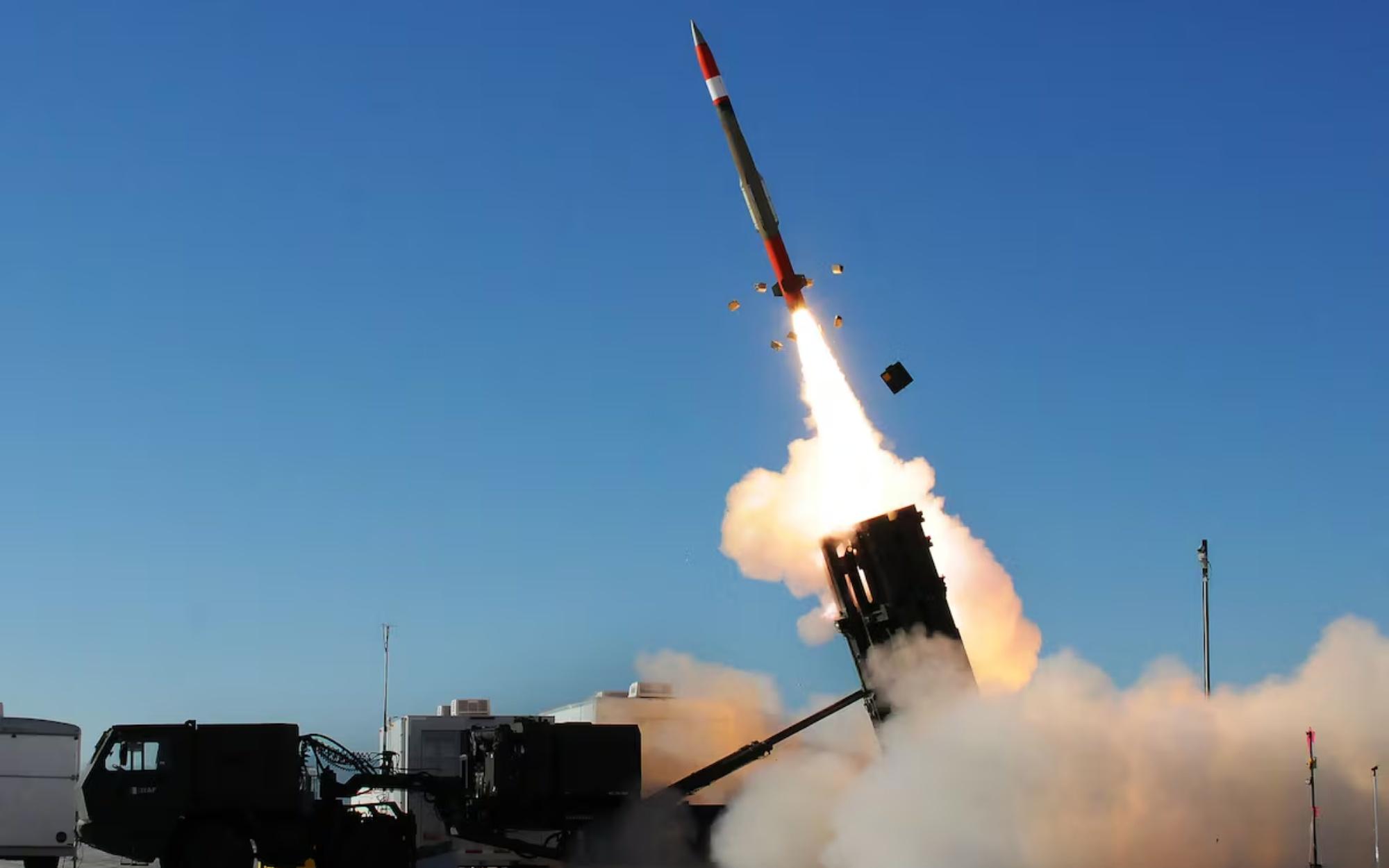
The U.S. Army has awarded Lockheed Martin a contract worth up to $58.6 billion to produce Patriot interceptor missiles, a major procurement move that comes as America faces growing pressure on its missile stockpiles from Ukraine, the Middle East, and recent U.S. operations involving Iran.
The War Department announced the award Wednesday, and the timing is not subtle.
After years of sending weapons abroad while also burning through munitions in active operations, Washington is now confronting the very predictable reality that arsenals do not refill themselves.
The new Lockheed deal converts a one year $4.7 billion award issued in April into a seven year draft agreement.
The Army said the arrangement creates a multi year procurement plan for Patriot interceptors from fiscal 2026 through 2032.
That longer runway matters because missile production is not like ordering office furniture, no matter how many bureaucrats in Washington seem to treat it that way.
Supply chains, rocket motors, guidance systems, skilled labor, and testing capacity all take time, money, and seriousness.
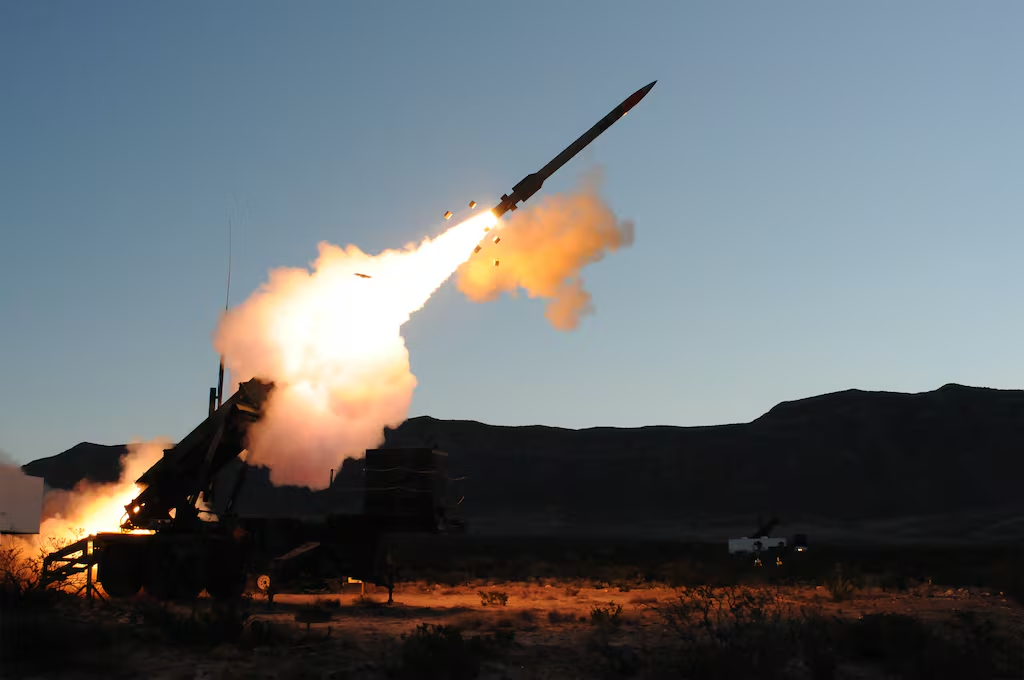
The Patriot system has become one of the most important air defense assets in the American arsenal and among U.S. allies.
Its interceptors are designed to counter ballistic missiles, cruise missiles, and aircraft, making them central to modern air defense in a world that keeps getting more dangerous.
The United States has supplied large quantities of weapons to allies, especially as the war in Ukraine has dragged on. At the same time, U.S. forces have used munitions in their own operations in the Middle East, including in connection with Iran related threats.
Those demands have sharpened concerns about inventories of critical air defense and precision guided weapons. For a superpower, running short on the missiles needed to protect troops, bases, ships, and allies is not a minor accounting problem.
War Department negotiators have been pressing contractors to move much faster.
Tentative production agreements reached earlier this year are now central to the broader effort to increase missile output before another crisis exposes empty shelves.
President Donald Trump’s administration has also increased pressure on contractors to put production ahead of shareholder payouts.
Trump signed an executive order in January aimed at identifying contractors considered to be underperforming on government contracts while still distributing profits to shareholders.
That is the kind of message the defense industry needed to hear, because patriotic press releases do not intercept incoming missiles. If companies want taxpayer dollars, they should be able to deliver weapons at the speed and scale the country requires.
Industry executives have welcomed the production agreements, but they have also argued that Congress must appropriate the money before companies can make major investments in parts, facilities, and expanded capacity. That means Capitol Hill still has to do something useful, which is always the tricky part.
Exact terms and delivery dates for many War Department munitions agreements remain under negotiation. That uncertainty matters because the operational need is not theoretical, and the enemy gets a vote while Washington debates paperwork.
A similar framework agreement has also been struck with RTX, the parent company of Raytheon, to increase production of Tomahawk cruise missiles.
The goal is to move from the current U.S. production rate of about 60 Tomahawks per year to eventually 1,000 units annually.
Lockheed Martin, based in Bethesda, Maryland, said the new funding would help it follow through on a pledge to triple production capacity for the Patriot Advanced Capability 3 Missile Segment Enhancement by the end of 2030. The company also said it expects to grow jobs at its Camden, Arkansas, plant by 50 percent, from about 1,200 workers to roughly 1,850.
Lockheed has previously said Patriot interceptor production would rise to 2,000 units annually. The company also said it is investing $8 billion to $9 billion through 2030 to modernize more than 20 U.S. facilities, including new munitions centers in Alabama and Arkansas.
The Patriot Advanced Capability 3 Missile Segment Enhancement is a hit to kill interceptor, meaning it destroys threats through direct impact rather than relying on a traditional explosive blast pattern. That capability has made it especially valuable against ballistic missiles and other high speed threats.
The urgency behind the production push is reinforced by outside estimates.
The Center for Strategic and International Studies, a Washington based think tank, estimated this week that the U.S. military has fewer than 1,000 Patriot interceptors on hand and fewer than 250 THAAD interceptors.
Those two air defense systems have both seen heavy recent use in the Middle East. That is a flashing warning light for anyone paying attention, because American forces cannot deter adversaries with talking points and good intentions.
The $58.6 billion Lockheed agreement is therefore not just another defense contract.
It is a recognition that the United States needs a deeper, faster, and more reliable industrial base if it intends to protect its troops, support allies, and keep hostile regimes from testing American weakness.
