
The United States is moving to strengthen its footprint in North Africa — not by boots on the ground, but by building brains behind the drones.
The War Department’s Africa Command announced plans to open a full-scale “drone academy” in Morocco as part of a broader shift in strategy across the continent.
The Africa Multidomain Training and Experimentation Center, slated to open in Tan-Tan, Morocco by 2030, will serve as the beating heart of that mission.
Under a freshly signed memorandum of understanding with the Royal Moroccan Armed Forces, U.S. military leaders are betting on a future where America’s partners in Africa can fight terrorist groups more effectively on their own turf.
The move comes as U.S. Africa Command, or AFRICOM, tightens its operational focus.
Recent months have seen significant troop withdrawals from Niger and Nigeria, signaling a pivot away from pervasive on-the-ground deployment toward empowering local allies with the technology, training, and autonomy to take the lead.
In simple terms, Washington is handing off the steering wheel but keeping its hand close to the ignition.
An AFRICOM official told Task & Purpose that the academy’s goal is to “train African forces so they can conduct these operations on their own.”
That’s the latest reflection of an American strategy of “empowerment over dependency,” a phrase repeated by AFRICOM commanders for more than a year.
Instead of endless deployments, the U.S. is now exporting its expertise — particularly in drones and surveillance technologies that deliver results.
The drone academy and its surrounding training complex will include an experimentation hub, an innovation center, and a multi-domain training range.
The site is expected to bring together U.S. troops, contractors, and academics to test and refine new drone technologies while boosting local capability among trusted African allies.
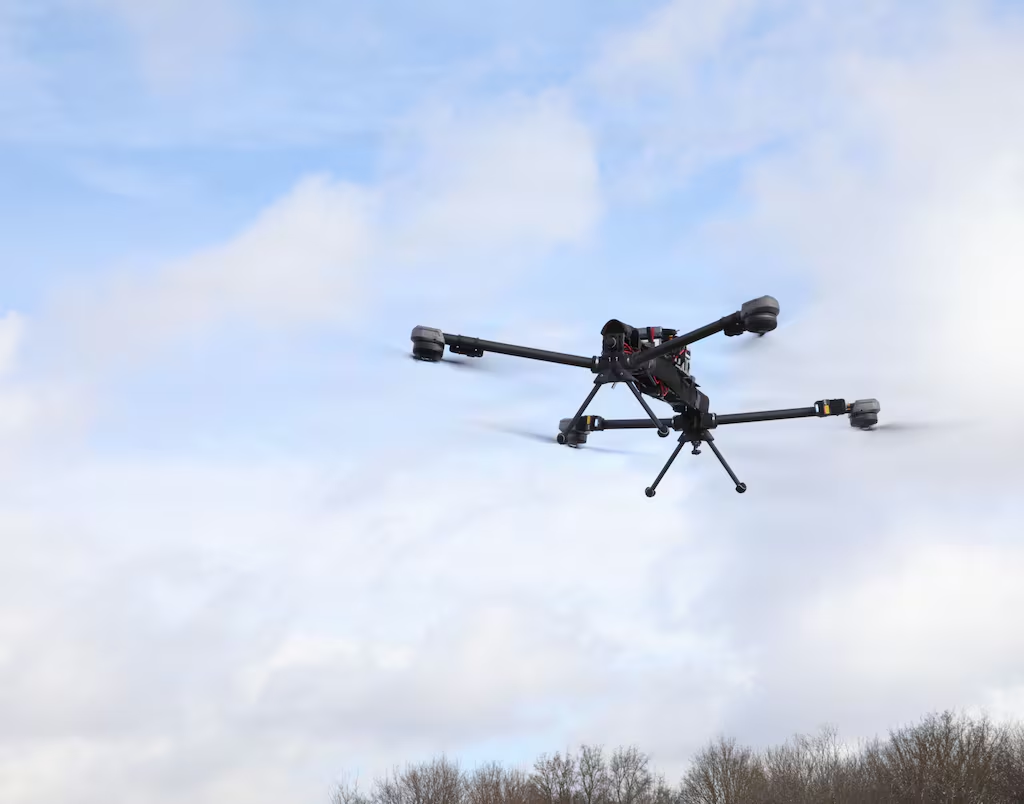
Drone warfare has already proven to be a game-changer in counterterrorism operations across the Middle East, and now it’s being unleashed in Africa.
These systems offer real-time intelligence, precision targeting, and persistent surveillance — perfect tools for tracking militant groups scattered across the vast deserts and jungles of West Africa.
AFRICOM leader Gen. Dagvin Anderson praised the initiative, saying, “The Africa Multidomain Training and Experimentation Center will increase readiness and advance capabilities of both nations.”
He highlighted the benefits for both U.S. and African war industries, emphasizing collaboration on emerging technologies. The partnership, he said, offers a new model for innovation — one where American and African industries share knowledge and develop adaptable solutions for irregular warfare.
The academy will also tie directly into ongoing multinational exercises like African Lion, the annual military training event that brings together dozens of nations each year.
The 2027 iteration of African Lion will serve as an official “proof of concept” for the Morocco center, effectively testing realism-based scenarios involving drones, multi-domain operations, and combined-force tactics.
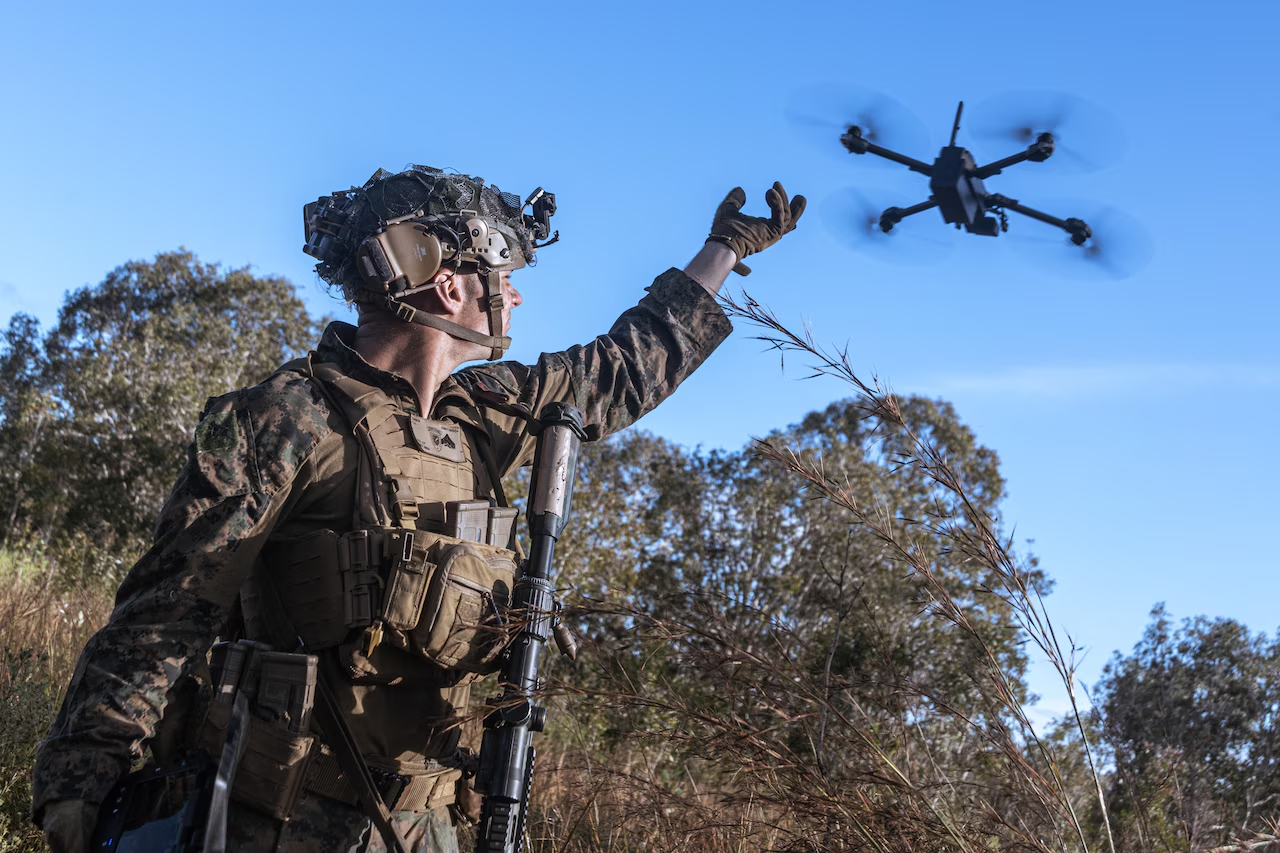
In previous African Lion exercises, troops have already been experimenting with drones like the FPV (first-person viewer) models, long-range precision drones, and even the ‘Bumblebee,’ a multi-rotor mini-UAS designed to collide with enemy drones mid-flight.
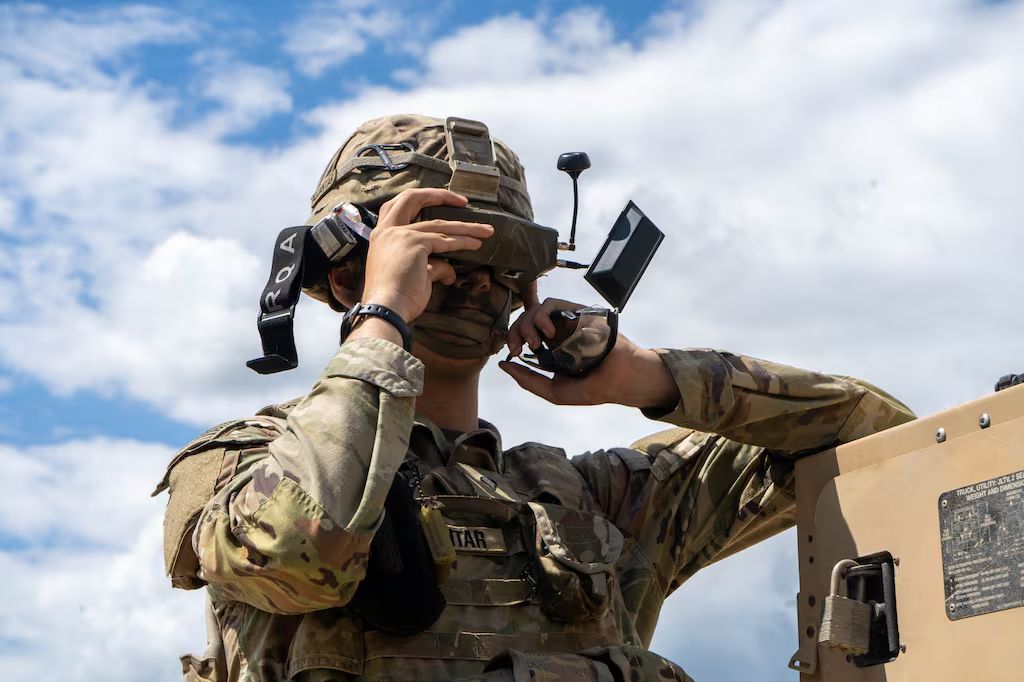
The past few years have shown how small, inexpensive, and adaptable these aerial platforms can be when used smartly — something the U.S. military wants its partners to understand inside and out.
Earlier, during the 2026 exercise, the War Department led a three-day crash course in unmanned aerial systems followed by a “drone academics” program.
That course trained Moroccan, Ghanaian, and Nigerian troops on comprehensive drone operational tactics, from reconnaissance to mission planning and execution. The feedback, according to officials, was overwhelmingly positive.
What’s clear is that the U.S. is no longer interested in playing endless global babysitter. After decades of entrenched presence around the world, the military is adopting a leaner, smarter approach that emphasizes partners doing their part.
In Africa, the idea isn’t to withdraw from the fight — it’s to arm the right friends with the technological edge to win it.
Critics may call this a drawdown, but to those watching closely, this is strategic conservation of power. By training reliable allies and building regional competencies, Washington keeps influence intact without draining its forces or resources.
That’s a page straight from President Trump’s America First playbook — strengthen allies where it benefits America most, and cut loose where it doesn’t.
Morocco, already one of the most stable countries on the continent, is a smart partner for this new experiment in regional security.
With its proximity to both Europe and the Sahel, and a long partnership with U.S. military training programs, the kingdom offers strategic location, leadership reliability, and regional reach.
When the academy opens its doors, it will mark more than another military base — it will represent a turning point in U.S. engagement across Africa.
Instead of spreading thin across endless commitments, America will be centralizing its strength and innovation, teaching our allies to take the lead in fighting terror.
The future of military power on the continent won’t just be measured in troop numbers, but in how effectively American-trained drone operators can keep tabs on the enemy and strike when it counts.
That’s a future where American ingenuity guides the action, even when American uniforms aren’t in the field — and that’s exactly the kind of forward-thinking strategy the War Department needs to keep America dominant and safe.
