
The unmistakable “whomp whomp” of the UH-1N Huey will soon fade from the skies around Washington, D.C., as Joint Base Andrews prepares to retire its aging utility helicopters.
For area residents and generations of airmen, the change will close a remarkable chapter in American military aviation.
The Air Force selected Andrews to receive 26 HH-60W Jolly Green II helicopters, replacing the base’s 26 Hueys with a faster and more capable platform.
The new fleet is expected to reach initial operational capability by 2029 and full operational capability by 2030.
Andrews will begin preparing by standing up the 5th Helicopter Squadron as the first unit at the installation scheduled to receive the Jolly Green IIs.
The transition to the “Whiskey” mission will also bring 60 additional active duty positions to the base.
By 2030, the 1st Helicopter Squadron and the newly established 5th Helicopter Squadron are expected to operate the HH 60W full time.
Until then, crews must carefully balance current operational demands with training on an aircraft that represents a substantial technological leap.
A recent 30 minute media flight aboard a Huey offered a final look at what the legendary helicopter has meant to Andrews.
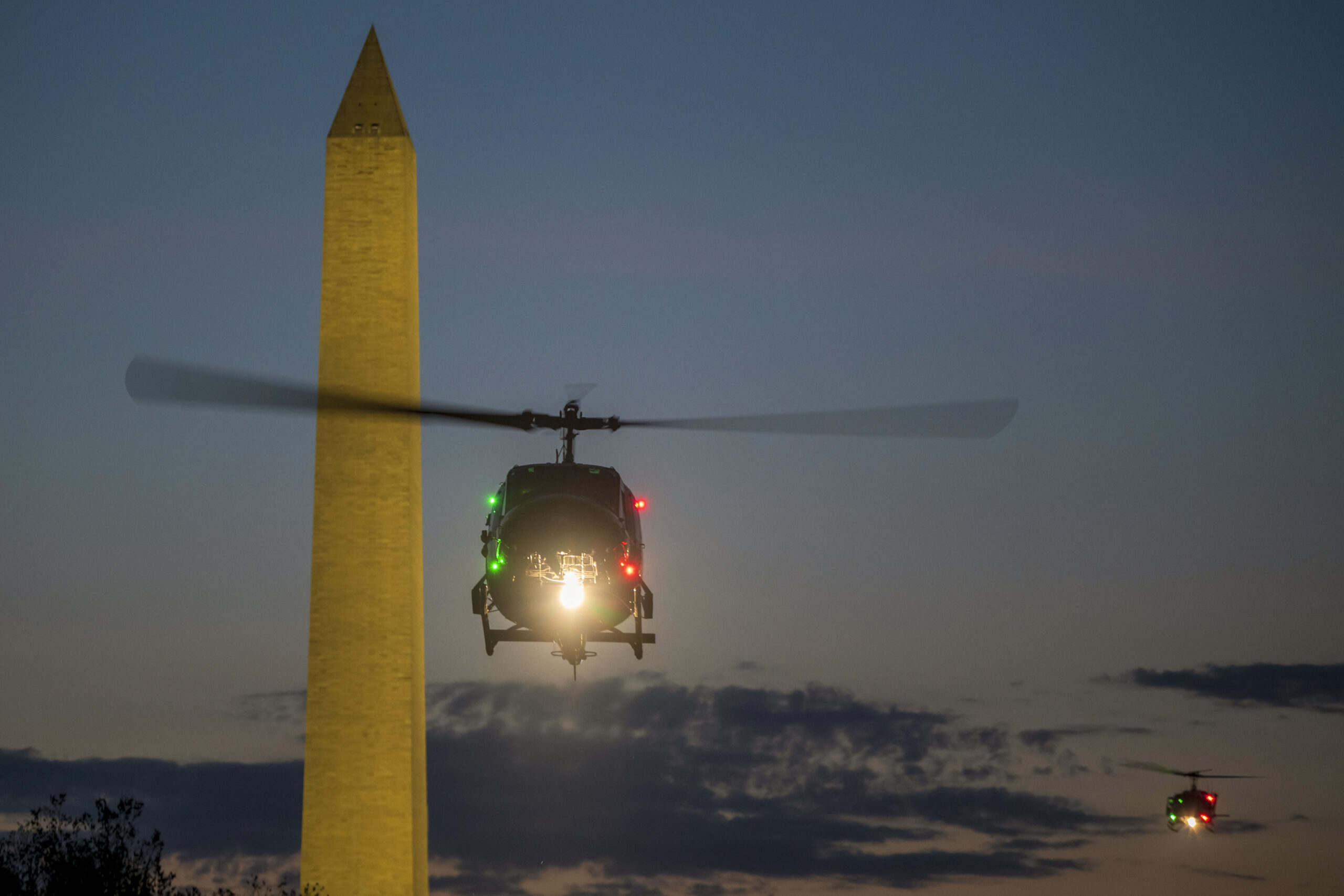
The aircraft carried passengers across the National Mall, north toward Virginia, south toward Springfield and then back to base, providing clear views of the Washington Monument and Capitol.
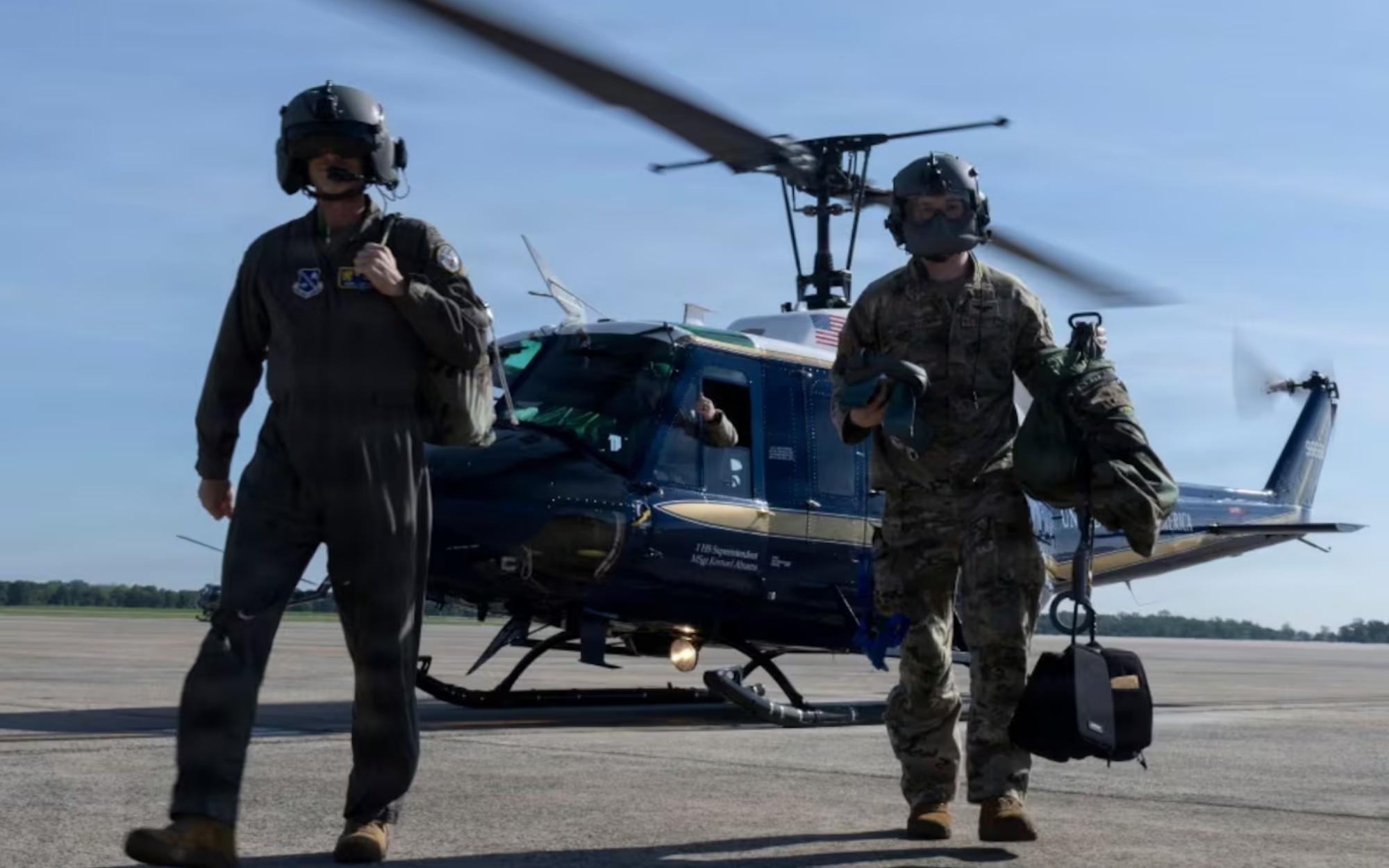
Lt. Col. Kristopher Schmautz, director of operations for the 1st Helicopter Squadron, said similarities between aircraft should ease some of the learning curve.
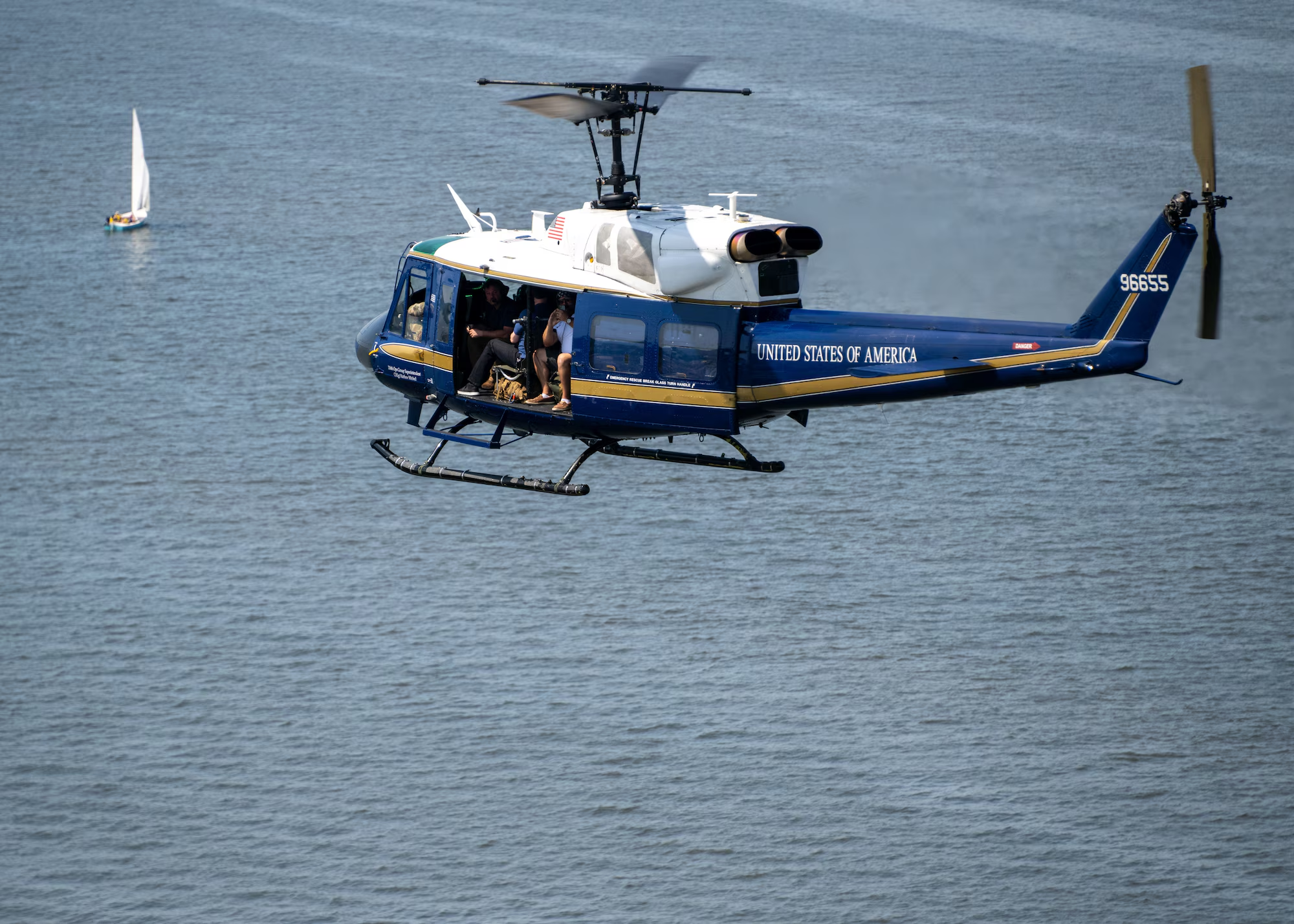
Still, the difference between the Huey and Jolly Green II is comparable to trading a 1970s Cadillac for a Tesla.
The HH 60W features modern avionics and a four axis autopilot system that can handle significant portions of flight.
That assistance allows pilots and other crew members to direct more attention toward the mission instead of constantly wrestling with old gauges and demanding controls.
For the crews, however, modernization comes with mixed emotions because several Andrews Hueys entered service in 1966.
Three of the helicopters still flying from the base actually served in Vietnam, connecting today’s airmen directly with one of the most consequential periods in American military history.
“They have seen decades of supporting missions both here and overseas, so from that it is the end of an era,” Schmautz said.
“The aircraft are very visible. People hear the sound from miles off, and they know that’s a Huey.”
The Huey also answered the call during the September 11 attacks.
Aircraft from Andrews were among the first to respond after the Pentagon was struck, supporting senior leaders while assisting with aid and medical evacuation missions across the region.
“For our generation that served in Vietnam, some of them, it stops them in their tracks because they remember that sound,” Schmautz continued.
“It’s so noticeable, and to be part of a crew that has gotten to fly this storied aircraft it’s something I never could have imagined when I first enlisted 24 years ago.”
That familiar sound comes from the Huey’s distinctive two blade rotor system.
The HH 60W uses four blades and produces a quieter sound profile, meaning some Washington area residents may believe fewer helicopters are flying even when the operational pace remains steady.
Despite the nostalgia, crews have “great excitement” about the Jolly Green II and its improved speed, range and payload capacity.
The new helicopter can transport 11 passengers, compared with nine aboard the Huey, while providing crews with a glass cockpit and modern mission systems.
The 1st Helicopter Squadron will continue operating the Hueys while the 5th begins converting to the HH-60W.
Airmen assigned to the 5th currently fly Hueys and will become qualified on both aircraft as Andrews manages what Schmautz called a “slow transition.”
“Day to day, it’ll be a balancing act as we figure out the exact dynamics of how fast and how we go ahead and convert the crews from one squadron or from one aircraft to the other,” Schmautz said. The two squadrons will gradually transfer responsibilities without allowing the current mission to slip.
Master Sgt. John Griggs, a 1st Helicopter Squadron flight engineer and senior enlisted leader for the 5th, called the move a major change in the right direction.
Better systems and capabilities should help crews carry out demanding missions more effectively, even if saying goodbye to the Huey is personal.
“Ever since I’ve been in aviation for about a decade, this is the only aircraft that I’ve known and operated,” Griggs said.
“So it’s a little bittersweet to move from something I have such a tenure with and such a legacy across all the conflicts, but I am excited to learn something new.”
Griggs said the Huey remains operationally effective and has never given him reason to doubt its ability to complete a mission.
The real challenge is sustainment because even a proven American workhorse eventually reaches the point where age, parts and maintenance become unavoidable realities.
“It’s very humbling to be able to see what this helicopter has done for the Air Force, and to be a part of transitioning to a newer airframe to uphold the same mission,” Griggs said.
The new aircraft will carry that mission forward with modern tools worthy of the crews entrusted to fly it.
“This is my favorite aircraft in the Air Force,” he said. “Lots of good memories on it.”
“Lots of time, but it is time for something new, something with better modernization to be more effective in the area.”
The Huey has earned its farewell, and the Jolly Green II now stands ready to inherit both the mission and the burden of its legendary predecessor.
