
The United States military awarded Raytheon a massive $22.9 billion contract Monday to dramatically increase Tomahawk missile production.
The seven year agreement represents a major push to replenish precision weapons inventories and restore the industrial capacity required for sustained combat operations.
American stockpiles have faced growing pressure as Washington supplied substantial quantities of weapons to allies while also expending munitions during the conflict with Iran.
Those demands have raised serious concerns about available inventories of air defense interceptors and precision guided strike weapons.
“We called on industry to rapidly scale up munitions output, and RTX is delivering,” Acting Secretary of the Navy Hung Cao said in a post on X.
“This landmark Tomahawk contract ensures our warfighters continue to have the lethal firepower they need.”
Raytheon, a business unit of RTX, said the contract will allow annual Tomahawk production to climb beyond 1,000 missiles.
That would be an enormous increase from the roughly 60 Tomahawks the company currently produces each year.
Moving from 60 missiles annually to more than 1,000 is not a routine adjustment to an assembly line.
It requires expanded facilities, additional equipment, a larger skilled workforce, reliable suppliers, and long term access to specialized materials and electronic components.
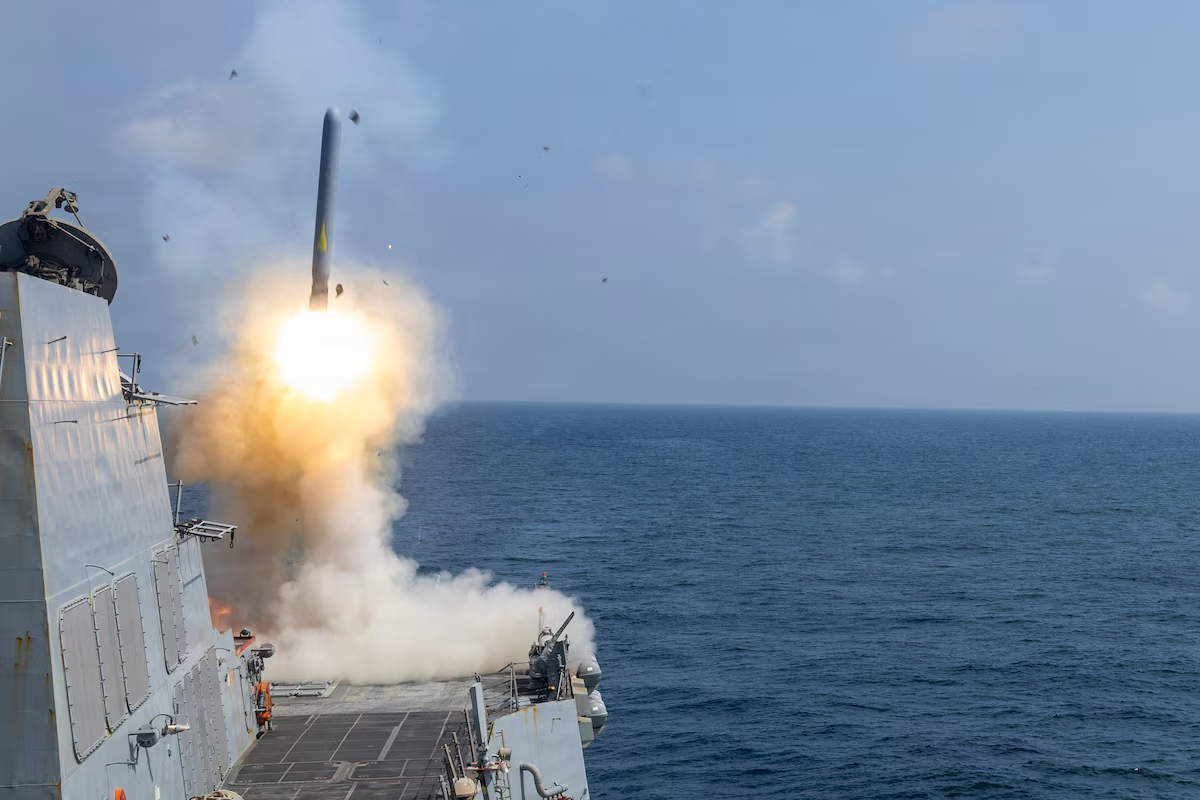
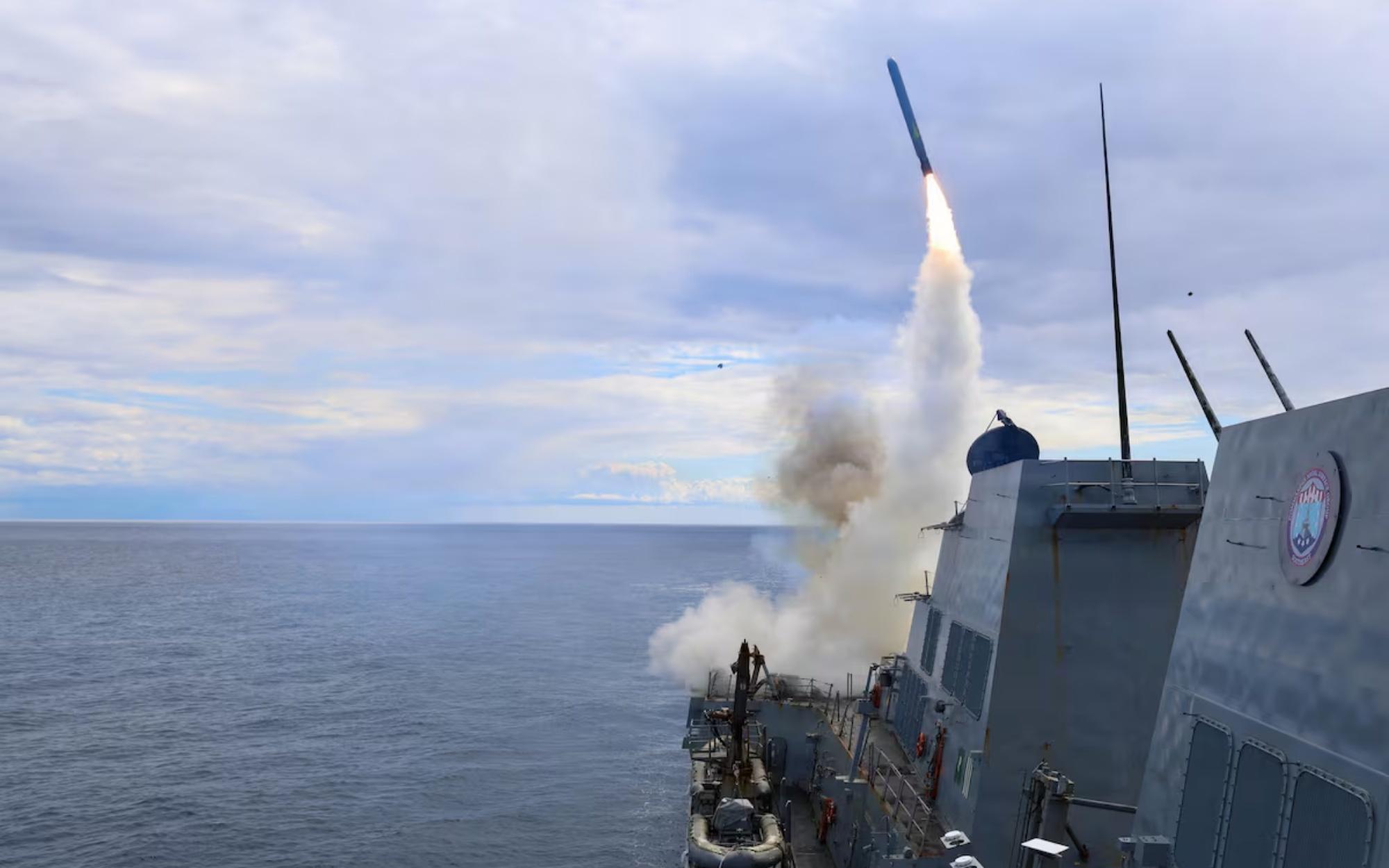
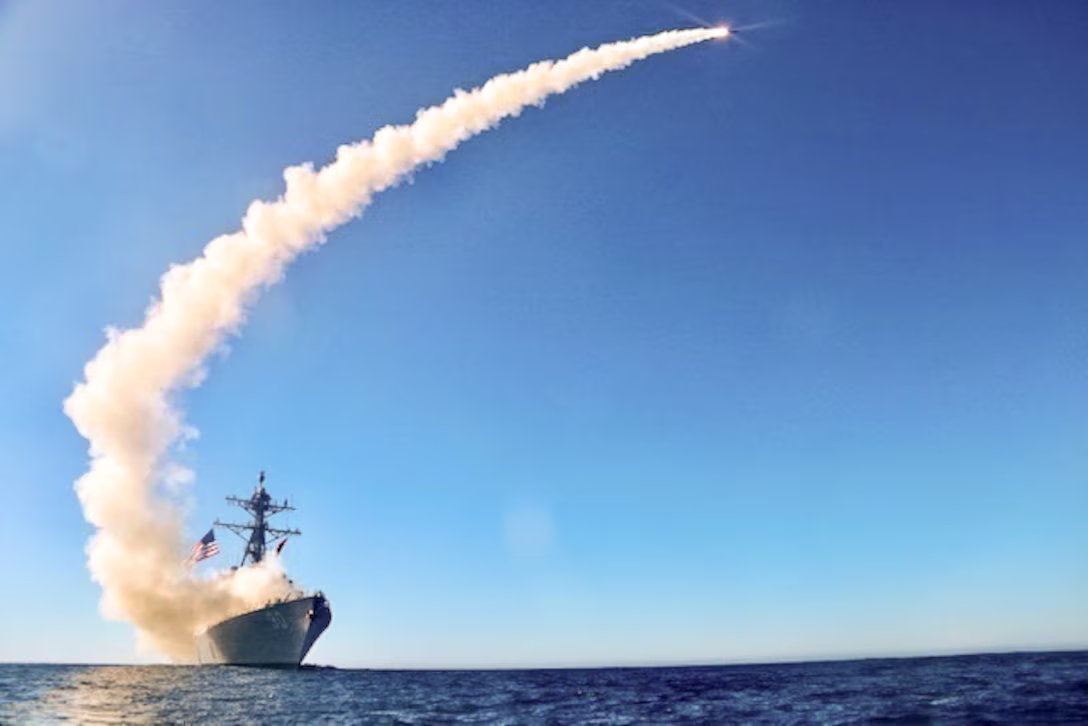
The Tomahawk remains one of the Navy’s most important conventional strike weapons.
Launched from surface ships and submarines, the missile gives commanders the ability to hit land targets from long range with precision while keeping American platforms farther from hostile forces.
That reach can prove decisive during the opening stages of a conflict, particularly against command facilities, air defense sites, weapons storage areas, and other hardened targets.
A larger inventory also gives military planners more options without forcing them to ration critical weapons during an extended campaign.
The formal announcement finalizes a framework agreement signed by the military and Raytheon in February.
That earlier arrangement established the foundation for expanding production, while Monday’s award puts serious money and purchasing commitments behind the plan.
President Donald Trump’s administration has been pursuing multi year agreements with major American military contractors.
These contracts provide companies with the predictability needed to invest billions of dollars in new factories, production equipment, supply networks, and workforce development.
That approach marks a welcome shift from the procurement drift that too often left manufacturers guessing about future orders.
Industry cannot build missiles at wartime speed when Washington purchases them in small batches and expects factories to remain ready through sheer wishful thinking.
Long term commitments give contractors a reason to expand capacity before the next emergency arrives. They also help suppliers plan for larger orders involving rocket motors, guidance systems, warheads, propulsion components, and the countless smaller parts required for modern precision weapons.
The Tomahawk agreement follows additional military deals signed earlier this month to accelerate production of Patriot and THAAD interceptor missile components.
Those systems are central to protecting American forces, allied installations, cities, and critical infrastructure from ballistic missile and aerial threats.
Together, the agreements suggest the Trump administration is treating munitions production as a national security priority rather than another paperwork exercise.
President Trump and War Secretary Pete Hegseth have emphasized military lethality, readiness, and the need to ensure American troops enter any fight with overwhelming firepower.
Rebuilding the arsenal will still take time because missile production depends on complicated supply chains and highly trained workers.
However, a seven year contract with a value approaching $23 billion provides the stability needed to begin reversing years of insufficient capacity.
For sailors aboard American destroyers, cruisers, and submarines, the result should be a deeper supply of one of the fleet’s most proven strike weapons.
For potential adversaries, the message is equally clear: the United States intends to restore its magazines and ensure its warfighters have the weapons required to hit hard from long range.
