
The U.S. Army just received the keys to its latest investment in troop living quarters overseas — a high-end $130 million barracks complex at Camp Humphreys, South Korea.
The sprawling base, already known as America’s largest military hub outside the homeland, continues to expand its infrastructure as tensions with North Korea persist and Washington strengthens its readiness posture in East Asia.
The three new eight-story barracks buildings will house more than 900 unaccompanied enlisted soldiers stationed at Humphreys.
This milestone, confirmed by the U.S. Army Corps of Engineers on July 8, 2026, marks another major improvement in living conditions for American warfighters forward-deployed in the region.
According to an Army announcement, each of the three state-of-the-art buildings can accommodate over 300 troops.
The project was designed to balance comfort, practicality, and security — essential qualities for service members enduring extended tours away from family.
Although the construction phase is complete, soldiers will not start moving in until fall, once the Army finishes furnishing the buildings.
Rachel Napolitan, spokeswoman for the Army Corps of Engineers’ Far East District, confirmed the final outfitting stage will include furniture, upgraded locks, and essential living items to ensure the barracks are fully operational before occupancy.
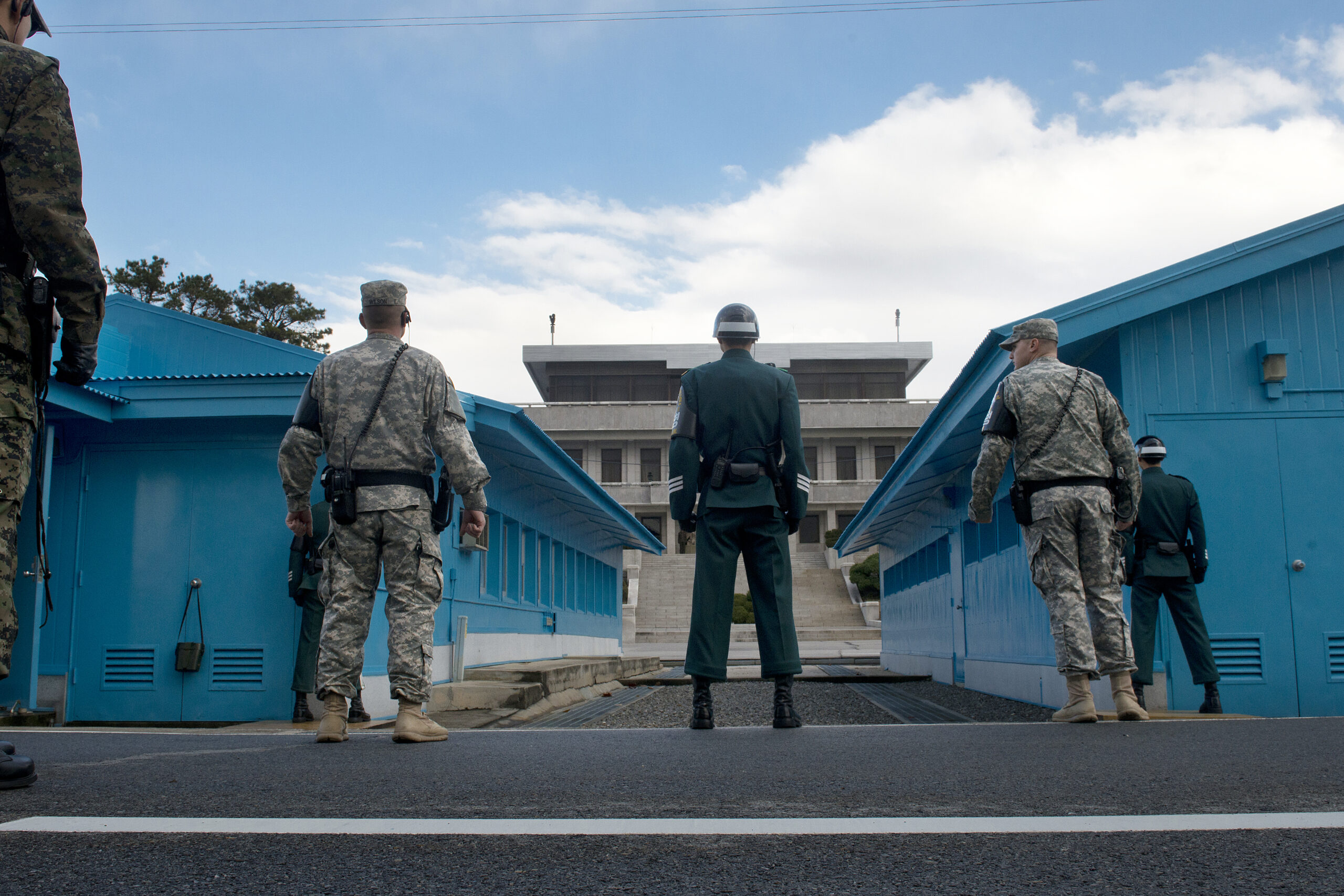
Each two-bedroom suite is paired with a shared bathroom and kitchenette. Laundry facilities are available on each floor, and common areas near elevators allow soldiers to create their own social spaces.
Outdoor features include multipurpose recreation courts, gazebos, barbecue areas, and secure bike racks — amenities that speak to both functionality and morale.
While the barracks adhere to the Army’s standard design blueprint, the Far East District added several enhancements following years of feedback from residents of previous housing complexes.
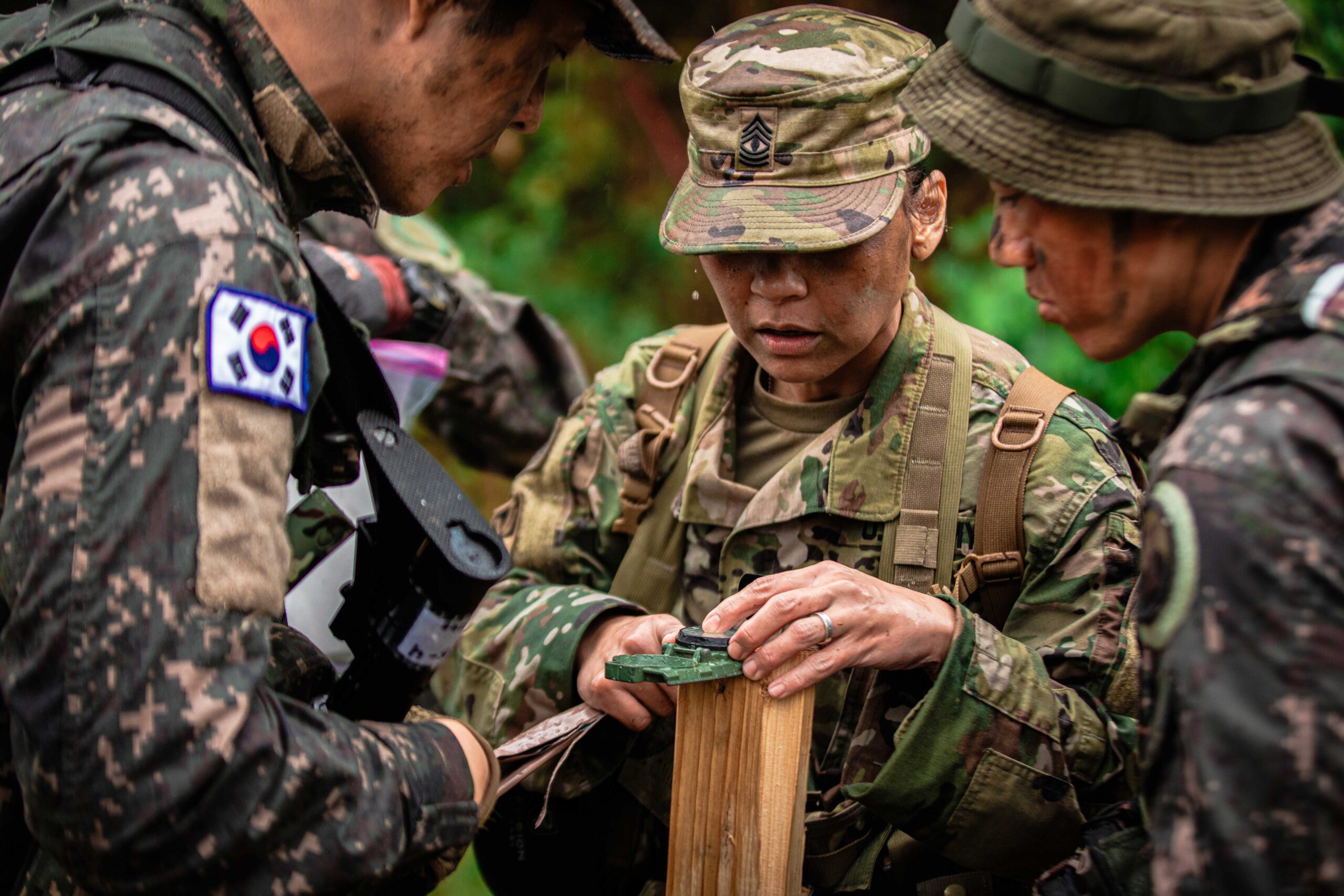
Resident engineer Nathan Han explained that troops’ input was valuable in improving air circulation, increasing the ratio of dryers to washers, upgrading outdoor gear, and solving recurring maintenance problems.
Samuel Brooks, Camp Humphreys’ housing chief, said the improvements reflect the Army’s commitment to delivering “the high quality of life soldiers deserve.” The upgrades are part of a broader modernization drive that matches America’s growing military presence on the Korean Peninsula — one that continues to serve as a crucial deterrent against North Korean aggression.
Located across from the installation’s golf course, the new barracks sit adjacent to another complex that opened in June 2024. That earlier $67 million project added 151 suites, providing housing for over 600 single troops.
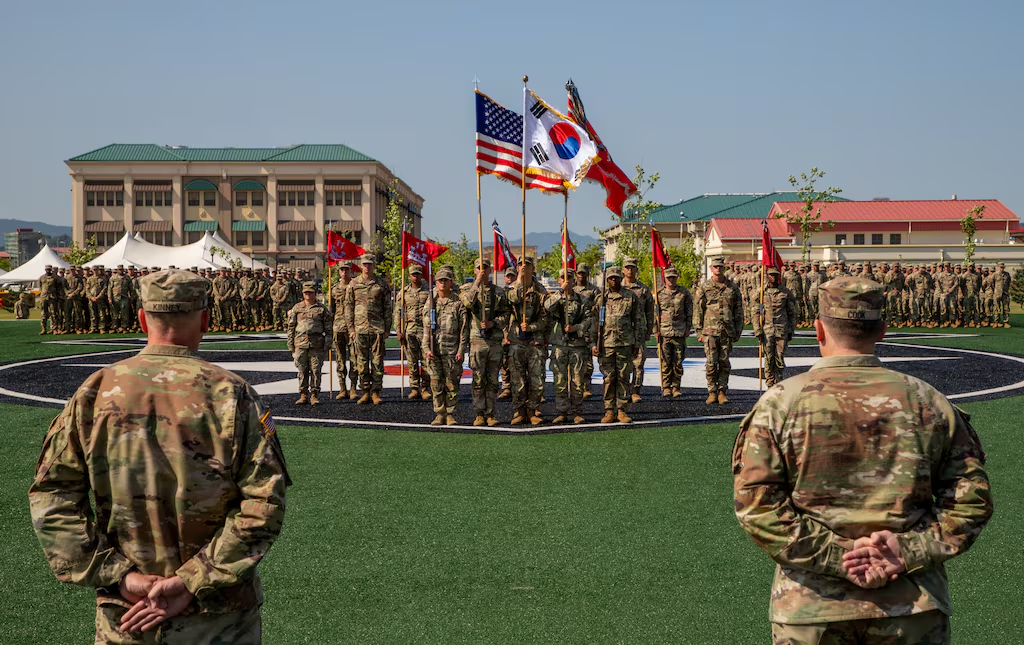
Together, the developments strengthen Humphreys’ role as a model U.S. Army facility abroad, combining military efficiency with modern living standards.
Funding for this latest $130 million project came from South Korea under the Special Measures Agreement, a cost-sharing deal reflecting Seoul’s contribution toward stationing roughly 28,500 U.S. troops across the peninsula.
The current five-year agreement, which began this year and will run through 2030, outlines a South Korean contribution of around $1.1 billion in 2026, with annual increases tied to inflation.
More barracks construction is already underway at Camp Humphreys. Another four buildings are scheduled for completion later this year, further expanding the installation’s housing capacity.
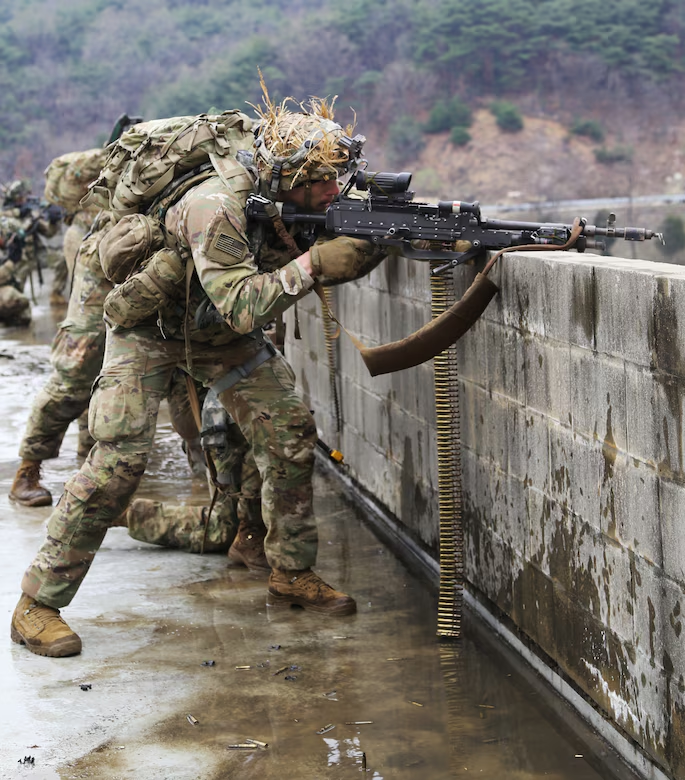
These projects demonstrate Washington’s long-term commitment to maintaining a stable, secure presence under the U.S.-South Korea alliance — one that remains vital to countering threats from Pyongyang.
Camp Humphreys sits about 40 miles south of Seoul and functions as the headquarters for U.S. Forces Korea, U.N. Command, Combined Forces Command, the Eighth Army, and the 2nd Infantry Division.
The facility represents a powerful symbol of U.S. resolve and readiness in Asia, serving not only as a deterrent hub but also as an enduring signal to both allies and adversaries that American forces are here to stay.
At a time when many focus on Washington politics or bureaucratic distractions, this project is a reminder of real priorities — ensuring U.S. soldiers have what they need to live, train, and serve effectively.
With strong leadership under President Trump and War Secretary Pete Hegseth’s vision for a revitalized War Department, initiatives like this reinforce the core mission: making sure the U.S. military remains the best-trained and best-supported fighting force in the world.
For the hundreds of American men and women who will soon call these new barracks home, the project is more than just new buildings.
It’s a message of commitment from the nation they serve, a sign that their sacrifices are matched with modern comforts and respect for their daily lives on the frontlines of freedom.
