
Germany is finally stepping up to the plate, sealing a deal with the United States to purchase Tomahawk cruise missiles and their accompanying launchers.
Chancellor Friedrich Merz announced Thursday that Germany will station the American-made weapons on its own soil, marking a major shift from relying on U.S. deployments to developing a homegrown long-range strike capability.
Merz revealed to lawmakers that the deal was finalized on the sidelines of a NATO summit in Ankara, describing the negotiations with U.S. officials as a major success and saying they surpassed expectations.
His statement signals a crucial recalibration of Germany’s posture within NATO—a clear acknowledgment that the days of depending entirely on American deterrence are over.
In his remarks, Merz emphasized that this move “closes a critical strategic gap” in German defense. He also pointed to Germany’s efforts to work with European partners to create indigenous missile systems that can eventually be stationed within Europe.
The long-term goal appears to be blending American capability with European production to create a stronger, independent deterrent system that aligns with transatlantic strategy.
German government officials confirmed that the U.S. approved the purchase in a letter of intent signed Tuesday. Washington’s green light came after weeks of behind-the-scenes coordination between the War Department and German defense authorities.
The approval is part of broader efforts to realign NATO’s missile capabilities as tensions with Russia remain high and as Europe tries to prove it can secure its own backyard without excessive reliance on American boots on the ground.
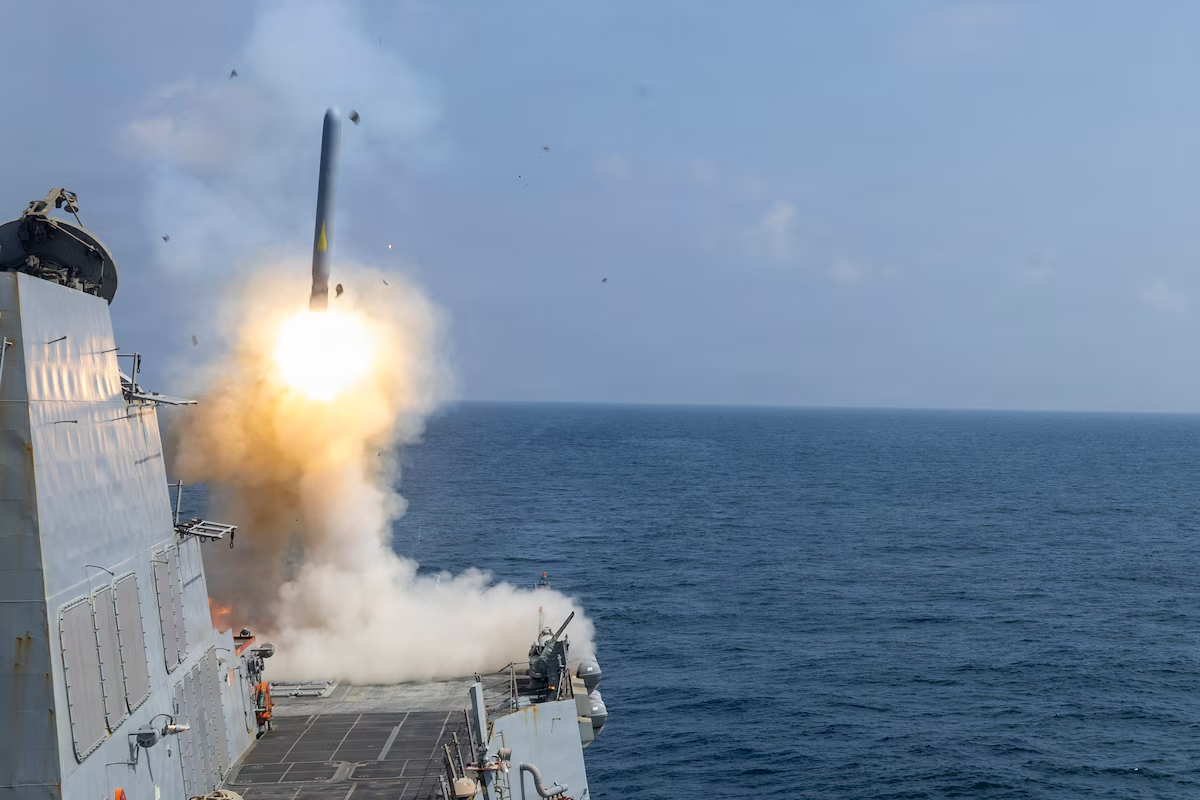
While officials have not disclosed the exact number of Tomahawks or launchers involved in the sale—information that remains classified—it is understood that the procurement will significantly expand Germany’s precision strike range.
This move puts Berlin closer to operational parity with other key NATO players that already have advanced cruise missile arsenals.
The timing of the deal is notable. President Donald Trump has long pushed European allies to carry their own weight in NATO, urging them to invest more in military modernization and stop freeloading off the U.S. taxpayer. This purchase fits neatly into that vision.
By buying American missiles and taking greater responsibility for its own defense, Germany appears to be answering the call that Trump’s administration began years ago and continues to guide U.S.-European defense cooperation today.
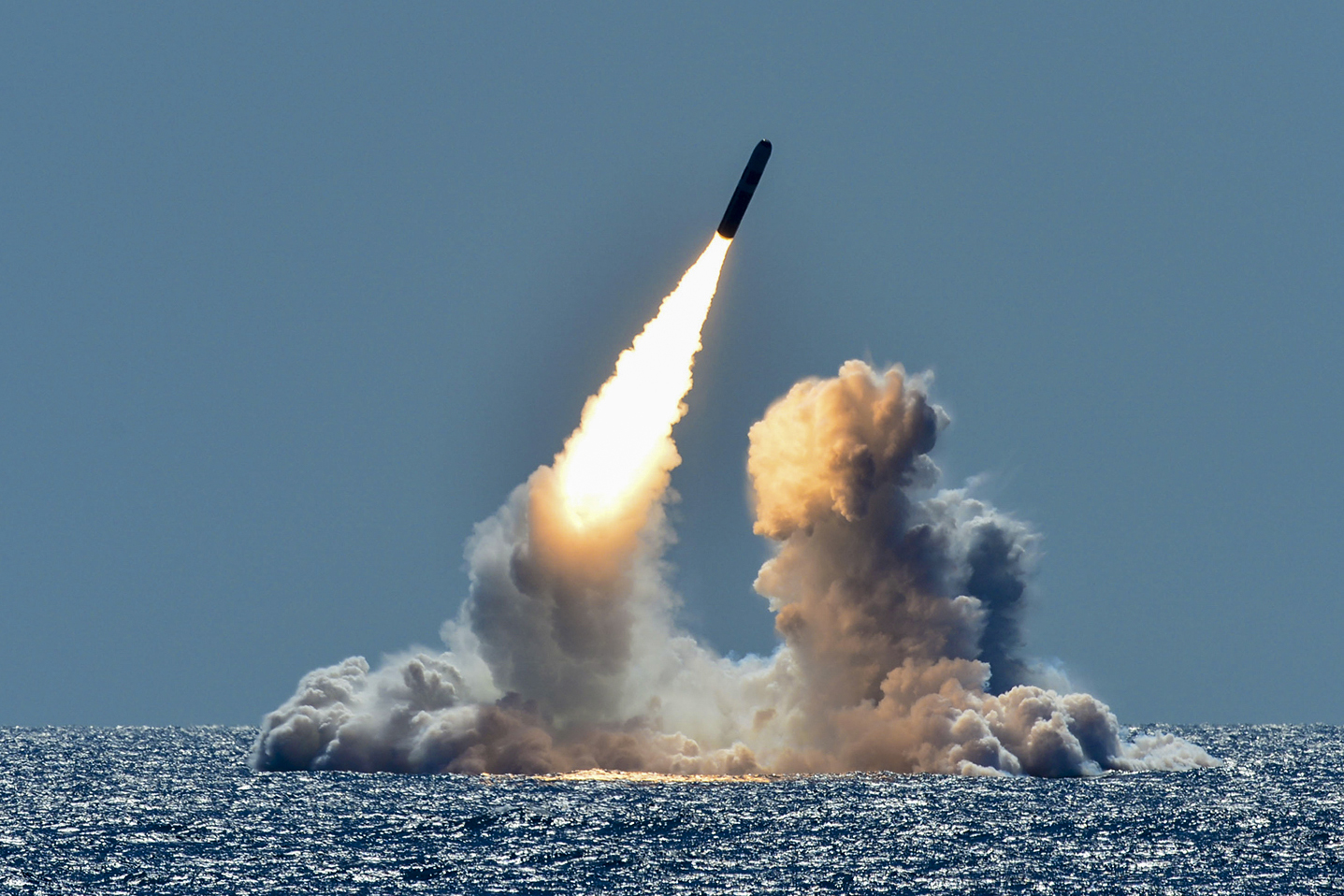
PACIFIC OCEAN (March 26, 2008) An unarmed Trident II D5 missile launches from the Ohio-class ballistic missile submarine USS Nebraska (SSBN 739) off the coast of California. The test launch was part of the U.S. Navy Strategic Systems Program’s demonstration and shakedown operation certification process. The successful launch certified the readiness of an SSBN crew and the operational performance of the submarine’s strategic weapons system before returning to operational availability. (U.S. Navy photo by Mass Communication Specialist 1st Class Ronald Gutridge/Released)
The sale also resolves an open question that emerged after Trump reduced the U.S. military presence in Germany earlier this year.
The former plan, initiated by the previous administration, had been to station a U.S. battalion armed with Tomahawks on German territory. Once that deployment was canceled, European leaders were left wondering how to fill the strategic void. The new purchase essentially closes that chapter by transferring operational responsibility to Germany itself.
This shift isn’t just symbolic—it’s a practical enhancement of Europe’s military capability. For decades, Germany and other NATO members have relied almost exclusively on the American deterrent umbrella.
Now, Germany’s acquisition of Tomahawks means it can field its own long-range deterrent, vastly extending its reach far beyond its borders. That capability will be essential should NATO ever need to counter aggression from the East.
While Germany already possesses its own cruise missile, the Taurus, its maximum range is about 311 miles—three to five times shorter than the Tomahawks. The American-made missiles can strike deep into hostile territory, offering far greater flexibility and retaliation power in the event of conflict.
For a Germany that’s long hesitated to flex its military muscle after World War II, this development represents a major turning point.
European defense analysts say this move could trigger a larger wave of modernization among NATO members. Nations like Poland, the Czech Republic, and the Baltics will likely follow Germany’s lead, further integrating into a stronger transatlantic missile defense framework.
For Washington, it’s a win-win: allies become stronger self-defenders while continuing to purchase top-tier U.S. weapon systems, tying NATO’s operational readiness to American technology.
The agreement also strengthens ties between the U.S. War Department and the German armed forces at a time when unity within NATO’s European flank is more vital than ever.
With escalating tensions on the continent, particularly as Russian military exercises push closer to NATO borders, the Tomahawk purchase sends a clear, unmistakable message: the alliance is not retreating—it’s rearming.
By investing in Tomahawks, Germany is not only updating its arsenal but also sending a political signal of loyalty and seriousness within NATO.
As Chancellor Merz put it, this is not just a procurement decision, it’s a strategic declaration that Germany intends to play a full role in Europe’s security architecture rather than sitting back and letting Washington bear all the weight.
Bottom line: Berlin’s new Tomahawk deal is far more than a weapons purchase.
It’s a recognition that the Trump-era vision of NATO self-reliance wasn’t just rhetoric—it was the future. For the U.S., it proves once again that real leadership means encouraging allies to stand on their own two feet, armed and ready.
